
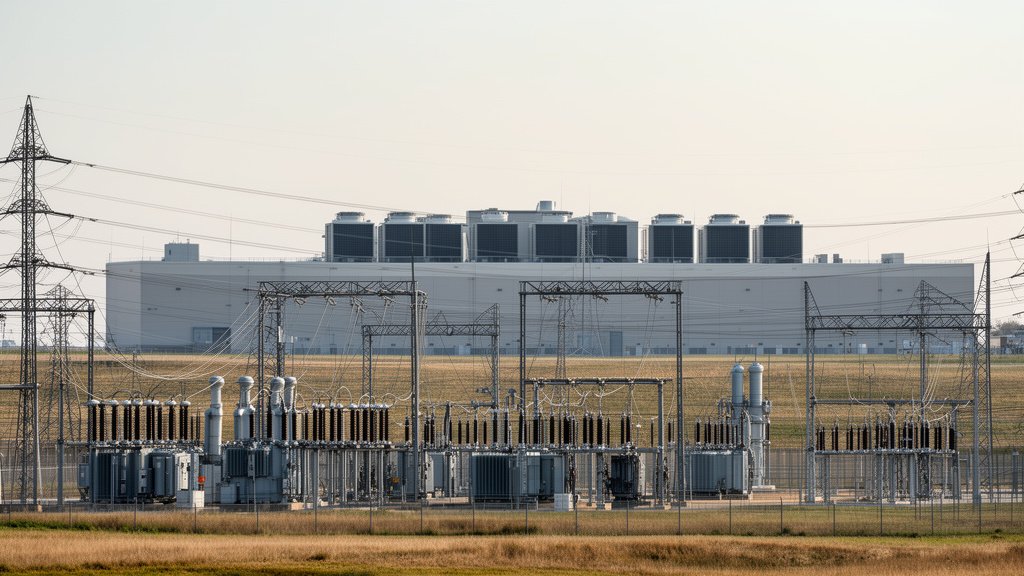
Kentucky Power, TeraWulf Strike $100M Deal: What It Means for You
Kentucky Power has officially finalized an expanded partnership agreement with TeraWulf Inc., a move that stands to reshape regional energy dynamics and provides a significant economic offset for local residential consumers. Under the terms of the agreement, the two entities will collaborate to double the data center’s electric demand to 1 gigawatt, a massive scale of power usage. As a tangible benefit to the community, the deal includes a guaranteed $100 million in winter energy bill credits, specifically earmarked for residential customers over a decade-long period, with the program slated to commence in 2029 pending final regulatory approval. This development marks a pivotal shift in how data-intensive industries—specifically those driving the artificial intelligence boom—are being integrated into the public utility framework.
Key Highlights
- Capacity Expansion: The agreement scales the data center’s energy demand to 1 gigawatt, marking a doubling of the previous capacity threshold.
- Financial Impact: Residential customers are set to receive a cumulative $100 million in winter energy bill credits over a ten-year duration.
- Implementation Timeline: The distribution of credits is scheduled to begin in 2029, contingent on the necessary regulatory approvals.
- Stakeholder Balance: The deal attempts to balance the high energy demands of industrial data operations with direct economic relief for residential utility ratepayers.
Analyzing the Utility-Scale Energy Integration
The finalization of the agreement between Kentucky Power and TeraWulf Inc. (NASDAQ: WULF) is more than a simple service contract; it is a complex infrastructure and policy maneuver. By expanding capacity to 1 gigawatt—a unit of power capable of lighting up hundreds of thousands of homes—the deal underscores the insatiable hunger of modern computational infrastructure. As AI models, blockchain validation, and cloud storage become more prevalent, the need for stable, massive energy sources has forced a new “industrial utility” marriage. This collaboration aims to ensure that while the grid is heavily utilized by industrial actors, the residential customer base sees a direct, material benefit rather than a loss in service quality or price hikes.
The Mechanics of the Winter Bill Credits
The structure of the $100 million credit package is designed to mitigate the cost of home heating during peak winter months. By isolating the credits to the winter period, the utility and TeraWulf are likely targeting the time of year when electricity bills typically spike due to electric heating loads. This strategic timing is intended to provide a buffer for household budgets during the most financially taxing months of the year. The 2029 start date provides a runway for the physical infrastructure to scale up, ensuring that the financial credits are tied to the actual operational commencement of the expanded 1 gigawatt capacity. This correlation is crucial: the credit is not a flat gift, but a performance-based benefit derived from the increased utilization of the grid.
Regulatory Oversight and Grid Stability
Because this agreement involves such a significant percentage of available grid capacity, it is subject to rigorous review by the Public Service Commission of Kentucky. Regulators are primarily concerned with two factors: grid reliability and rate fairness. The expansion to 1 gigawatt necessitates upgrades to local transmission and distribution networks to ensure that the increased load does not cause brownouts or instability for the surrounding residential and commercial zones. The deal must demonstrate that it is “revenue neutral” or “revenue positive” for the utility, meaning that the industrial customer’s payment structure effectively covers the costs of grid reinforcement while still allowing for the surplus required to fund the $100 million in residential credits.
The Secondary Angles of Modern Energy Economics
1. The Infrastructure Race: This deal highlights the national trend of data centers migrating to regions with cheaper or more accessible power. Kentucky is positioning itself as a competitive hub for these high-consumption industries, leveraging its existing power generation assets. This could signal a broader trend of industrial growth in the region, provided the grid can keep pace.
2. AI and Computation Load: The 1 gigawatt figure is emblematic of the “AI-driven” energy demand. As tech giants and specialized firms race to build computational capacity, utilities are finding themselves in a unique position of leverage. They are no longer just passive providers; they are active partners in the digital economy.
3. Future-Proofing the Grid: The long-term nature of this deal—stretching through 2029 and beyond—suggests a shift toward long-term capacity planning. It moves away from short-term spot market purchasing and toward long-term agreements that provide certainty for both the energy producer and the energy consumer.
FAQ: People Also Ask
Q: When will residential customers see the benefits from this deal?
A: The $100 million in winter energy bill credits is scheduled to begin flowing to residential customers in 2029, pending the completion of the 1 gigawatt expansion and final regulatory approval.
Q: How does the TeraWulf expansion affect the power grid in Kentucky?
A: The expansion requires significant energy capacity—1 gigawatt. This mandates that Kentucky Power and the relevant regulatory bodies oversee necessary grid upgrades to ensure that the massive increase in industrial demand does not compromise service for local residents.
Q: What regulatory body has the final say on this agreement?
A: The Public Service Commission of Kentucky holds jurisdiction over such utility agreements. They are tasked with reviewing the deal to ensure it adheres to state regulations regarding fairness, reliability, and economic impact on ratepayers.
Q: Is this deal permanent, or is it subject to change?
A: The deal is currently pending regulatory approval. While the framework is finalized between the parties, the Public Service Commission may require modifications before granting the final authorizations necessary for the project to proceed.


Related Posts


