
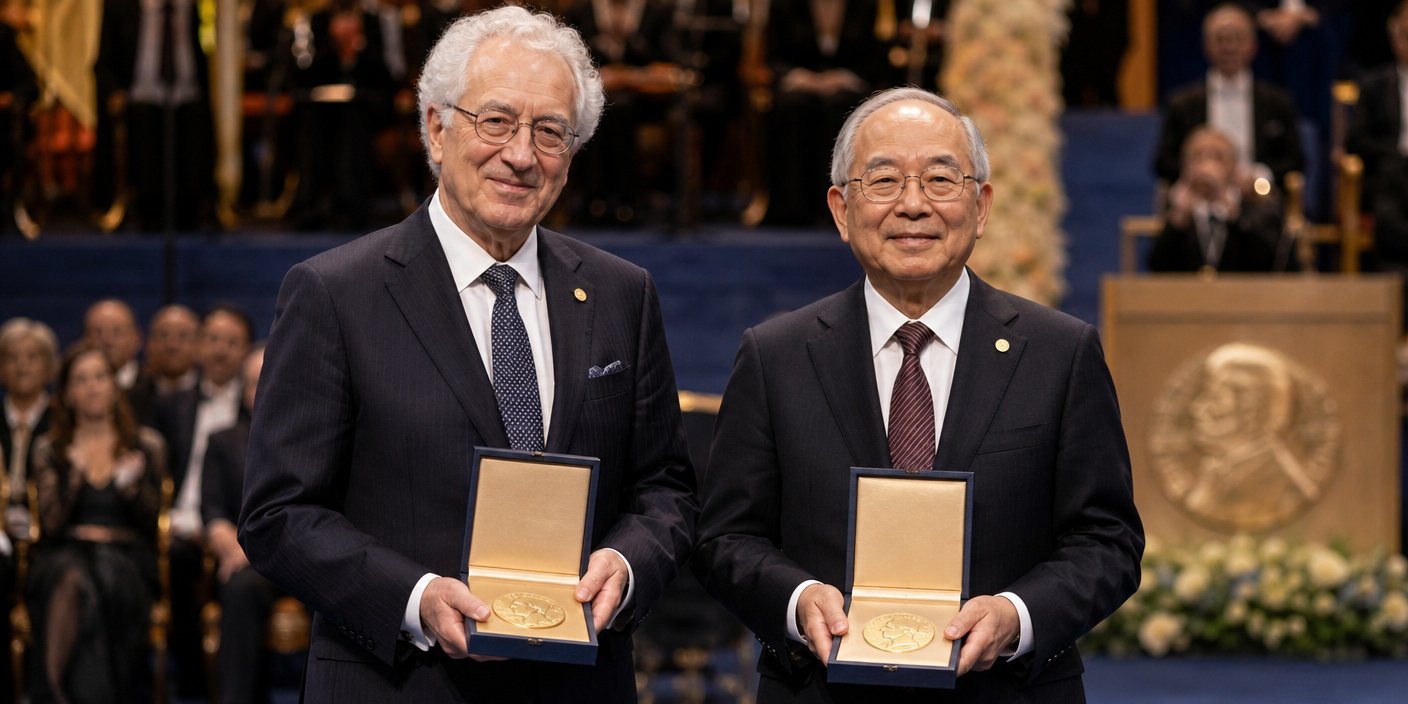
2026 Nobel Prize in Chemistry Honors Catalysis Pioneers
The 2026 Nobel Prize in Chemistry has been officially awarded to Henri Kagan and Kenso Soai, marking a significant milestone in chemical sciences. By unlocking the secrets of molecular handedness, or chirality, these two researchers have fundamentally altered the landscape of synthetic chemistry. Their combined contributions have enabled the mass production of specialized pharmaceuticals and high-performance materials that were previously deemed impossible to manufacture at scale. The Nobel Committee’s decision highlights the critical role of asymmetric catalysis in bridging the gap between theoretical laboratory breakthroughs and the practical, life-saving applications found in global industrial production.
Key Highlights
- Henri Kagan’s Legacy: Recognized for the development of chiral phosphine ligands, specifically the DIOP ligand, which revolutionized asymmetric hydrogenation.
- The Soai Reaction: Kenso Soai honored for his discovery of asymmetric autocatalysis, providing a mechanism for how symmetry breaking can occur in nature.
- Pharmaceutical Revolution: The methods developed by Kagan and Soai are now standard in the synthesis of vital life-saving drugs, including anti-inflammatories and beta-blockers.
- Green Chemistry Impact: These catalytic processes drastically reduce chemical waste by ensuring high yield and purity, contributing to the advancement of sustainable industrial practices.
The Architecture of Asymmetry: Mastering Molecular Handedness
The fundamental challenge that Henri Kagan and Kenso Soai addressed lies in the concept of chirality. Many molecules in nature exist in two mirror-image forms—like a pair of human hands—referred to as enantiomers. While these molecules often share the same chemical formula, their biological activity can differ drastically. In pharmaceuticals, one enantiomer may act as a life-saving medicine, while its mirror image could be inert or, in worst-case scenarios, toxic. Before the work of Kagan and Soai, producing a single, desired enantiomer with high precision was an expensive, inefficient, and often daunting endeavor.
Henri Kagan: The Pioneer of Asymmetric Hydrogenation
Henri Kagan’s journey toward the 2026 Nobel Prize began in the early 1970s. Kagan realized that the key to controlling the outcome of a chemical reaction lay in the catalyst—a substance that accelerates a reaction without being consumed by it. He introduced the concept of the ‘chiral ligand,’ a molecular template that forces a chemical reaction to occur in one specific direction. His development of the DIOP ligand (2,3-O-isopropylidene-2,3-dihydroxy-1,4-bis(diphenylphosphino)butane) was a watershed moment.
By attaching this ligand to metal atoms, Kagan created a highly effective ‘chiral environment.’ This allowed chemists to perform asymmetric hydrogenation, adding hydrogen to molecules in a way that produced only the desired mirror-image form. This discovery essentially gave chemists a ‘molecular map,’ allowing them to synthesize complex compounds with unprecedented control. The pharmaceutical industry adopted Kagan’s methodologies rapidly, as it allowed for the manufacturing of drugs that were not only safer but also significantly cheaper to produce, reducing the need for complex and wasteful post-synthesis separation processes.
Kenso Soai: Unlocking Autocatalysis and Symmetry Breaking
While Kagan focused on the practical application of catalytic design, Kenso Soai probed the deep, mysterious origins of chirality itself. In the mid-1990s, Soai discovered a phenomenon that stunned the scientific community: asymmetric autocatalysis. His research demonstrated that a reaction could ‘self-amplify’ its own chirality. If a tiny excess of one mirror-image molecule was present, that molecule could act as a catalyst to produce more of itself, eventually taking over the entire reaction mixture.
This discovery, known as the ‘Soai Reaction,’ provided a plausible scientific explanation for how life on Earth might have selected one specific mirror-image form of amino acids and sugars over the other. Beyond its evolutionary implications, Soai’s work provided a new toolkit for asymmetric synthesis. By using small amounts of chiral molecules to trigger the production of large quantities of specific enantiomers, chemists can now achieve near-perfect optical purity. This has massive implications for materials science, particularly in the creation of liquid crystals and advanced polymers, where the handedness of the molecular structure dictates the physical properties of the material.
Industrial and Economic Impact: From Lab to Market
The synergy between Kagan’s structural approach and Soai’s autocatalytic discovery has created a robust economic engine within the global chemical sector. The ability to manufacture pure enantiomers has streamlined the development of everything from high-efficacy antidepressants to targeted cancer therapies.
Economic analysis suggests that the implementation of these catalytic methods has reduced production costs for some key pharmaceutical ingredients by as much as 40% over the last decade. Furthermore, these processes align with the principles of Green Chemistry. By eliminating the ‘racemic’ waste—the undesired mirror-image molecules that usually need to be separated and discarded—Kagan and Soai’s methods significantly lower the environmental footprint of large-scale chemical manufacturing. This efficiency is no longer just a laboratory preference; it is a regulatory requirement for modern, sustainable industrial chemistry.
Future Horizons: The Next Frontier
Looking forward, the techniques pioneered by Kagan and Soai are being applied to even more complex systems, including supramolecular chemistry and nanotechnology. Researchers are now exploring how to use these asymmetric catalysts to build ‘molecular machines’—nanoscopic devices that can perform mechanical work.
As we move further into the 21st century, the ability to control the structure of matter at such an intimate, fundamental level will be essential for technological advancement. Whether it is through the creation of smarter electronics or more effective bio-engineered tissues, the foundation laid by these two Nobel laureates will continue to be the bedrock upon which future discoveries are built. Their work serves as a reminder that the most significant breakthroughs often occur at the intersection of curiosity-driven discovery and rigorous practical application.
FAQ: People Also Ask
What does ‘asymmetric synthesis’ mean?
Asymmetric synthesis is a branch of chemistry that focuses on producing specific mirror-image forms (enantiomers) of a molecule, rather than a mix of both forms. This is crucial in pharmaceuticals, where one form may be therapeutic while the other is harmful.
How does the Soai reaction work?
The Soai reaction is a type of asymmetric autocatalysis. It involves a reaction that produces a chiral product, and that product then acts as a catalyst to produce more of itself, effectively ‘amplifying’ the chirality of the system from a very small starting amount.
Why is the DIOP ligand important?
Henri Kagan’s DIOP ligand was the first practical chiral phosphine ligand used for asymmetric hydrogenation. It provided a reliable, modular way for chemists to impose ‘handedness’ on chemical reactions using transition metals, creating the standard for modern synthetic processes.
Can these catalytic processes be used outside of medicine?
Yes. While highly significant for pharmaceuticals, the work of Kagan and Soai is essential in the production of flavors, fragrances, agricultural chemicals, and advanced materials like liquid crystals for display technologies.


Related Posts


