
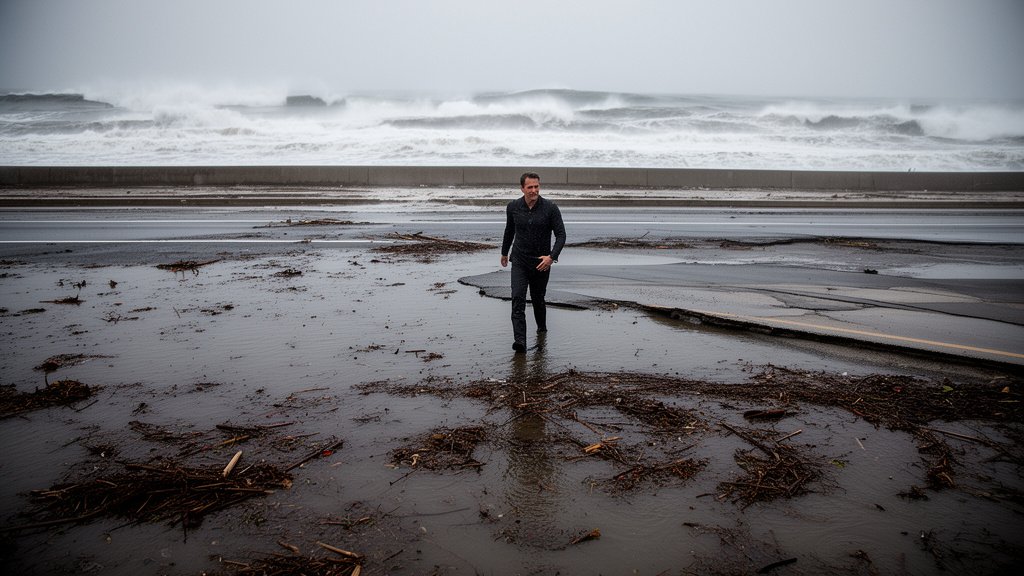
Hurricane Rachel Pummels SoCal: Historic Flooding & Coastal Crisis
Hurricane Rachel has officially made landfall in Southern California, delivering a historic, high-intensity deluge of rainfall, life-threatening storm surge, and widespread flash flooding that has paralyzed the region’s coastal infrastructure. The storm, which defied typical seasonal expectations for the Pacific coast, arrived with sustained winds reaching near-hurricane force, triggering immediate evacuations and a catastrophic breakdown in regional power grids. Emergency services are currently overwhelmed as first responders scramble to reach residents trapped in high-water zones, while the National Hurricane Center (NHC) maintains an active, urgent warning for the entirety of the coastal corridor from San Diego to Los Angeles.
Key Highlights
- Unprecedented Rainfall: Coastal regions are experiencing rainfall totals exceeding 10 inches in less than 12 hours, shattering previous daily precipitation records for the month.
- Infrastructure Collapse: Over 250,000 residents are currently without power as Southern California Edison (SCE) reports widespread transformer failures due to high winds and surge-related saltwater intrusion.
- Coastal Surge Impact: High-tide cycles, compounded by a 6-foot storm surge, have breached coastal defenses, resulting in mandatory evacuation orders for low-lying beach communities.
- Transportation Chaos: The California Department of Transportation (Caltrans) has shuttered major arteries, including portions of the Pacific Coast Highway, due to debris, mudslides, and standing water.
The Meteorological Anomaly: Why Rachel Hit So Hard
The arrival of Hurricane Rachel represents a significant meteorological anomaly for the West Coast. While remnants of tropical systems occasionally drift toward California, a fully formed hurricane making landfall is a rare, high-consequence event. Meteorologists from the National Weather Service (NWS) San Diego office have noted that anomalous sea surface temperatures in the Eastern Pacific acted as a fuel source, allowing Rachel to maintain its structure far longer than standard models predicted. This event underscores a shifting paradigm in Western climate patterns.
Infrastructure Under Siege
The immediate aftermath of the landfall has exposed profound vulnerabilities in California’s coastal infrastructure. The surge did not merely affect residential real estate; it compromised critical utility corridors. Southern California Edison crews are currently grounded in many areas due to wind speeds exceeding 75 mph, preventing the repair of downed power lines. Furthermore, the sewage and drainage systems in Los Angeles and Orange Counties, designed primarily for seasonal rain rather than tropical volumes, have reached capacity. Reports of sewage overflows are emerging, creating a secondary public health crisis that officials are struggling to contain. The intersection of saltwater surge and freshwater flooding has created a chemical cocktail of runoff that poses severe risks to local aquifers and coastal ecosystems.
A Historical Perspective on Coastal Vulnerability
To understand the magnitude of Hurricane Rachel, one must look back to historical precedents, such as the 1939 Long Beach tropical storm. While that event remains the benchmark for Southern California, Rachel appears to be tracking toward a higher impact index. The primary difference today is the density of coastal development. In 1939, much of the coastline was underdeveloped. Today, billions of dollars in real estate, critical communication hubs, and essential transit lines sit directly in the inundation zone. The failure of protective seawalls in areas like Malibu and Laguna Beach provides a grim forecast for the coming 48 hours, as high tide cycles threaten to amplify the surge’s destructive reach.
The Economic Fallout and Insurance Landscape
The economic implications of Hurricane Rachel are expected to be staggering. Early estimates from actuarial firms suggest potential property damage claims could reach into the billions. This event is likely to trigger a reevaluation of the California FAIR Plan and private insurance availability in coastal zones. For local businesses, particularly in the tourism and hospitality sector, the storm represents a catastrophic loss of revenue during what was supposed to be a peak operational period. Economists are warning that the cost of cleanup, debris removal, and infrastructure hardening will require substantial state and federal emergency funding, potentially diverting resources from other climate mitigation projects for the remainder of the fiscal year.
Future Predictions: The New Normal?
As the storm slowly tracks inland and weakens into a tropical depression, climatologists are already beginning to dissect the data. The question at the forefront of the academic community is whether Rachel is a harbinger of a new climate reality for the Pacific Coast. If sea surface temperatures continue to trend above historical averages, the ability for storms to retain intensity closer to the North American continent increases. This suggests that the current 50-year planning cycle for coastal infrastructure may be obsolete. Urban planners are now facing the immediate necessity to redesign storm barriers, elevate critical transit arteries, and rethink the density of development in flood-prone zones. The aftermath of Rachel will likely serve as the catalyst for the largest infrastructure overhaul in California’s modern history.
FAQ: People Also Ask
Q: Is it safe to return to coastal areas immediately after the rain stops?
A: No. Officials strongly advise against returning to coastal zones. Even after the rain ceases, the risk of structural collapse, downed electrical lines, and lingering storm surge remains high. Wait for explicit clearance from local authorities.
Q: How does Hurricane Rachel compare to Tropical Storm Hilary?
A: While both brought significant moisture, Hurricane Rachel arrived with a higher sustained wind velocity and a more aggressive storm surge. Its impact on the coastal infrastructure is more localized but significantly more destructive regarding structural damage compared to the widespread, flood-heavy impact of Hilary.
Q: Will my insurance policy cover flood damage from this hurricane?
A: Standard homeowner policies typically exclude flood damage. You must check with your provider to see if you have a separate flood insurance policy, likely through the National Flood Insurance Program (NFIP), which is generally the only source of coverage for rising water damage.
Q: What steps should be taken if my home was flooded?
A: Safety is the priority. Turn off electricity and gas if possible, avoid walking through floodwater (which may be contaminated), and document all damage with photos before attempting any cleanup. Contact your insurance agent immediately to initiate the claims process.


Related Posts


