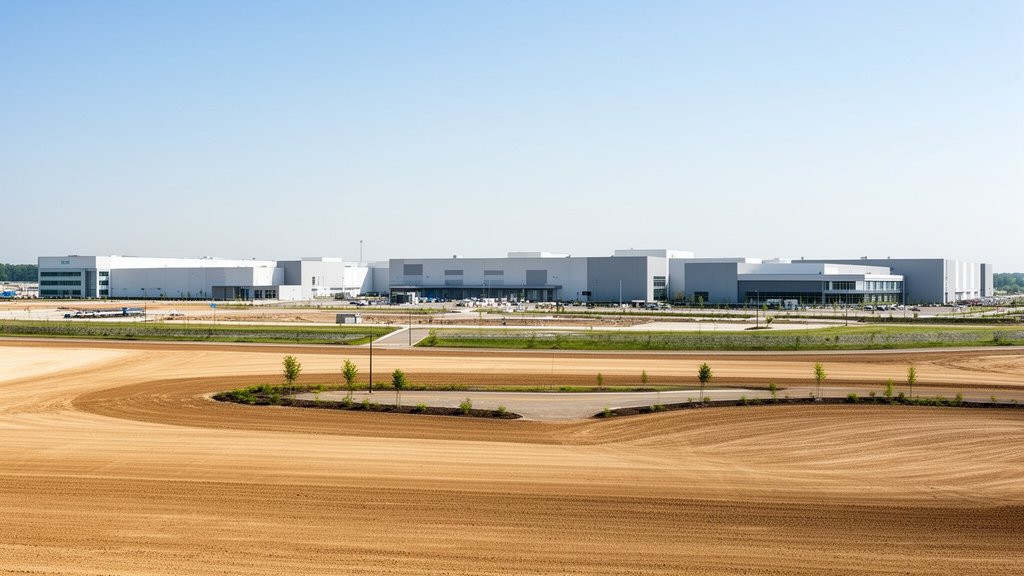
Bayer’s $2.2 Billion Ohio Bet: New Pharma Hub to Transform New Albany
Bayer has officially announced a massive $2.2 billion investment to construct a state-of-the-art pharmaceutical manufacturing facility in New Albany, Ohio, marking a defining moment for the regional economy and the American healthcare supply chain. This capital-intensive project stands as a testament to the growing trend of reshoring essential industrial operations to the United States. With the facility projected to generate 1,500 construction jobs and 600 permanent, high-skilled roles, the move is widely viewed as a historic level of German direct investment in the state of Ohio, underscoring the region’s emerging status as a global hub for advanced manufacturing and technology. Key Highlights: Total Investment: A significant $2.2 billion capital infusion dedicated to pharmaceutical infrastructure. Employment Boom: The project will create 1,500 specialized construction jobs during the development phase. Long-term Growth: 600 permanent, full-time roles will be established upon completion, focusing on high-tech pharmaceutical production. Strategic Location: New Albany, Ohio, serves as the chosen site, leveraging the region’s existing industrial infrastructure and logistical advantages. Global Impact: This investment represents a major milestone in German direct investment, strengthening the economic ties between Germany and the U.S. Midwest. Transforming the Heartland: The New Albany Pharma Ecosystem: The selection of New Albany for this $2.2 billion Bayer facility is no accident. In recent years, central Ohio has successfully positioned itself as a magnet for massive capital expenditures, particularly in industries that require rigorous infrastructure, reliable utility support, and access to a skilled talent pipeline. By establishing a world-class pharmaceutical manufacturing plant here, Bayer is not merely building a factory; it is embedding itself into a regional ecosystem that is rapidly becoming a nexus for technological advancement. The Anatomy of the Investment: When Bayer committed to this $2.2 billion figure, the decision likely involved a multi-year feasibility study examining site logistics, regulatory environments, and workforce availability. The pharmaceutical industry requires a highly specialized environment—often referred to as ‘cleanroom’ manufacturing—where precision, hygiene, and advanced robotics converge. The construction phase, employing 1,500 workers, will likely involve specialized contractors capable of handling complex mechanical, electrical, and plumbing (MEP) systems necessary for pharmaceutical operations. This creates a significant ripple effect in the local economy, benefiting local suppliers, engineering firms, and the hospitality sector during the construction duration. Following construction, the 600 permanent roles represent the long-term value of the project. These are not entry-level positions; they will require engineers, chemical technicians, supply chain managers, and quality control experts. This influx of high-paying jobs will inevitably drive demand for housing, services, and educational partnerships in New Albany and the greater Columbus area, further cementing the city’s trajectory as an economic powerhouse. Supply Chain Resilience and Global Strategy: The global pharmaceutical supply chain has faced unprecedented volatility in recent years. From shortages of active pharmaceutical ingredients (APIs) to logistical bottlenecks, manufacturers have learned that relying on far-flung, single-source manufacturing locations is a risk that must be mitigated. Bayer’s pivot to domestic production in the U.S. is a strategic hedge against this volatility. By manufacturing in New Albany, Bayer is effectively shortening the supply chain for the North American market, ensuring that life-saving medications can be produced and distributed with greater speed and reliability. Furthermore, this investment serves as a major vote of confidence in the U.S. regulatory environment. German companies, known for their meticulous planning and long-term investment horizons, do not commit billions of dollars to a region without absolute certainty in the stability of that market. This move suggests that Ohio, and the United States at large, remains a highly competitive environment for heavy industry, provided the local infrastructure can support the demanding requirements of modern high-tech production. Future-Proofing the Manufacturing Sector: Looking ahead, the synergy between this Bayer plant and the existing industrial corridor in New Albany will likely attract ancillary businesses. Companies that provide raw materials, specialized packaging, and advanced logistics services are often drawn to the ‘gravity’ of such a large anchor tenant. We can expect to see an increase in regional research collaborations, potential partnerships with nearby universities, and an accelerated development of technical training programs aimed at supplying the 600 permanent positions with local talent. This project is not just about the brick and mortar of a manufacturing facility; it is about the future of domestic production. As the industry moves toward more sophisticated, personalized medicines and complex biologics, having the infrastructure in place to manufacture these products at scale will determine which regions win the global race for investment. Bayer’s announcement is a massive win for Ohio, confirming that the state has transitioned from its traditional industrial roots into a sophisticated, high-tech hub capable of supporting the most complex manufacturing challenges of the 21st century. FAQ: People Also Ask: Q: What is the primary purpose of the new Bayer facility in New Albany? A: The facility is designed for pharmaceutical manufacturing. While specific drug classes often remain proprietary until later stages of development, the plant is engineered to handle complex, large-scale production requirements to ensure a stable supply chain for the North American market. Q: How does the 1,500 construction job figure compare to other regional projects? A: The creation of 1,500 construction jobs is significant, representing a major short-term stimulus. It is comparable to other mega-projects in the Central Ohio region, reflecting the immense scale of the physical infrastructure required for modern, high-tech pharmaceutical production. Q: Why was New Albany chosen as the location for this $2.2 billion investment? A: New Albany offers a combination of available land, high-quality utility infrastructure, access to a skilled labor market, and a business-friendly environment that has already attracted significant attention from international technology and manufacturing firms. Q: Will the 600 permanent jobs be filled locally? A: While Bayer will likely leverage global expertise for initial setup and leadership roles, the 600 permanent positions will create a massive opportunity for the local workforce. Educational and training partnerships are expected to emerge to align local skills with the specific technical demands of the facility.


Related Posts