
Tech Sell-Off Intensifies: AI Debt Fears and 3.7% Inflation Trigger Market Rout
Global equity markets are undergoing a painful recalibration this week, as a combination of persistent US inflation and mounting apprehension regarding the debt-fueled expansion of the AI sector triggered a broad sell-off across technology indices. The catalyst for this volatility was the latest US inflation print, which came in at 3.7%, delivering a stark reminder that the disinflationary path the market had priced in may be far more treacherous than anticipated. As investors digest the implications of a prolonged high-interest-rate environment, the semiconductor industry—the bedrock of the current AI boom—has found itself on the front lines of this corrective movement.
The Inflation Catalyst and Market Reaction
The revelation that US inflation stands at 3.7% has acted as a wrecking ball to the ‘soft landing’ narrative that had buoyed tech stocks for the better part of the year. For the semiconductor sector, this data point is particularly lethal. High inflation forces the US Federal Reserve to maintain elevated interest rates for longer, increasing the cost of capital for industries that rely heavily on massive, upfront capital expenditures (CapEx). When the ‘risk-free’ rate of return rises, the present value of future earnings for growth stocks—particularly in AI and chip manufacturing—is heavily discounted by institutional investors, leading to the rapid price deterioration observed across global exchanges.
The Semiconductor Shockwave: SK Hynix and Samsung
Nowhere has the impact been more visible than in the Asian markets, where the KOSPI index suffered a dramatic drop of over 8%. The decline was led by heavyweights SK Hynix and Samsung Electronics, two firms that have been primary beneficiaries of the generative AI infrastructure race. These companies are currently grappling with the dual pressure of softening consumer electronics demand and the extreme cost of scaling high-bandwidth memory (HBM) production, which is essential for AI accelerators. As the market re-prices these assets, the massive sell-off suggests that the premium valuation previously attached to the semiconductor supply chain is being sharply questioned.
The ‘AI Debt’ Sustainability Crisis
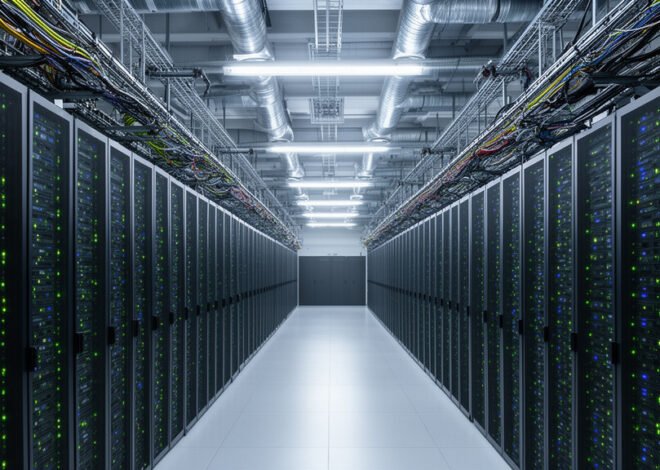
Beyond the macroeconomic noise, a structural concern is brewing regarding ‘AI debt.’ This term, coined by market analysts, refers to the aggressive borrowing and capital allocation strategies employed by major tech players to build out data centers and proprietary large-language models. The central question now facing Wall Street and international investors is whether the return on investment (ROI) from these massive infrastructure projects will materialize quickly enough to justify the staggering levels of debt accumulated to fund them.
Historically, tech cycles have been driven by clear consumer and enterprise adoption curves. However, the current AI build-out is defined by high-cost, speculative infrastructure investment. When the cost of servicing this debt rises alongside interest rates, the margin for error becomes razor-thin. If AI monetization fails to keep pace with these massive expenditures, companies risk being left with high-interest debt and underutilized assets, a scenario that is currently causing institutional portfolio managers to rotate capital out of high-growth tech and into more defensive positions.
Secondary Angles: Examining the Fallout
1. The Capital Intensity Trap: The semiconductor industry is famously cyclical. The shift from aggressive expansion to cautious maintenance is a difficult pivot. Companies are currently locked into multi-billion-dollar fabrication plant (fab) projects that were approved when interest rates were near zero. This ‘capital intensity trap’ means they cannot easily throttle back spending, even as market sentiment sours.
2. Shift in Institutional Sentiment: We are witnessing a clear divergence between ‘AI Hype’ and ‘AI Utility.’ Institutional investors are becoming increasingly surgical, moving away from firms solely focused on infrastructure build-outs (like raw chip manufacturers) and toward those demonstrating clear software-as-a-service (SaaS) revenue from AI integrations. This rotation explains why the decline has been so concentrated in the semiconductor and hardware spaces compared to the broader software sector.
3. Future Predictions: If the 3.7% inflation rate remains ‘sticky’ through the next quarter, expect further valuation compression in the tech sector. Analysts anticipate that companies will focus more on balance sheet health, likely delaying non-core projects to pay down debt, which could lead to a slowdown in the overall pace of AI model releases over the next 18 to 24 months.
FAQ: People Also Ask
Q: Why does a 3.7% inflation rate trigger a tech sell-off?
A: Tech stocks are often classified as ‘long-duration’ assets. Their value is derived from future earnings. When inflation is high, interest rates must remain elevated to combat it. High interest rates increase the discount rate applied to future earnings, making those future profits worth less in today’s dollars, which naturally lowers stock prices.
Q: What is meant by ‘AI Debt’ in this context?
A: ‘AI Debt’ refers to the immense financial liabilities and capital expenditures companies are taking on to build the physical infrastructure—such as server farms and advanced chips—required for AI. There is growing concern that the revenue generated by AI services is currently insufficient to cover the high interest costs on this debt.
Q: Why are SK Hynix and Samsung leading the decline?
A: As two of the world’s largest semiconductor manufacturers, they are the most leveraged to the semiconductor capital cycle. When investors fear a slow-down in AI infrastructure spending, these companies suffer the most because their business models depend on consistent, high-volume orders for AI-ready chips.


Related Posts