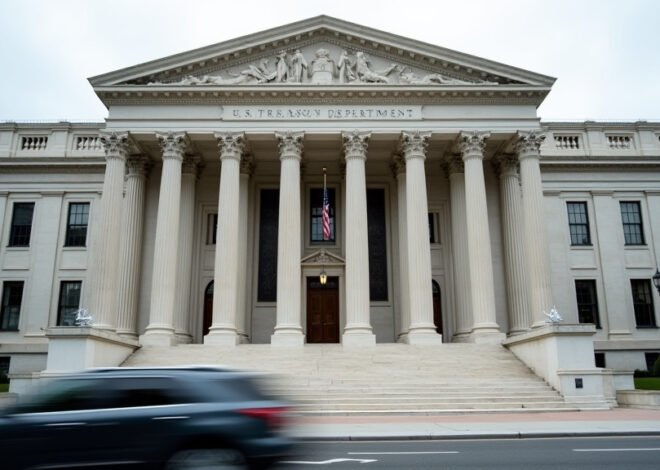

US Stock Indexes Close Higher; Gold Hits Record Amid Shutdown and Fed Rate Cut Uncertainty
Major U.S. stock indexes finished trading higher on Monday, September 29, 2025, snapping a three-session losing streak, as investors navigated growing concerns over a potential government shutdown and anticipated Federal Reserve policy adjustments. The Nasdaq Composite saw a gain of 0.5%, the S&P 500 rose by 0.3%, and the Dow Jones Industrial Average edged up by 0.1%. This modest upward movement occurred against a backdrop of increasing geopolitical and domestic uncertainty.
Gold Surges to All-Time Highs
Amidst this market apprehension, safe-haven assets experienced a significant surge. Gold prices climbed to a fresh record high, reaching $3,858.45 per troy ounce by the close of trading on Tuesday, September 30, 2025. Gold futures continued to trade near $3,900 the following day. This rally was fueled by a combination of factors, including escalating trade tensions, the looming government shutdown, and broader economic anxieties stemming from tariffs and a weakening job market. Investors traditionally flock to gold during periods of uncertainty, seeking a store of value. The precious metal has seen substantial gains throughout 2025, with gold futures up more than 45% year-to-date, and silver futures even higher.
Government Shutdown Looms and Begins
The immediate catalyst for market nervousness was the approaching deadline for a U.S. government funding bill. Lawmakers remained deadlocked over appropriations legislation, raising fears of a shutdown that would commence on October 1, 2025. A government shutdown was indeed initiated, halting pay for hundreds of thousands of federal workers and delaying various government services. Economists warned that such disruptions could cost the U.S. economy approximately $7 billion per week and weigh on investor and consumer confidence. The shutdown also raised concerns about the timely release of crucial economic data, including the monthly jobs report, which are vital for the Federal Reserve’s monetary policy decisions. By late October, the shutdown was progressing towards becoming the second-longest in U.S. history.
Federal Reserve Delivers Rate Cut Amidst Data Blackout
Market participants had been closely watching economic indicators, particularly the jobs report scheduled for Friday, hoping for modest numbers that would support the Federal Reserve’s plan for interest rate adjustments. As anticipated, the Federal Reserve announced its second interest rate cut of 2025 on October 29, 2025, reducing its benchmark federal funds rate by 25 basis points to a target range of 3.75% to 4%. This decision was made despite elevated inflation and a lack of comprehensive economic data due to the ongoing government shutdown, which created a significant blackout of information for policymakers. Fed Chair Jerome Powell indicated that a December rate cut was not guaranteed, leading to a reassessment of market expectations. The Fed acknowledged that downside risks to employment had risen in recent months, influencing their cautious approach.
Corporate Spotlight: AI Storage and Prediction Markets Shine
In corporate news, technology and business sectors showed dynamic movements. Robinhood’s prediction markets continued their rapid expansion, surpassing four billion event contracts traded all-time, with over two billion recorded in the third quarter of 2025 alone, according to CEO Vlad Tenev. The company was reportedly in talks with UK and EU regulators about potential international expansion of this business. Shares of Robinhood saw a notable pop on September 29.
Separately, Western Digital and Seagate Technology experienced significant stock price increases. This surge was driven by robust demand for their high-capacity storage products, crucial for the burgeoning artificial intelligence (AI) sector. Seagate, in particular, reported blowout fiscal first-quarter results that exceeded analyst expectations, highlighting strong customer demand and revenue growth driven by AI infrastructure needs. Their performance bolstered investor confidence in the AI-driven storage market.
Conclusion
As September drew to a close and October began, the U.S. financial markets experienced a mix of positive momentum and underlying apprehension. While stock indexes saw a rebound and gold achieved record highs driven by safe-haven demand, the looming and then active government shutdown introduced significant uncertainty. The Federal Reserve’s decision to cut rates, albeit with cautious language regarding future policy, underscored the complex economic landscape influenced by both domestic political gridlock and global economic trends. The robust performance of key companies in the AI and fintech sectors offered bright spots amidst the broader market fluctuations.


Related Posts