
Libyan Military Chief, 7 Others Killed in Recent Jet Crash Near Ankara; Investigation Underway
A recent, tragic event has captured international attention with the Libyan Military Chief Crash. Libya’s top military official died in a plane crash shortly after takeoff from Ankara, Turkey, on December 23, 2025. Eight people were on board the private jet, and all perished in the incident. This news is featured prominently across global media, detailing the devastating Libyan Military Chief Crash.
The Delegation’s Mission
Libya’s Chief of General Staff, Lieutenant General Muhammad Ali Ahmad al-Haddad, was on an official visit leading a high-level military delegation to Ankara for critical defense talks. The goal was to strengthen military cooperation, a partnership between Libya and Turkey that is significant. The delegation met with Turkish defense officials to discuss matters of mutual strategic interest, aiming to foster stability and modernize Libya’s armed forces. General al-Haddad played a vital role in efforts to unify Libya’s divided military, and his leadership was crucial for peace. The delegation was returning home to Tripoli, departing from Ankara’s Esenboga Airport, when the unfortunate Libyan Military Chief Crash occurred.
The Tragic Descent
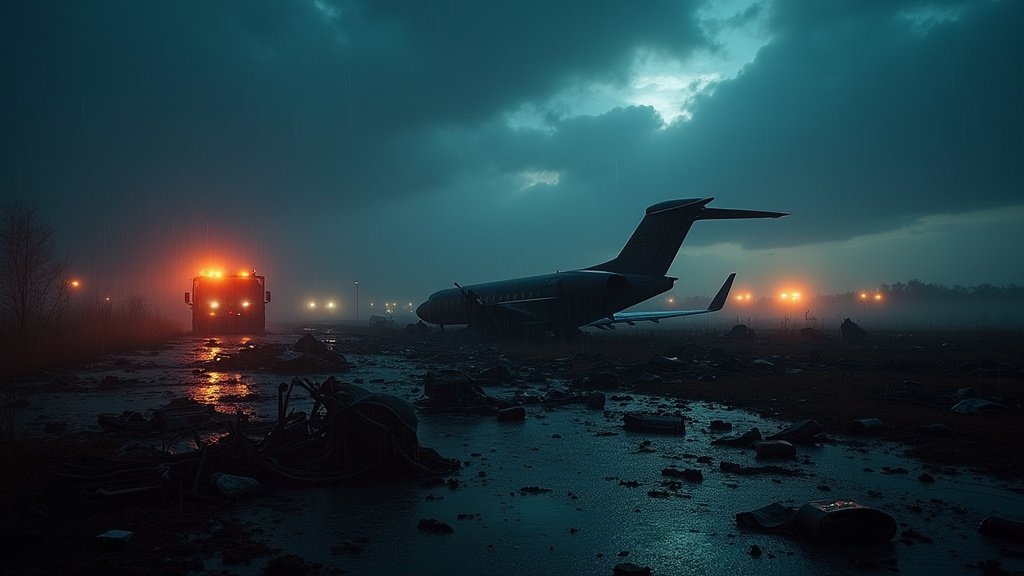
The Dassault Falcon 50 business jet took off around 8:30 PM local time, carrying five Libyan military officials and three crew members. Soon after departure, contact was lost after the aircraft reported an emergency, citing an electrical malfunction and requesting an emergency landing. Turkish air traffic control rerouted the jet, and preparations for an urgent landing began. However, the plane disappeared from radar as it began its descent. The wreckage was later found scattered near Kesikkavak village in the Haymana district, south of Ankara, following the devastating Libyan Military Chief Crash. There were no survivors.
Honoring the Fallen
Among the eight victims of the Libyan Military Chief Crash was General al-Haddad, whose death is a profound loss for Libya as he was a central figure in military unification. Also killed were four other senior officers: General Al-Fitouri Ghraibil, who led Libya’s ground forces; Brigadier General Mahmoud Al-Qatawi, head of the military manufacturing authority; Mohammed Al-Asawi Diab, an adviser; and military photographer Mohammed Omar Ahmed Mahjoub. The identities of the three crew members were confirmed, including French nationals and possibly a Greek flight attendant, whose service was also tragically cut short. Libya declared a three-day period of national mourning, with flags flying at half-staff as the nation mourned its fallen leaders after the Libyan Military Chief Crash.
The Ongoing Investigation into the Libyan Military Chief Crash
Turkish authorities launched an immediate investigation, with a joint probe with Libya now underway. The Chief Public Prosecutor’s Office in Ankara is leading the case, with several prosecutors examining every detail, including pilot conditions and technical fitness. Air traffic recordings and maintenance records are under scrutiny as investigators look for potential structural failures or design flaws contributing to the Libyan Military Chief Crash. The recovery effort was challenging, with wreckage spread over three square kilometers, and heavy rain and fog complicating operations. Search teams successfully recovered the black boxes, crucial for understanding the crash, and these recorders were sent to the United Kingdom for a neutral, expert analysis. Germany was initially considered but cited a lack of technical capability for this aircraft model. Libya sent a delegation to Ankara to cooperate closely with Turkish investigators, emphasizing information sharing and coordination. DNA analysis is also being conducted to aid in the precise identification of victims. The investigation seeks to determine the exact cause of the Libyan Military Chief Crash with transparency and accountability.
A Strategic Partnership
Libya’s internal situation remains complex, with the country divided since 2011 by rival administrations and armed groups. Turkey has been a key supporter of the Tripoli-based government, and the visit by General al-Haddad occurred just before a critical vote extending Turkey’s troop mandate in Libya, highlighting deep strategic ties. The Libyan Military Chief Crash occurred during this sensitive period. While some reports suggested potential links to Greece, officials urge against politicizing the incident, focusing instead on the humanitarian and technical aspects. Analysts suggest the crash will not harm Turkish-Libyan relations, which are described as growing and based on shared interests. Political and military cooperation is expected to continue, despite the tragic Libyan Military Chief Crash.
Conclusion
This recent Libyan Military Chief Crash serves as a somber reminder of aviation risks. The loss of General al-Haddad and his delegation is significant, impacting Libya’s military leadership and ongoing unification efforts. The investigation continues diligently, with Turkish and Libyan authorities working together. The findings from the black box analysis of the Libyan Military Chief Crash are awaited, as these results will shed light on the cause and help prevent future tragedies. This news remains a featured story, underscoring its importance, and the search for answers regarding the Libyan Military Chief Crash is paramount for all involved.

Related Posts