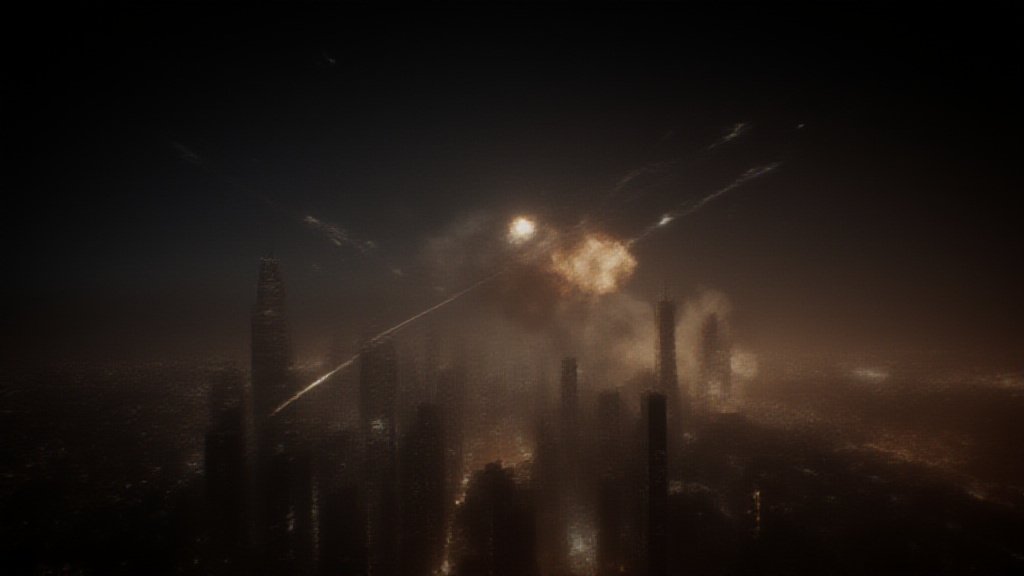
Middle East on Edge: Iran Launches Widespread Missile and Drone Attacks Amid Escalating Regional Conflict
Middle East tensions are soaring. Iran launched missile and drone attacks. These strikes hit targets across the Gulf region. Recent news reports confirm this escalation. Several nations reported incoming threats. Their air defense systems activated. This raises global fears. A wider regional conflict looms. Security analysts express concern. They warn of global market instability.
The attacks occurred on Sunday. Saudi Arabia reported new assaults. The United Arab Emirates (UAE) also faced threats. Qatar confirmed incoming missiles and drones. Bahrain’s capital Manama heard explosions. Kuwait’s government reported an incident. A Kuwaiti office block caught fire. This followed an attack by Iranian drones. The UAE’s defense ministry responded. It stated they intercepted threats. They acted against Iranian aggression. The UAE called it brutal and unjustified. More than 1,400 missiles and drones targeted infrastructure. Civilian sites were hit. This resulted in civilian casualties.
Explosions were heard in Dubai. This happened as diplomats discussed Iran’s attacks. Loud blasts echoed in Bahrain’s capital. Iran’s strikes hit fuel tanks. Kuwait’s international airport was targeted. A desalination plant in Bahrain sustained damage. Bahrain authorities reported injuries. A university building also suffered damage. Missile fragments fell after interception. A maritime incident occurred. A UAE-flagged tugboat sank. It sank after an explosion in the Strait of Hormuz. Seven crew members were aboard. Four survived. Three Indonesian nationals went missing.
Iran’s President Masoud Pezeshkian made statements. He emphasized friendly relations. He apologized for recent harm. He pledged to halt strikes. This would happen unless Iran faced an attack. However, hard-liners asserted a different view. They stated the war strategy would not change. This revealed a rift. Some leaders sought de-escalation. Others remained committed to conflict. Conflicting statements emerged. These came from Iran’s leadership council. Supreme Leader Ayatollah Ali Khamenei was killed earlier. This happened in joint US-Israeli airstrikes.
The United States and Israel had initiated strikes. These began on February 28, 2026. They targeted Iranian leadership and infrastructure. Iran responded with widespread attacks. These struck Israel and US interests. They also hit regional allies. Iran’s actions were described as reckless. They violated state sovereignty. They threatened regional stability. The targeting of civilians was condemned. It was called destabilizing behavior. Nations affirmed their right to self-defense. They commended air defense cooperation. This cooperation prevented greater loss.
Iran’s missile program is extensive. It dates back to the monarchy. It developed significantly after the 1979 revolution. Missiles became a critical tool. They served offensive and defensive roles. Iran has developed various missile types. These include Scud variants and Shahab missiles. Recent developments show greater range. They also show improved accuracy. Iran has fired missiles during past conflicts. This includes the war with Iraq. It also targeted ISIS in Syria.
The Strait of Hormuz is vital. It is a critical energy chokepoint. Nearly 20 million barrels of oil flow daily. This is about 20% of world supply. Any disruption has global impact. Attacks have affected shipping. This brought maritime traffic to a near standstill. Oil and LNG exports halted. Global oil prices surged. Brent crude surpassed $92 per barrel. Prices rose 28% in a week. Further disruptions could push prices higher. Markets priced in some risk. But the full consequences remain uncertain.
Energy markets reacted sharply. Natural gas prices rose over 40%. Major energy importers face higher costs. This includes India and China. Their trade deficits could widen. Inflationary pressures might intensify. Global economic stability is at risk. Economists warn of an energy-driven shock. This could push up inflation. It might also slow growth. The conflict’s duration is key. Short conflicts might limit damage. Prolonged war risks a supply shock. Oil prices could exceed $100 per barrel. This could lead to stagflation.
Shipping routes face pressure. The cost of shipping has increased. Several tanker spot prices quadrupled. Many ships remain anchored. They await safer passage. Storage management is critical. Product traders see rising fuel costs. Consumers face higher pump prices. Airfares will also increase. Policymakers consider strategic reserve releases. International coordination is essential.
The attacks targeted civilian sites. This includes residential areas. It also includes airports and hotels. Such actions endanger innocent lives. The UN has expressed concerns. They deplore military strikes. They call for restraint. Civilians bear the ultimate price. Bombs and missiles cause misery. They do not resolve differences.
Key individuals involved include Iranian President Masoud Pezeshkian. He has spoken of de-escalation. However, hard-liners maintain a different stance. US and Israeli leadership also initiated strikes. This has intensified the conflict. Multiple countries reported intercepting Iranian missiles. These include Saudi Arabia, UAE, Qatar, and Bahrain.
The background includes years of tension. This involves Iran’s nuclear program. It also involves its ballistic missiles. Its regional military reach is a factor. Attempts to revive a nuclear deal failed. Iran’s position was weakened. Sanctions, protests, and past conflicts contributed. This created an opportunity for military action.
The implications are far-reaching. Global oil markets are volatile. Energy security is a major concern. International diplomacy faces challenges. Regional stability is severely threatened. Gulf states are drawn into the conflict. They are reassessing their interests. Some are pushed closer to Israel and the US. Military spending is expected to surge. Economic transformation programs face risks.
This recent news highlights a dangerous escalation. Iran’s missile attacks have broadened the conflict. They have drawn in multiple nations. The regional and global consequences are significant. The situation remains highly volatile. Future developments will shape regional security. They will also impact global markets. This featured news underscores ongoing instability.

Related Posts