Indian Tejas Jet Crashes During Dubai Airshow, Pilot Killed: Investigation Launched Amid Safety Questions
Indian Tejas Fighter Jet Crashes During Dubai Airshow, Pilot Fatalities Confirmed
Dubai, UAE – November 22, 2025 – A tragic incident cast a somber shadow over the final day of the Dubai Airshow today, as an Indian Air Force (IAF) Tejas Light Combat Aircraft (LCA) crashed during an aerial display at Al Maktoum International Airport. The pilot, Wing Commander Namansh Syal, sustained fatal injuries in the accident, the IAF confirmed, marking a significant Tejas Jet Crash event. This devastating Tejas Jet Crash has immediate implications for the aircraft’s future.
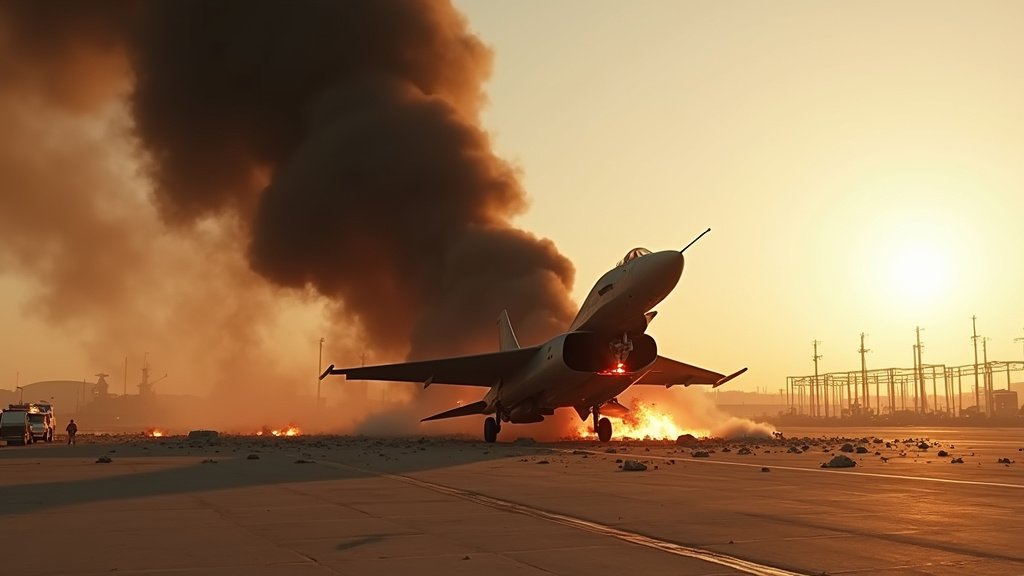
The devastating crash occurred around 2:10 PM local time. Eyewitnesses reported that the Tejas, a 4.5-generation multirole fighter developed by Hindustan Aeronautics Limited (HAL), was performing a low-altitude maneuver when it lost control and nosedived towards the ground, erupting in a massive fireball. Thick black smoke billowed from the crash site, prompting immediate response from emergency services. The aerial displays were temporarily halted as rescue operations commenced, and visitors were moved back to exhibition zones following the Tejas Jet Crash.
A Brave Pilot Lost in the Tejas Jet Crash
Wing Commander Namansh Syal, 34, was a distinguished officer from Kangra district in Himachal Pradesh. He is survived by his wife, who is also an IAF officer, their six-year-old daughter, and his parents. Syal had a notable career, having flown MiG-21s and Sukhoi Su-30 MKIs before transitioning to the Tejas program. Relatives described him as humble, courageous, and a seasoned pilot expecting a promotion. His tragic death has sent waves of grief through his hometown and across India, with leaders from various political spectrums offering condolences for the IAF pilot death.
Safety and Scrutiny Intensify After Tejas Jet Crash
This incident marks the second crash involving a Tejas aircraft in less than two years, raising significant questions about the fighter jet’s fighter jet safety record, particularly concerning high-performance aerobatic maneuvers. The first crash occurred in March 2024 near Jaisalmer, Rajasthan, when a Tejas trainer variant went down, though the pilot ejected safely. Initial reports from that incident attributed the cause to suspected engine seizure, possibly due to an oil pump malfunction, a potential Tejas aircraft failure. The Dubai crash, occurring during a public demonstration, has intensified scrutiny on flight safety protocols and decision-making under performance pressure following this Tejas Jet Crash.
The IAF has immediately constituted a Court of Inquiry (CoI) to thoroughly investigate the factors that led to the accident. Potential causes under examination include mechanical failure, pilot error, or anomalies in the flight control system. Officials have not yet released preliminary findings, and the IAF has not publicly attributed the failure to any specific system in this HAL Tejas investigation.
Implications for India’s Defense Ambitions After Tejas Jet Crash
The Tejas is a cornerstone of India’s “Make in India” defense manufacturing initiative and a key component of its strategy to bolster its air force and reduce reliance on foreign suppliers. The aircraft is also being heavily promoted for export. This high-visibility crash on an international stage is expected to have repercussions for India’s defense export concerns. Potential buyers may pause or reconsider deals, especially given the competitive global defense market where perception and a proven safety record are crucial. Analysts suggest that rivals may use this incident to sow doubt among prospective customers, impacting confidence in India’s indigenous defense capabilities following the Indian Tejas crash.
Hindustan Aeronautics Limited (HAL), the manufacturer, expressed deep sorrow and pledged full cooperation with the investigation into the Tejas Jet Crash. The company is under pressure to meet its delivery promises for both domestic orders, including a recent deal for 97 additional Tejas aircraft, and potential international sales.
Aircraft Background
The HAL Tejas is a 4.5-generation, single-engine, delta-wing light combat aircraft designed for multirole capabilities, including air-defense and ground-attack missions. It features advanced avionics, composite structures, and a fly-by-wire flight control system. The Tejas Mk1A, an advanced variant, incorporates an AESA radar, an electronic warfare suite, and other upgrades. The aircraft involved in the crash was reportedly powered by a General Electric F404-series engine, the same type used in many other international fighter jets. Despite its advanced features, the program has faced delays, including in engine deliveries and overall production timelines. HAL’s own technical specifications previously highlighted the aircraft’s “remarkable achievement of accident-free flying” prior to these incidents and the recent aerobatic display crash.
The Dubai Airshow Context and Tejas Jet Crash
The Dubai Airshow is a premier global event for the aerospace and defense industry, attracting manufacturers, military delegations, and potential buyers from around the world. The presence of the Tejas was intended to showcase India’s growing prowess in indigenous defense technology. However, the tragic crash has overshadowed the event, underscoring the inherent risks associated with high-performance aerial demonstrations. The organizers confirmed the fatal nature of the incident and extended their condolences to the IAF and the pilot’s family following the Tejas Jet Crash, which has been described as an unfortunate Dubai Airshow accident.
The investigation into the cause of the crash is ongoing and will be crucial in determining the future trajectory of the Tejas program, its safety reputation, and India’s standing in the global defense export market. The outcome will likely influence not only potential buyers but also the ongoing development and operational strategies for India’s indigenous fighter jet, especially in light of this significant Tejas Jet Crash.

Related Posts