Tragedy Strikes Thailand: Crane Collapse on High-Speed Rail Project Kills 32, Injures Scores
A devastating Thailand Crane Collapse occurred on Wednesday, January 14, 2026, when a construction crane collapsed onto a moving passenger train, killing at least 32 people and injuring many others. The incident took place in Nakhon Ratchasima province, about 230 kilometers northeast of Bangkok, marking a significant Thailand Crane Collapse event. This catastrophic Thailand Crane Collapse has sent shockwaves across the region.
Consequences of the Thailand Crane Collapse
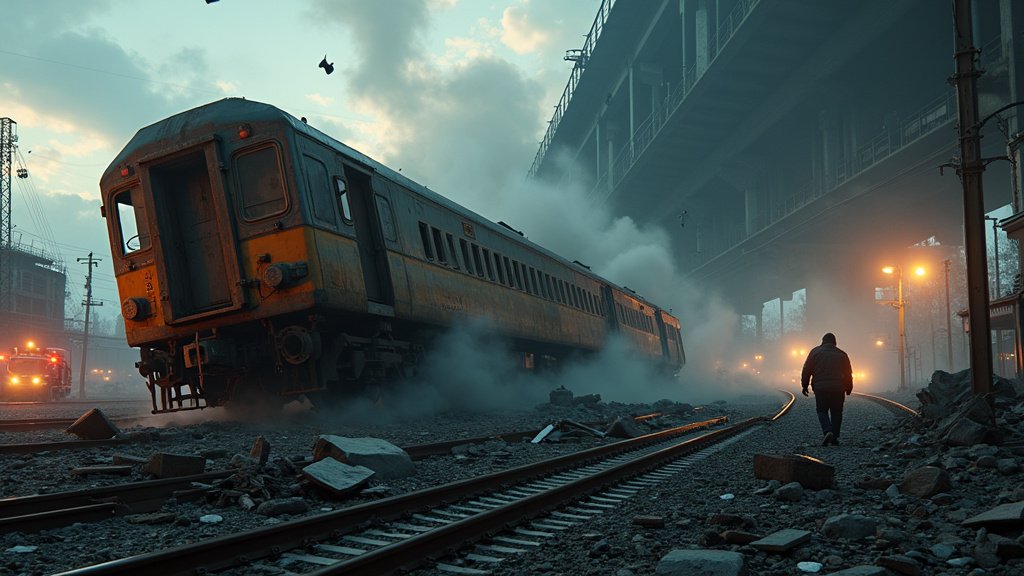
The train, en route from Bangkok to Ubon Ratchathani province with 195 passengers and staff, was struck by the collapsing crane, impacting two of its carriages and leading to a fiery derailment. The force of the Thailand Crane Collapse was so immense that it sliced the second carriage in half. Rescue efforts were extensive as many passengers were trapped within the wreckage. The ensuing fire intensified the danger, making escape perilous. The train’s electric doors, which could not be opened manually, further complicated rescue operations. Rescuers utilized heavy equipment to extract trapped individuals, while paramedics provided immediate medical attention. The scene was one of devastation, with mangled carriages overturned and smoke billowing from the wreckage, a direct result of the Thailand Crane Collapse.
High-Speed Rail Project Linked to the Construction Site Tragedy
This tragic event is directly linked to a high-speed rail project, a significant infrastructure undertaking backed by China with an estimated cost of $5.4 billion. This ambitious project, part of China’s Belt and Road Initiative, aims to connect Bangkok to Kunming, China, via Laos, and was slated for completion by 2028. The section where the crane fell is integral to this project, designed to modernize Thailand’s rail network and enhance regional connectivity with faster, Chinese-made trains. The Thailand Crane Collapse happened on an elevated section of this project, where a crane was lifting a concrete slab. The crane’s support base, weighing between 20 to 30 tons, gave way and landed directly on the train traveling at approximately 120 km/h. Several other heavy construction materials also fell during the Thailand Crane Collapse. The crane was operated by Italian-Thai Development (ITD), a major construction firm responsible for this segment of the project. Engineering consultants have pinpointed ITD as solely responsible for this Construction Site Tragedy. The elevated structure was erected directly above the existing rail line, making the Thailand Crane Collapse a direct impact on public transport.
Previous Incidents and Thailand Safety Concerns
This accident has intensified existing Thailand Safety Concerns surrounding industrial and construction practices. Italian-Thai Development has a documented history of incidents, including a building collapse in Bangkok in March 2025 that killed approximately 90 people, leading to indictments for negligence although trials are pending. In March 2025, another ITD crane collapsed at a highway construction site, resulting in five fatalities. Prior to this, in 2017, an ITD crane fell during a Bangkok rail project, killing three construction workers. Adding to the grim record, a tunnel on this same high-speed rail route collapsed in August 2024, killing three workers, with heavy rainfall suspected as a cause. The recent Thailand Crane Collapse has fueled public outrage, with widespread calls for stricter regulations and a blacklist for companies with repeated safety violations. The Thai Prime Minister has stressed accountability, attributing such accidents to negligence, skipped steps, or improper materials, and has ordered a full investigation into the Thailand Crane Collapse.
Ongoing Investigation and Aftermath of the Thailand Crane Collapse
An immediate and thorough investigation into the Thailand Crane Collapse has been launched by authorities to determine the exact cause and assign accountability. The Transport Minister has mandated a comprehensive inquiry involving the State Railway of Thailand, with a fact-finding committee expected to deliver its findings within 15 days. Project supervisors will be held responsible for the failures leading to the Thailand Crane Collapse. The accident has caused significant disruption, with the main rail line to the northeast blocked indefinitely, necessitating the rerouting of numerous trains. Italian-Thai Development has issued a statement expressing regret, extending condolences, and pledging compensation to the victims’ families and coverage of medical expenses. The confirmed death toll stands at 32, with 66 injured, seven in critical condition, and three passengers reported missing. The search and rescue operation, temporarily halted due to a loud noise from another crane that caused panic, has resumed after safety checks were conducted by engineers. This Infrastructure Project Failure underscores the critical need for stringent safety protocols in Thailand’s expanding rail infrastructure, particularly given the inherent risks associated with ongoing construction projects like the high-speed rail line. The latest Thailand Crane Collapse serves as a stark reminder of the necessity for robust safety oversight to ensure public safety and the well-being of workers.
Current Status and Future Outlook for Thailand’s Infrastructure
The investigation into the Thailand Crane Collapse is actively progressing, with authorities meticulously examining all contributing factors, including structural integrity and safety procedures. The Thai government is planning to implement more stringent measures to avert future tragedies. The timeline for the high-speed rail project, an ambitious endeavor that has now experienced a significant High-Speed Rail Disaster, may be impacted as the focus shifts to recovery efforts and providing aid to victims and their families. The nation mourns the lives lost and hopes for a swift resolution to the aftermath of the Thailand Crane Collapse. Stricter regulations governing construction sites are anticipated, with safety now paramount. This ongoing story, a prime example of an Infrastructure Project Failure, continues to be a prominent topic, highlighting critical infrastructure challenges and the urgent need for improved safety standards across the country. The country is undertaking a crucial review of its safety regulations, a necessary step to prevent similar events and guarantee public safety in the wake of this devastating Thailand Crane Collapse.

Related Posts