Trump’s ’58th Time’ India-Pakistan Peace Claim Sparks Congress Firestorm Amidst India’s Denial
Trump Repeats ‘Trump India Pakistan Peace’ Claim, Congress Unleashes Barrage of Criticism
Washington D.C. – In a recurring echo of past diplomatic assertions, former U.S. President Donald Trump has once again claimed credit for brokering peace between India and Pakistan, stating the two nuclear-armed neighbours “made peace” in May following his threats to withdraw trade deals. This latest pronouncement, delivered at the America Business Forum in Miami, marks the alleged 58th time Trump has reiterated this narrative regarding Trump India Pakistan relations, drawing a sharp and immediate rebuke from India’s opposition Congress party. The persistent claims come despite India’s consistent stance that any de-escalation was achieved through bilateral dialogue, not foreign intervention, challenging Trump India Pakistan peace claims.
The Recurring Trump India Pakistan Narrative: Trade Tariffs as Peace Tools
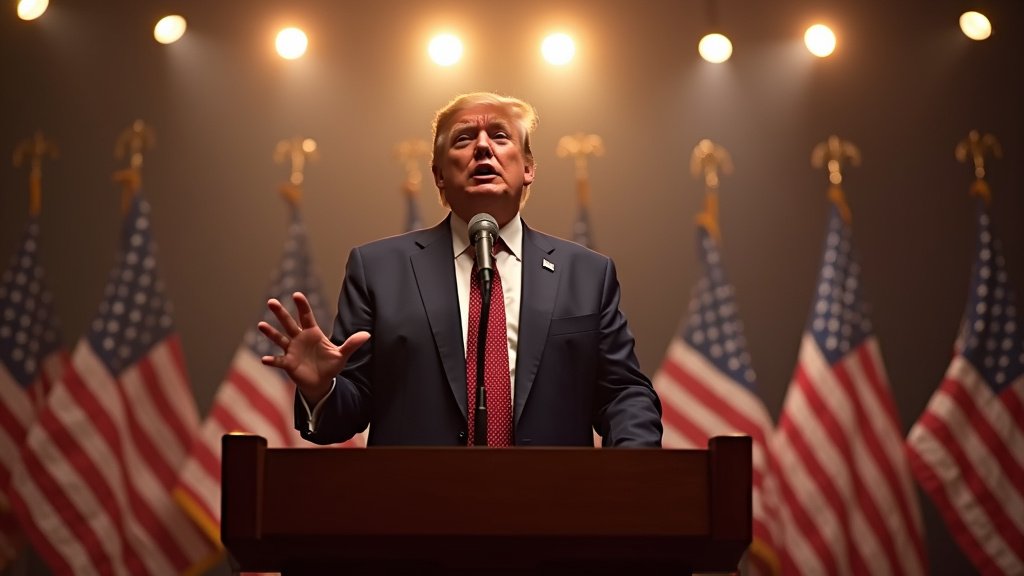
During his address in Miami, Trump painted a dramatic picture of the May 2025 military escalation between India and Pakistan, which followed India’s Operation Sindoor. This operation was launched in retaliation for the April 22 Pahalgam terror attack. According to Trump, he was in the midst of trade deal negotiations with both nations when he learned of the impending conflict. “I said, ‘I’m not going to make any trade deals with you guys unless you agree to peace’,” Trump recounted, asserting that his threat to impose tariffs and cease trade was the decisive factor in the Trump India Pakistan situation. He claimed that a day later, he received confirmation that peace had been established. “They stopped. Thank you. Let’s do trade. Isn’t that great? Tariffs did that. Without tariffs, that would have never happened,” he stated to applause, furthering his Trump diplomatic claims.
Trump’s account of the events has seen its details shift over time. While initially claiming five planes were shot down, he later revised the number to seven, and in his recent Miami address, he stated that “eight planes were shot down essentially”. He has also claimed that his administration resolved numerous other global conflicts through similar methods, often highlighting his ability to bring about peace through strength and economic leverage. Since the May 10 understanding that ended the cross-border skirmishes, Trump has repeatedly suggested he played a pivotal role in the Trump India Pakistan peace effort, with some reports noting he has made such claims over 60 times. This latest instance, labelled the “58th time” by Congress’s Jairam Ramesh, underscores the persistent nature of these assertions regarding Trump India Pakistan.
Congress Slams Modi Government’s Silence on Trump India Pakistan
The Indian National Congress has seized upon Trump’s repeated claims to criticize the Bharatiya Janata Party (BJP)-led central government, particularly Prime Minister Narendra Modi. Senior Congress leader Jairam Ramesh, who heads the party’s communications department, took to social media to express his party’s dismay regarding the Trump India Pakistan narrative. He highlighted the extraordinary reach of Trump’s pronouncements, which have been made from various international stages, questioning what he termed the “Modi government’s silence” on a matter he believes impacts India’s narrative control and sovereignty, linking it to Congress criticism Modi faces.
Ramesh sarcastically alluded to the close ties between the Indian Prime Minister and the former U.S. President, writing, “No wonder his good friend in New Delhi does not want to hug him any more”. He also questioned what Prime Minister Modi and External Affairs Minister S. Jaishankar had to say about Trump’s revelations concerning Trump India Pakistan, posing whether India’s security interests were “mortgaged” under U.S. “pressure”. The Congress has framed these repeated claims as an affront to India’s diplomatic standing, particularly given India’s consistent assertion that the ceasefire was a result of direct bilateral talks and not mediated by any third party, which is a cornerstone of India foreign policy. Ramesh’s critique implies that the government’s failure to firmly counter Trump’s narrative allows foreign powers to claim credit for India’s strategic decisions, despite the ongoing India Pakistan conflict.
India’s Firm Stance: Bilateralism Over Mediation on Trump India Pakistan
New Delhi has, on multiple occasions, explicitly denied any third-party involvement in facilitating the ceasefire with Pakistan. Official statements from India’s Ministry of External Affairs have consistently maintained that the cessation of hostilities was the outcome of direct communication between the Directors General of Military Operations (DGMOs) of India and Pakistan. India’s position has always been that issues with Pakistan are to be resolved bilaterally, a principle enshrined in agreements like the Simla Agreement, a key aspect of India foreign policy and handling the India Pakistan conflict.
During previous instances where Trump claimed credit, Indian officials, including Foreign Secretary Vikram Misri, had clarified that while leaders from both nations were in touch, there were no discussions concerning trade deals or U.S. mediation regarding Trump India Pakistan. The Indian government has emphasized that its actions during the May 2025 standoff were measured, precise, and non-escalatory, aimed solely at targeting terror infrastructure, and that any aggression from Pakistan would be met with a stronger response. This clear articulation of India’s foreign policy approach stands in stark contrast to Trump’s narrative, impacting discussions of Trump India Pakistan peace.
A Pattern of Trump India Pakistan Claims and Contrasting Realities
Donald Trump’s tendency to claim credit for resolving international conflicts, particularly the India-Pakistan dispute, is a well-documented aspect of his presidency and post-presidency. His strategy often involved leveraging trade and economic threats, a theme that resonates with his broader “America First” policy and his approach to Trump trade deals. The inclusion of the India-Pakistan conflict within a list of ‘settled’ wars, alongside others like Kosovo-Serbia and Egypt-Ethiopia, underscores his persistent view of his own diplomatic prowess, often sidelining the roles of other nations or established international bodies like the United Nations and any potential bilateral dialogue.
The current geopolitical discourse sees the U.S. navigating complex trade relations, with Trump’s administration previously imposing tariffs on India. This backdrop of trade friction and differing approaches to international diplomacy colours the ongoing debate surrounding Trump India Pakistan. While Trump continues to promote his version of events, India remains steadfast in its commitment to bilateral engagement and its prerogative in managing its security and foreign policy. The Congress party’s vocal criticism highlights the political implications within India, as it questions the narrative being projected on the international stage and the perceived silence of its own leadership in the face of such foreign claims, especially concerning Congress criticism Modi receives.
As this news continues to unfold, the contrasting perspectives on the resolution of the India-Pakistan tensions — one emphasizing U.S. intervention via trade threats, the other highlighting direct bilateral diplomacy and bilateral dialogue — remain a focal point. The latest comments from Trump, amplified by the Congress’s sharp rejoinders, ensure this contentious issue remains in the spotlight, prompting ongoing discussions about sovereignty, narrative control, and the true nature of international peacemaking in the context of Trump India Pakistan peace efforts.

Related Posts