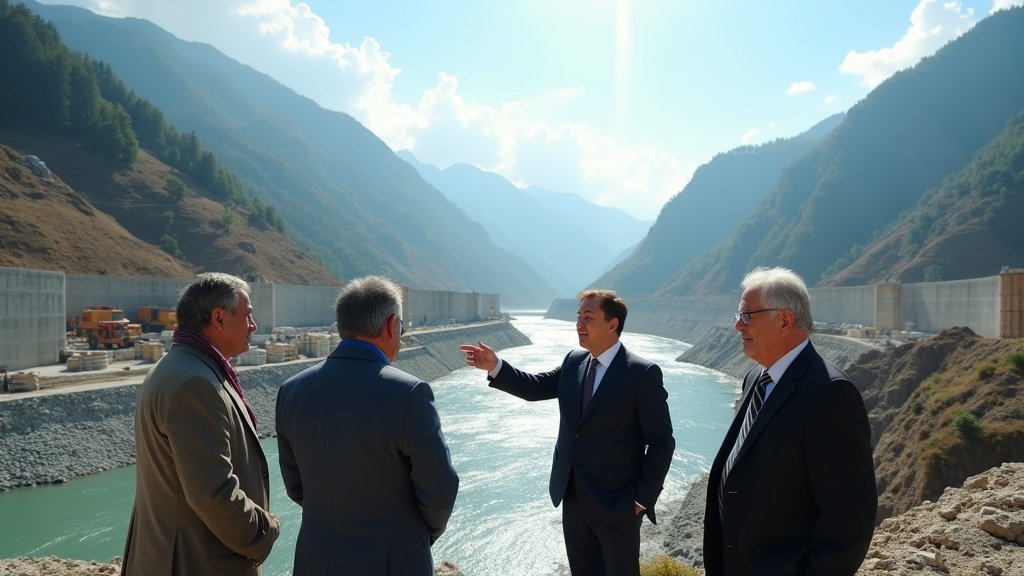
World Bank South Asia VP Johannes Zutt Concludes Bhutan Visit, Reaffirming Strong Support for Hydropower and Development
THIMPHU, Bhutan – November 09, 2025 – In a significant demonstration of continued commitment, Johannes Zutt, the World Bank Vice President for South Asia, has concluded a 5-day visit to Bhutan, reinforcing the World Bank Group’s robust partnership and expanding support for the Kingdom’s ambitious development agenda. This recent visit underscored the enduring collaboration between the international financial institution and the Himalayan nation, with a particular focus on critical infrastructure projects and broader economic strategies, solidifying the relationship of the World Bank Bhutan.
World Bank Bhutan: A Partnership Deepens
Johannes Zutt, who assumed his role as World Bank Vice President for South Asia on July 1, 2025, made his inaugural visit to Bhutan in this capacity. His presence signifies a renewed focus on the region and a personal commitment to Bhutan’s unique development path. Zutt, a Dutch national with prior experience as the World Bank’s Country Director for Bangladesh, Bhutan, and Nepal from 2013 to 2015, managed key relations with countries including Bhutan, overseeing a substantial portfolio of projects and financial resources. His current mandate covers an extensive $39 billion portfolio across Bangladesh, Bhutan, India, Maldives, Nepal, and Sri Lanka, emphasizing job creation, climate resilience, human capital development, and private capital mobilization, all areas where the World Bank Bhutan actively engages. The World Bank Bhutan aims to foster economic growth Bhutan.
During his visit, Zutt held high-level meetings that highlighted the depth of engagement. He met with His Majesty King Jigme Khesar Namgyel Wangchuck and His Majesty the Fourth King Jigme Singye Wangchuck, reaffirming the World Bank Group’s steadfast support for Bhutan’s economic and development aspirations. Discussions also took place with His Excellency Prime Minister Tshering Tobgay and the Honorable Minister of Finance Lekey Dorji, delving into the nation’s progress and future strategic directions, crucial for the Bhutan development agenda.
Spotlight on Hydropower: The Dorjilung Project and World Bank Bhutan Support
A key highlight of Vice President Zutt’s visit was his tour of the proposed 1,125 MW Dorjilung Hydroelectric Power Project in eastern Bhutan. This colossal undertaking is poised to be Bhutan’s largest hydropower initiative to date, developed under an innovative Public-Private Partnership (PPP) model. The Dorjilung project is central to Bhutan’s strategy for bolstering energy security, driving economic growth, and generating much-needed employment opportunities, with significant backing from the World Bank Bhutan.
Representing a strategic collaboration, the Dorjilung project involves significant private sector investment, with Indian conglomerate Tata Power Company Limited joining Bhutan’s Druk Green Power Corporation (DGPC) as a joint venture partner. This partnership is expected to not only facilitate financing from Indian institutions but also streamline electricity exports. The project’s estimated cost is around $1.7 billion. The World Bank Group, through its various arms—the International Development Association (IDA), the International Bank for Reconstruction and Development (IBRD), and the International Finance Corporation (IFC)—is instrumental in mobilizing the necessary resources to support its development. Zutt remarked that the Dorjilung hydropower project “could be a game-changer, bringing together public and private investment to deliver clean energy, create jobs, and strengthen Bhutan’s fiscal resilience through energy exports.” The World Bank Bhutan sees hydropower development as a key pillar for progress.
World Bank Bhutan’s Multifaceted Support for Bhutan Development Agenda
The World Bank Group’s engagement in Bhutan extends beyond individual projects, encompassing a broad strategy to foster inclusive and sustainable development. This is particularly evident in the newly discussed Country Partnership Framework (CPF) for Bhutan, covering fiscal years 2025-2029. This framework, aligned with Bhutan’s 13th Five Year Plan, prioritizes accelerating economic growth and job creation while safeguarding the nation’s unique cultural and natural heritage, a core tenet of the World Bank Bhutan’s strategy.
A significant financial package of $300 million has been approved to enhance regional trade and connectivity, further bolstering Bhutan’s economic potential. The World Bank Group’s support is designed to increase private investment, enhance climate resilience, and build robust infrastructure. This comprehensive approach aims to unlock private sector potential, mobilize private capital, and attract foreign direct investment, with a particular focus on empowering women and young people. The institution’s commitment is also reflected in its lending terms; Bhutan, as a Small States Exception recipient, is now eligible for IDA financing as a mix of grants and credits, showcasing the tailored approach of the World Bank Bhutan.
High-Level Dialogue and Vision: World Bank Bhutan’s Role
Johannes Zutt’s meetings with Bhutan’s King and Prime Minister served to reaffirm the strong bilateral ties and the alignment of the World Bank’s strategic objectives with Bhutan’s national vision. These discussions likely covered progress on key development initiatives and the challenges ahead, including economic diversification and enhancing climate resilience, key areas of focus for the World Bank Bhutan. The World Bank’s continued support is critical for Bhutan as it aims to achieve upper-middle-income status by 2029, a goal actively supported by the World Bank Bhutan for economic growth Bhutan.
Beyond Development: Embracing Peace and Culture with World Bank Bhutan
A notable aspect of Zutt’s visit was his attendance at the Global Peace Prayer Festival 2025, held in Thimphu from November 4-17. This landmark spiritual gathering brought together Buddhist leaders, practitioners, and peace advocates from across the globe, fostering a collective aspiration for global peace and happiness. Bhutan, known for its philosophy of Gross National Happiness (GNH), provided a fitting venue for such an event, underscoring the nation’s commitment to holistic well-being, a philosophy that the World Bank Bhutan respects.
Bhutan’s Path to Prosperity and Resilience: Supported by World Bank Bhutan
Bhutan’s development trajectory is uniquely characterized by its commitment to Gross National Happiness, balancing economic growth with environmental conservation and cultural preservation. As the world’s first carbon-negative country, it faces the dual challenge of maintaining its environmental integrity while pursuing economic advancement and creating sufficient job opportunities for its growing youth population. Youth unemployment remains a concern, with previous reports indicating rates as high as 19 percent, an issue the World Bank Bhutan is actively addressing through job creation initiatives.
The World Bank’s strategy, particularly through its new Country Partnership Framework, directly addresses these challenges by focusing on job creation, economic diversification beyond hydropower, and building resilience against climate and disaster risks. The emphasis on attracting private investment and supporting sectors like renewable natural resources, agribusiness, tourism, and digital industries is crucial for diversifying the economy and creating quality employment, aligning with the broader goals of the Bhutan development agenda supported by the World Bank Bhutan.
Conclusion: A Strengthened World Bank Bhutan Partnership
Vice President Johannes Zutt’s visit to Bhutan serves as a powerful testament to the enduring and evolving partnership between the World Bank Group and the Kingdom. By reaffirming support for transformative projects like the Dorjilung hydropower initiative and aligning with Bhutan’s forward-looking development framework, the World Bank Group is poised to play a crucial role in supporting Bhutan’s journey towards sustained economic growth, enhanced energy security, and greater resilience. This featured news highlights a strengthened collaboration aimed at fostering prosperity while preserving Bhutan’s cherished values and pristine environment, embodying the mission of the World Bank Bhutan.

Related Posts