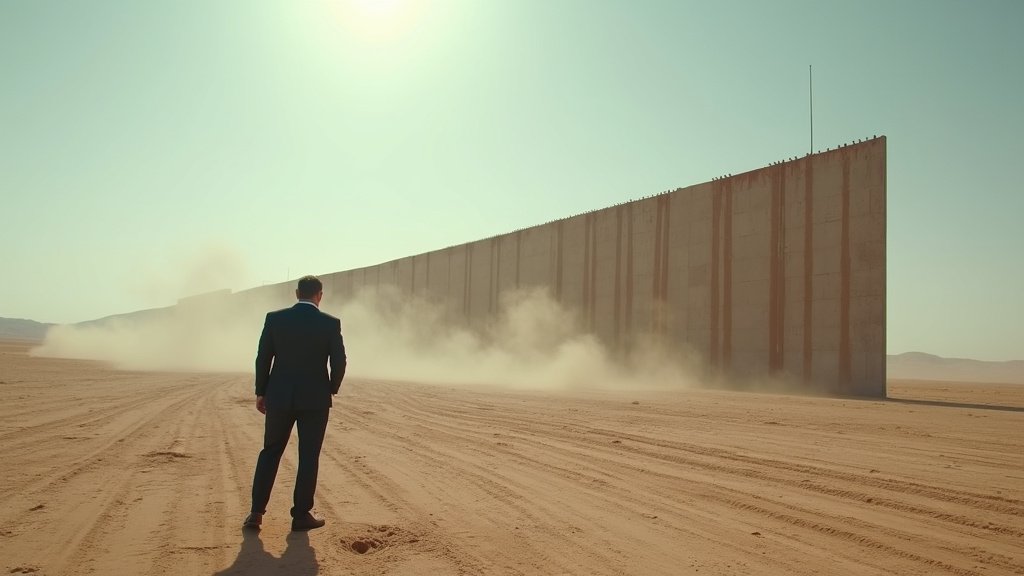
The 35-Day Government Shutdown: A Record-Breaking Standoff Over Border Wall Funding
The unprecedented 35-day Government Shutdown, the longest in the nation’s history at the time, began on December 22, 2018, and concluded on January 25, 2019. This prolonged funding lapse, a consequence of a bitter dispute over U.S.-Mexico border wall funding, impacted nearly a quarter of government operations, led to hundreds of thousands of federal worker furloughs, and inflicted an estimated $11 billion cost on the American economy. The Government Shutdown highlighted the significant consequences of legislative impasses.
The Government Shutdown Impasse Over Border Wall Funding
The core of the conflict during this significant Government Shutdown centered on President Trump’s demand for $5.7 billion to fund the construction of a wall along the U.S.-Mexico border. Democrats opposed this, proposing alternative border security measures. The legislative stalemate began after Congress failed to pass appropriations bills. President Trump refused to sign any appropriations bill lacking substantial funding for the border wall, igniting a protracted political battle, especially after Democrats gained a majority in the House of Representatives. This Government Shutdown was largely defined by this clash.
Key Figures and Failed Trump Shutdown Negotiations
President Trump adopted a firm position, declaring he would be “proud to shut down the government” for border security. This stance put him at odds with congressional leaders. While Republican leaders initially sought to pass bills without wall funding, they ultimately deferred to the President’s wishes. Democrats insisted that negotiations on border security could only resume once the government was reopened. Numerous high-stakes meetings and Trump shutdown negotiations failed to yield a resolution for weeks. The inability of key players to find common ground prolonged the Government Shutdown.
The Human Toll of the Government Shutdown: Federal Workers and Essential Services
The most immediate consequence of the Government Shutdown was its impact on federal employees. Approximately 800,000 federal workers were either furloughed or required to work without compensation. While a law guaranteed back pay, the interim period caused significant financial hardship for countless families, a direct result of the Government Shutdown. Essential services continued, but personnel worked without immediate paychecks. Federal contractors faced uncertainty, another repercussion of the Government Shutdown.
Economic Repercussions and Disrupted Services During the Government Shutdown
The extended funding lapse had a notable economic impact shutdown. The CBO estimated the Government Shutdown cost the economy at least $11 billion, with some analyses suggesting a permanent loss of $3 billion in GDP. This economic strain stemmed from lost federal worker pay and reduced confidence. The Government Shutdown also disrupted numerous services. National parks and federal museums closed, leading to lost revenue. The FDA suspended routine inspections. The IRS experienced backlogs. Air traffic control and TSA workers continued duties without pay, leading to widespread flight delays. Federal science agencies also felt the impact of this significant Government Shutdown.
Services That Remained Operational During the Government Shutdown
Despite the widespread disruptions of the Government Shutdown, many critical government functions continued uninterrupted. Programs authorized by permanent law, such as Social Security and Medicare benefits, were not affected. The U.S. Postal Service maintained operations. Military personnel remained on duty, though they did not receive their paychecks until the Government Shutdown‘s end.
The Resolution of the Government Shutdown and Lingering Effects
After weeks of deadlock during the Government Shutdown, it ended on January 25, 2019, when President Trump signed a short-term funding bill. This resolution did not fully satisfy the demand for wall funding but allowed negotiations to continue. Ultimately, subsequent legislation provided a significantly reduced amount for border fencing, falling far short of the initial request, marking a crucial outcome of the prolonged Government Shutdown.
The 35-day Government Shutdown served as a stark reminder of the significant disruptions that can occur when Congress and the President fail to agree on budgetary matters, particularly in the context of congressional funding lapse events. It highlighted the vulnerability of federal employees, the far-reaching economic consequences, and the impact on essential public services, making it a pivotal and costly event. This news remains a significant point of reference when discussing government funding negotiations and their implications, especially concerning the Government Shutdown.

Related Posts