South Korea Reaffirms Global Stance, Co-sponsors UN Resolution on North Korean Human Rights Abuses
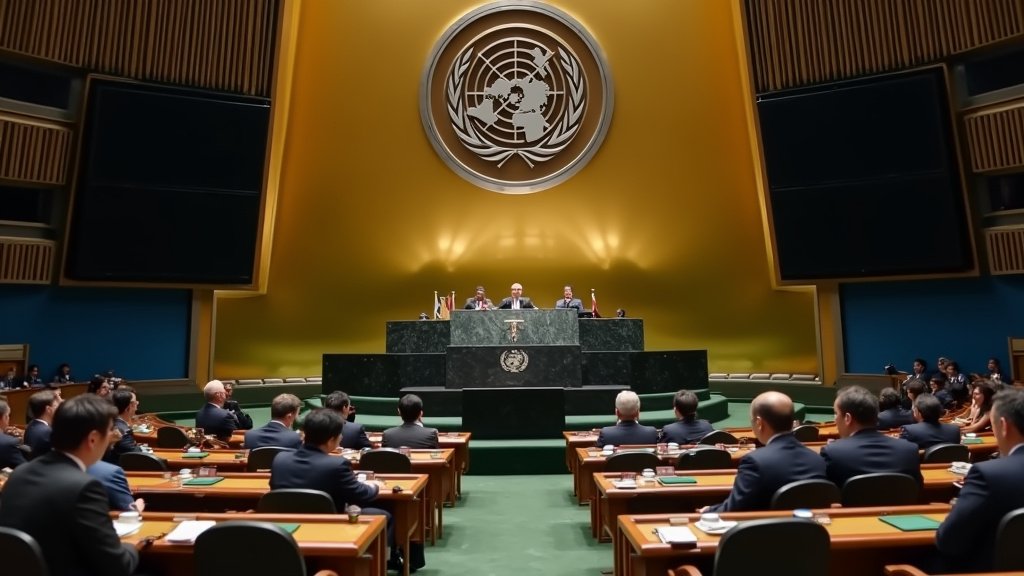
Seoul has once again thrown its support behind a United Nations resolution condemning the severe North Korean human rights situation, signaling a steadfast commitment to international principles. This move, confirmed by South Korea’s Ministry of Foreign Affairs, places the nation among 41 co-sponsoring member states of the annual UN General Assembly resolution concerning North Korean human rights. The resolution is set to be presented for final adoption by the General Assembly plenary in December.
A Continued Commitment to Universal Values and North Korean Human Rights
This decision by the current Lee Jae Myung administration marks a continuation of Seoul’s policy, which resumed co-sponsorship of the resolution in 2023 under the previous Yoon Suk Yeol administration. South Korea had previously supported similar resolutions annually from 2008 to 2018, focusing on North Korean human rights. However, between 2019 and 2022, under the Moon Jae-in administration, Seoul opted not to co-sponsor, prioritizing inter-Korean relations and dialogue. The recent decision underscores the government’s view that addressing North Korean human rights issues is a matter of universal values and principles, aiming for tangible improvements for its citizens and tackling DPRK human rights violations.
Deep Concerns Over Grave Violations and North Korean Human Rights Abuses
The UN resolution expresses profound concern over the “systematic, widespread and grave violations of human rights” in North Korea, highlighting a pervasive culture of impunity and a significant lack of accountability concerning North Korean human rights. Specific condemnations include the Democratic People’s Republic of Korea’s (DPRK) diversion of substantial resources towards its military spending and illegal weapons programs at the expense of its citizens’ welfare. Reports indicate continued operation of political prison camps, extensive forced labor, arbitrary detentions, and severe restrictions on freedoms of thought, conscience, religion, expression, and association, all indicative of severe human rights abuses.
A comprehensive report from the UN Human Rights Office, released in September 2025, concludes that North Korea’s human rights situation has not only failed to improve over the past decade but has, in many instances, degraded. This “lost decade” has brought increased suffering, repression, and fear to the population, with tightened state control and surveillance made possible by advancements in technology, further exacerbating the plight of North Korean human rights. The report also notes the ongoing fate of hundreds of thousands of disappeared individuals, including abducted foreign nationals, a key aspect of the DPRK human rights violations.
North Korea’s Persistent Opposition to UN Human Rights Resolutions
Pyongyang has consistently denounced these UN resolutions, viewing them as a politically motivated provocation and an infringement upon its sovereignty regarding North Korean human rights. North Korea maintains its narrative as a “socialist utopia” and has accused the UN and criticising nations of using human rights as a political weapon. The latest resolution also notes with concern the potential negative impact on the human rights situation, particularly for separated families, following North Korea’s January 2024 declaration that it would no longer pursue reunification with South Korea, a shift impacting South Korea policy.
Global Cooperation and Future Implications for North Korean Human Rights
South Korea’s renewed co-sponsorship positions it alongside other nations committed to international accountability for human rights abuses. This stance comes despite some speculation that the current administration, focused on dialogue with Pyongyang, might withhold support to avoid escalating tensions. Human rights organizations, including Human Rights Watch, had urged Seoul to take a principled stand on North Korean human rights. While the United States is not listed as a co-sponsor on this particular UN human rights resolution, South Korea’s participation reinforces the global community’s message demanding action from North Korea to improve its dire human rights record. The adoption of this resolution by the UN General Assembly signifies ongoing international pressure on Pyongyang to address the widespread suffering of its people, a crucial aspect of global news concerning the Korean Peninsula and international human rights law.


Related Posts