Seattle Festival Tragedy: 3 Killed, Manhunt Underway
A popular food festival in Seattle became the site of a horrifying act of violence Sunday evening, resulting in the deaths of three individuals and leaving at least four others critically wounded. The Seattle Police Department (SPD) has launched an intensive, city-wide manhunt to track down the suspects involved in the incident, which occurred amidst a crowded public gathering, shattering the sense of security at one of the city’s signature seasonal events.
Key Highlights
- Fatalities Confirmed: Three individuals have been confirmed dead at the scene following the gunfire, with four others transported to local hospitals with varying degrees of injury.
- Ongoing Manhunt: Law enforcement is currently pursuing multiple suspects, with specialized tactical units deployed across the city to secure the area and identify those responsible.
- Urgent Investigation: The Seattle Police Department is actively calling for any bystanders who may have captured video footage or photographs of the incident to come forward immediately to aid the investigation.
- Community Impact: The tragedy has sent shockwaves through the local community, raising immediate concerns regarding safety protocols at large-scale, open-air public events.
The Anatomy of a Public Tragedy and the Search for Justice
The tranquility of a Sunday evening in Seattle was abruptly shattered when gunfire erupted at a bustling food festival, a staple of the city’s summer calendar that draws thousands of residents and tourists alike. As families and friends gathered to enjoy local cuisine and entertainment, the atmosphere shifted in an instant from celebratory to catastrophic. Witnesses described a chaotic scene, with attendees scrambling for cover as multiple shots were fired, leading to a frantic mass exodus from the festival grounds.
The Immediate Law Enforcement Response
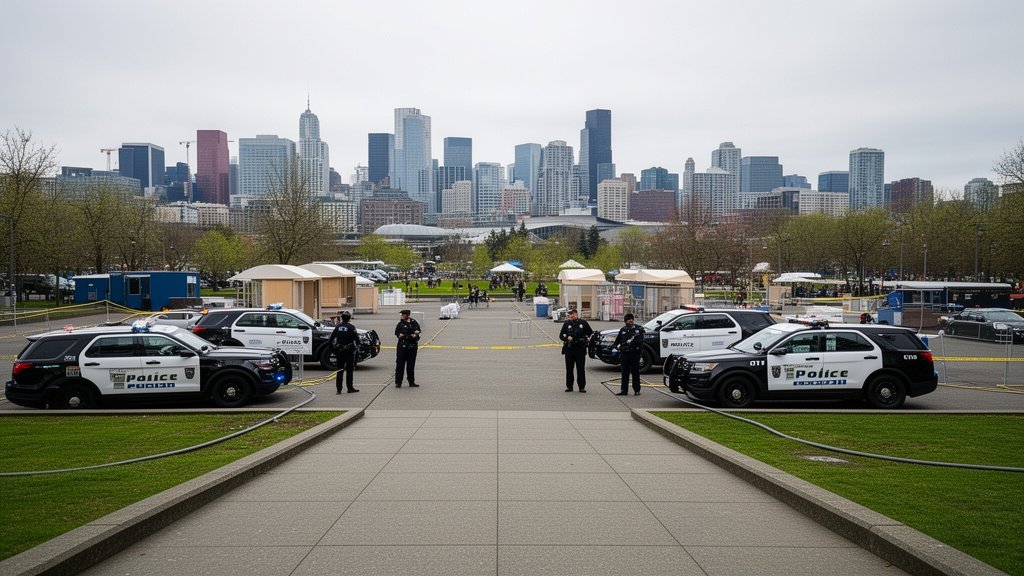
Following the first emergency calls, which flooded 911 dispatch centers, the Seattle Police Department mobilized an aggressive, multi-layered response. The priority was twofold: first, to secure the safety of the remaining attendees and clear the area for emergency medical services; and second, to identify and track the perpetrators. Tactical units, utilizing drones and K-9 search teams, have been scouring the vicinity, focusing on potential escape routes. The scale of the response reflects the gravity of the event, with local law enforcement coordinating with state and federal partners to cast a wide net across the metropolitan area.
Investigators are currently processing the scene, a labor-intensive task given the density of the crowd. Forensic teams are documenting the trajectory of rounds, collecting shell casings, and isolating digital evidence. One of the primary investigative challenges, police noted in a press briefing, is the ‘noise’ of the crowd. While many witnesses observed the immediate panic, distinct descriptions of the suspects remain fluid. The SPD has emphasized that the cooperation of the public is vital, urging anyone with cellphone footage to upload it to their secure evidence portal rather than circulating it on social media, where it could inadvertently compromise the investigation.
Secondary Angle: The Erosion of Safety in Public Spaces
This tragedy brings to the forefront a challenging conversation regarding the vulnerability of public, open-access spaces. For decades, the philosophy of urban planning has prioritized ‘open-city’ design, encouraging the free movement of people through plazas, parks, and event zones. However, incidents like this force a re-evaluation of the balance between openness and security. The challenge for city planners and law enforcement is to implement effective security measures—such as perimeter screenings or enhanced surveillance—without stifling the very atmosphere that makes these festivals attractive to the community. The psychological toll on the city cannot be overstated; when a space designated for leisure and community connection becomes a target, the social fabric of the city experiences a profound, lingering anxiety.
Secondary Angle: The Logistics of Urban Manhunts
Tracking suspects in a dense, high-traffic urban environment presents significant logistical hurdles for law enforcement. Unlike rural scenarios where tracking is terrain-based, an urban environment offers a plethora of ‘blind spots,’ public transit escape routes, and high-density residential areas where suspects can effectively hide in plain sight. Modern law enforcement now relies heavily on the integration of disparate data streams. Traffic camera networks, automated license plate readers, and the aggregation of private security camera footage are critical to reconstructing the suspects’ path before and after the event. The speed at which this digital net is cast often determines the difference between a swift apprehension and a cold case.
Secondary Angle: Economic and Cultural Fallout
Beyond the immediate tragedy, there is a tangible economic risk. Seattle’s festival season is a significant economic engine, driving revenue for local small businesses, artisans, and hospitality providers. When violent incidents occur at these venues, there is a measurable chilling effect on public participation in future events. Organizers face the dual pressure of managing higher insurance premiums and the necessity for increased security spending, which may, in turn, reduce the accessibility or profitability of these events. The long-term challenge for city officials is to restore public confidence, ensuring that the community feels safe enough to support the cultural life that sustains the city’s identity.
As the investigation continues, the focus remains on justice for the victims. The Seattle Police Department has reiterated its commitment to leaving no stone unturned, with Chief officials stating that the manhunt will continue unabated until those responsible are in custody. For now, the city remains on high alert, mourning the loss of three community members and hoping for the recovery of the wounded, while an entire region waits for answers to the question of why such an event was allowed to unfold.
FAQ: People Also Ask
Q: What is the current status of the manhunt for the suspects?
A: The Seattle Police Department has confirmed that the investigation is active and ongoing. Tactical teams are currently analyzing evidence and witness statements, and have issued a bulletin to local law enforcement agencies to assist in the search for the identified persons of interest.
Q: Should witnesses share video footage on social media?
A: Police strongly advise against sharing footage of the incident on social media platforms immediately. Instead, witnesses are urged to upload all photos and videos directly to the Seattle Police Department’s secure evidence submission portal, as posting publicly can jeopardize the integrity of the ongoing criminal investigation.
Q: Will the city cancel future food festivals due to this event?
A: City officials have stated that while they are reviewing safety protocols for all upcoming public gatherings, no blanket cancellations have been issued. A comprehensive safety audit will be conducted to determine how to better secure future events while maintaining the community-focused nature of these festivals.
Q: What can residents do to assist in the investigation?
A: Residents with any information, no matter how small or seemingly insignificant, are encouraged to contact the Seattle Police Department’s tip line. Even partial descriptions of individuals seen fleeing the area or suspicious activity observed prior to the shooting can be crucial to the investigation.


Related Posts