
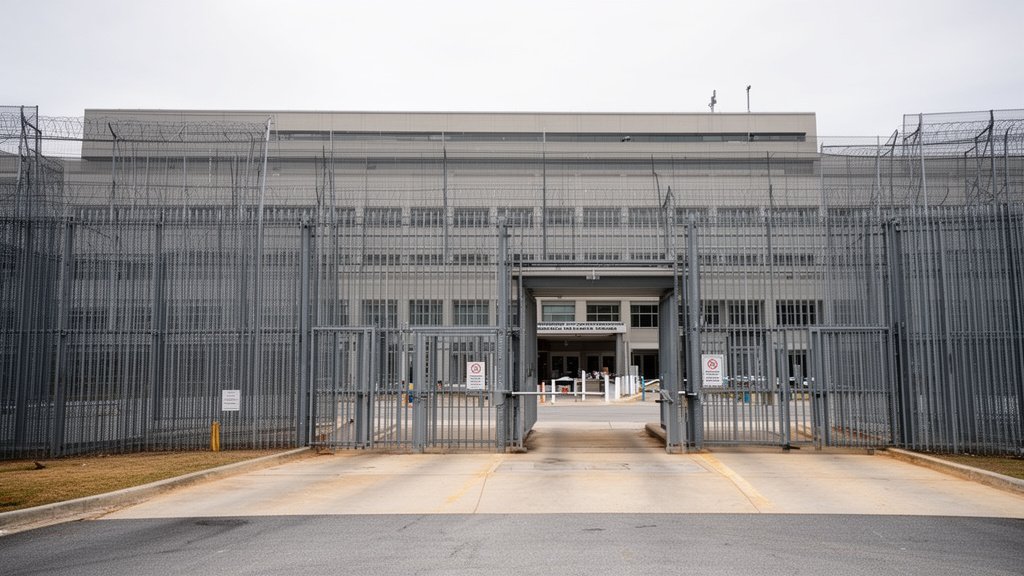
DHS Blasts ‘Rising Rhetoric’ After Atlanta ICE Attack
On October 20, 2026, the Department of Homeland Security (DHS) confirmed a security incident at an Immigration and Customs Enforcement (ICE) facility in Atlanta, Georgia. An individual attempted to firebomb the location using an improvised incendiary device. According to official reports, the device failed to breach the facility’s perimeter, resulting in no structural damage or injuries to personnel. The incident, however, has triggered a severe condemnation from DHS leadership, casting a spotlight on the volatile climate facing federal law enforcement officers across the United States.
The Incident and Immediate Response
The attack occurred during a time of heightened sensitivity regarding border security infrastructure. While the device did not detonate effectively enough to compromise the facility, federal authorities immediately cordoned off the area to conduct forensic analysis. The failure of the device to breach the perimeter has been cited by security analysts as a testament to recent upgrades in facility hardening, though the intent behind the act—to cause damage to a federal building—remains the focus of an ongoing federal investigation.
Secretary Markwayne Mullin, in an official statement released shortly after the site was secured, did not mince words. Mullin described the act as an “assault on the rule of law” and emphasized that such actions are not isolated events. The Secretary’s remarks were notable for their focus on the broader narrative, linking the specific incident in Atlanta to a documented statistical rise in assaults and threats directed against federal law enforcement personnel over the past twenty-four months.
Rhetoric and the Security Environment
A central theme in Secretary Mullin’s response was the correlation between public discourse and physical danger. The DHS has noted that the volume of violent rhetoric regarding federal agencies has reached levels not seen in previous years. This escalation is not merely digital; it is manifesting in tangible risks to the men and women tasked with enforcing federal immigration and security statutes.
Experts within the security community argue that when federal agencies become the primary focus of hyper-partisan rhetoric, the “gray zone” between political protest and criminal violence begins to blur. For agents stationed at facilities like the one in Atlanta, this means a daily increase in situational awareness requirements. The threat is no longer just potential; it is operational. The DHS is reportedly reviewing security protocols for all administrative and detention facilities in the Southeast to determine if further hardening or increased tactical presence is required to deter copycat attempts.
Statistical Trends and Agency Personnel Safety
The data cited by the Secretary’s office suggests a troubling trajectory. Assaults on federal law enforcement personnel—ranging from verbal threats to physical attacks and attempted destruction of property—have increased by a significant margin compared to the previous five-year average.
This trend poses a unique challenge for the Department of Homeland Security. Balancing the need for transparency and public accountability while ensuring the safety of personnel is a delicate act. When agents are viewed through a lens of extreme hostility, recruitment efforts and morale are naturally impacted. The Atlanta incident serves as a stark reminder that administrative facilities, often viewed as mundane bureaucratic hubs, are now viewed by extremists as viable targets for political expression through violence.
Strengthening Infrastructure and Deterrence
Following the October 20 incident, the discussion in Washington has shifted toward infrastructure resilience. Security experts emphasize that while the Atlanta facility held firm, a reliance on physical barriers is not a long-term solution. Comprehensive security requires a combination of intelligence gathering, inter-agency cooperation with local Atlanta law enforcement, and a concerted effort to de-escalate the rhetoric surrounding federal immigration enforcement.
As the investigation into the individual behind the attempted firebombing continues, DHS officials have promised a full prosecution to the furthest extent of the law. The message from the Secretary is clear: violence against federal property and personnel will be met with the full weight of federal resources. The challenge, however, will be maintaining this posture while navigating an increasingly polarized political landscape where federal agents are frequently caught in the crossfire of national debate.
FAQ: People Also Ask
What happened at the Atlanta ICE facility on October 20, 2026?
On October 20, 2026, an individual attempted to firebomb an ICE facility in Atlanta, Georgia. The improvised device failed to breach the perimeter of the facility, and there were no injuries or structural compromises reported. The incident is currently under investigation by federal authorities.
What was the response from DHS Secretary Markwayne Mullin?
Secretary Markwayne Mullin issued a strong, public condemnation of the attack. He linked the incident to a worrying statistical rise in assaults against federal law enforcement personnel and warned that toxic rhetoric directed at federal agencies is creating a dangerous, real-world environment for officers and staff.
Why are assaults on federal personnel increasing according to the DHS?
The Department of Homeland Security has linked the increase in threats and assaults to a sustained rise in intense, negative rhetoric regarding federal law enforcement and immigration agencies. This political climate, according to the agency, has emboldened individuals to transition from vocal opposition to acts of physical violence against federal infrastructure and employees.
Is the Atlanta facility currently secure?
Yes, following the attempted attack, the DHS confirmed that security protocols remained intact and the facility was secured. Federal law enforcement is continuing to monitor the site and has signaled that investigations are ongoing to ensure the safety of all personnel working at the location.


Related Posts


