U.S. Probes Iran-Linked Cyberattacks on Water Grids
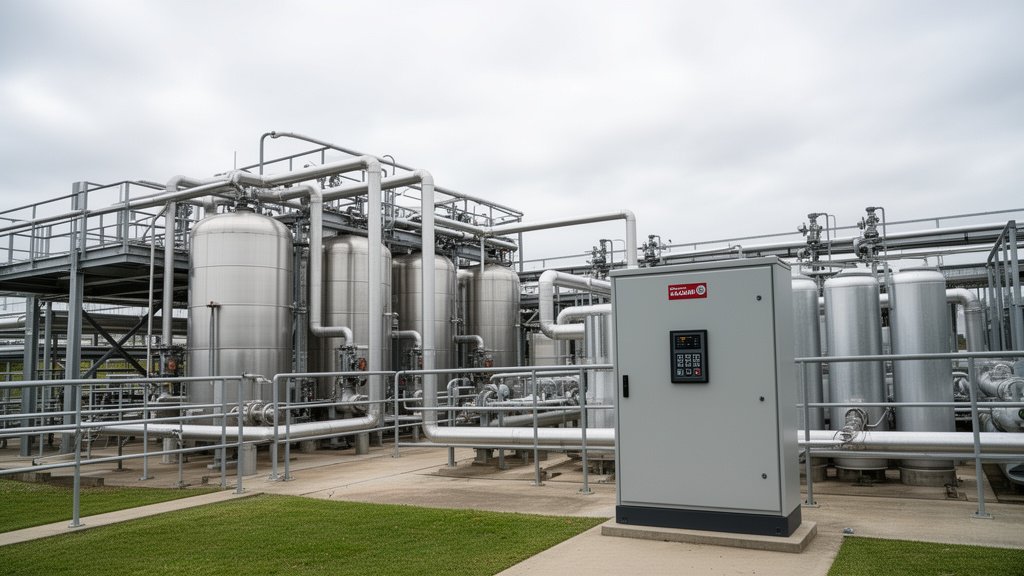
Federal investigators are currently piecing together a complex cyberattack campaign that has compromised the integrity of water systems across at least seven states. The U.S. government is actively scrutinizing potential Iranian involvement, characterizing the events as a direct threat to critical national infrastructure. The intrusions, which targeted specific programmable logic controllers, forced several municipal utilities to transition to manual operations to prevent service interruptions, highlighting the fragile security posture of local water grids.
Key Highlights
- Coordinated Vulnerability: The attacks specifically targeted Unitronics Vision Series programmable logic controllers (PLCs), which are ubiquitous in water and wastewater management facilities.
- Seven-State Scope: While initial reports focused on high-profile incidents like the one in Aliquippa, Pennsylvania, the investigation has widened to encompass vulnerabilities identified in water facilities across seven states.
- Attribution: Intelligence and federal assessments have linked the digital activity to the “Cyber Av3ngers,” an entity believed to be affiliated with the Islamic Revolutionary Guard Corps (IRGC).
- Immediate Mitigation: Affected utilities successfully regained control by shifting to manual operating modes, preventing potential impacts on water supply or chemical levels.
- Federal Response: The Cybersecurity and Infrastructure Security Agency (CISA) and the FBI have issued emergency guidance for all operators using the affected hardware to disconnect from the public-facing internet immediately.
The Anatomy of a Critical Infrastructure Breach
The infiltration of U.S. water infrastructure represents a significant escalation in geopolitical cyber warfare. Unlike traditional data breaches that aim to steal personal information, these incidents are designed to achieve operational disruption. The attackers did not attempt to poison water supplies or manipulate chemical levels, as the physical fail-safes in place would have prevented such catastrophic outcomes. Instead, the attackers sought to demonstrate the ability to compromise American critical infrastructure, potentially as a retaliatory measure for ongoing geopolitical tensions.
Unmasking the Unitronics Exploits
The primary attack vector involved Unitronics Vision Series PLCs—devices that function as the “brains” of water treatment equipment, managing pumps, valves, and chemical dosing systems. Cybersecurity researchers found that these units were often left connected to the public internet with default passwords or minimal security credentials. By exploiting these simple, often overlooked configuration gaps, the threat actors gained unauthorized access to the operational technology (OT) network. Once inside, the attackers displayed digital graffiti on the human-machine interfaces (HMIs), a psychological tactic designed to signal that the facility had been breached.
The ‘Cyber Av3ngers’ Connection
Investigators have attributed the digital footprint of these attacks to the “Cyber Av3ngers.” This group has a documented history of targeting critical infrastructure, often leveraging their access to publish screenshots and operational data as proof of their success. The U.S. intelligence community assesses that this group operates with the tacit or direct approval of the IRGC. This attribution elevates the incident from a routine criminal hacking event to a national security priority, moving the conversation from cybersecurity to state-sponsored digital sabotage.
The Regulatory and Operational Crisis
The vulnerability of American water utilities stems from a fragmented regulatory landscape. Unlike the energy sector or the financial industry, which face rigorous federal mandates for cybersecurity, the water sector is highly decentralized. Thousands of small, municipal water boards manage their own systems, often operating with limited budgets, outdated legacy software, and minimal dedicated IT security personnel. This decentralization creates a “patchwork” defense where the weakest link—a small town in rural America—becomes a potential entry point into the broader national grid.
Vulnerabilities in Decentralized Utilities
Many of these facilities were never designed with the internet in mind. Decades ago, industrial control systems were “air-gapped,” meaning they were physically isolated from any outside network. However, the move toward “smart” utility management, which allows operators to monitor pumps and levels remotely, has inadvertently introduced these legacy systems to the public web. This convergence of OT and IT environments has outpaced the security capabilities of local operators, leaving thousands of PLCs exposed to scanners that map out these vulnerable devices in real-time.
The Shift Toward Manual Overrides
In the wake of these attacks, the CISA mandate has been clear: move operational controls behind a secure firewall and disable remote access where possible. For many utilities, this has meant reverting to manual oversight—a labor-intensive process that significantly slows down operational efficiency. While this is the safest path, it highlights the inherent tension between the need for high-tech, efficient water management and the reality of the threat landscape. The industry is now grappling with how to maintain automation while ensuring that the infrastructure remains isolated from hostile actors.
A New Era of Geopolitical Cyber Warfare
This sequence of events marks a pivot in how nation-states utilize cyber capabilities. Historically, digital operations were used for espionage—stealing state secrets or industrial designs. The targeting of water, power, and healthcare sectors suggests that adversaries are pre-positioning for potential disruption in the event of open conflict. By “mapping” these systems, actors like the Cyber Av3ngers are essentially building a library of vulnerabilities that could be weaponized in a larger-scale engagement.
Escalating Tensions and Infrastructure Defense
The U.S. government is responding by increasing the frequency of threat intelligence sharing between the federal level and local operators. The EPA, FBI, and CISA are collaborating to provide resources for immediate patching and risk assessments. However, the challenge remains that once a vulnerability is known, it must be remediated by the utility itself. This requires significant investment in cybersecurity training and hardware upgrades, creating an economic burden for municipalities that are already struggling with aging physical infrastructure.
The Future of Water Security
The long-term solution lies in a structural shift toward “secure-by-design” manufacturing for industrial devices. Manufacturers like Unitronics are under increasing pressure to ensure that their products are secure out of the box, rather than requiring users to configure complex security settings. Furthermore, as federal authorities continue their investigation, it is likely that new regulatory frameworks will emerge, potentially standardizing cybersecurity requirements for all public utility providers across the nation. For now, the focus remains on resilience: ensuring that despite a digital compromise, the water keeps flowing.
FAQ: People Also Ask
Q: Were the water supplies in these seven states unsafe to drink?
A: No. Federal authorities have confirmed that the cyberattacks did not impact the safety, quality, or chemical makeup of the water supply. The attackers were focused on disrupting the operational management interface rather than altering water treatment processes.
Q: Why were Unitronics PLCs targeted specifically?
A: These devices are popular for their ease of use and affordability, making them common in smaller, decentralized municipal utilities. Unfortunately, they were often deployed with default security settings, making them easy targets for automated scanning tools used by malicious actors.
Q: Is this considered an act of war?
A: While the U.S. government characterizes these actions as serious threats and acts of cyber-sabotage, it stops short of labeling them as an “act of war.” The Biden administration is treating these incidents as a significant national security priority to prevent future, more damaging escalations.
Q: How can small towns protect themselves against these threats?
A: Experts recommend immediately changing all default credentials, disabling remote access to industrial control systems (ICS) from the public internet, and ensuring that any remote access requires multi-factor authentication and is routed through a secure Virtual Private Network (VPN).


Related Posts