China Escalates Tech War with New Drone Export Controls
In a decisive move that underscores the widening chasm in the global technology sector, Beijing has initiated a fresh wave of export controls targeting high-performance, dual-use drone technology and components. This strategic escalation, managed by the Ministry of Commerce of the People’s Republic of China (MOFCOM), functions as a direct counter-measure to recent tightening of U.S. restrictions, specifically targeting actions taken by the Federal Communications Commission (FCC) and the Department of Homeland Security (DHS) against Chinese technology firms. By restricting the flow of critical hardware—including sophisticated thermal sensors, specialized long-range imaging equipment, and specific high-performance lithium battery configurations—China is weaponizing its dominant position in the drone supply chain, directly challenging the resilience of Western defense and commercial drone industries.
Key Highlights:
- China has imposed strict export licensing requirements on specific dual-use drone technologies, impacting critical components like high-resolution thermal imaging and long-range LIDAR systems.
- The move is explicitly framed as a retaliatory measure against U.S. sanctions and ‘entity list’ restrictions applied to Chinese technology firms by the FCC and DHS.
- Beyond drones, the strategy includes targeted sanctions against select U.S.-based organizations, further complicating cross-border corporate operations.
- This escalation marks a shift from passive market dominance to active supply-chain management, forcing U.S. manufacturers to accelerate domestic production of critical drone subsystems.
The Silicon Iron Curtain: Decoding China’s Strategic Trade Blockade
The implementation of these new export controls is far from a spontaneous reaction; it represents a calculated evolution in China’s economic statecraft. For years, the drone industry has relied on a globalized supply chain where Chinese manufacturing prowess—specifically in optics, propulsion, and avionics—was the default baseline for both hobbyist and enterprise-grade platforms. By introducing complex licensing requirements for ‘dual-use’ technology, Beijing is essentially claiming a veto over which international entities gain access to their high-performance hardware. This creates a friction point that extends deep into the U.S. defense sector, which has been attempting to decouple from Chinese reliance while simultaneously maintaining readiness.
The Mechanics of Control: What Technology is Restricted?
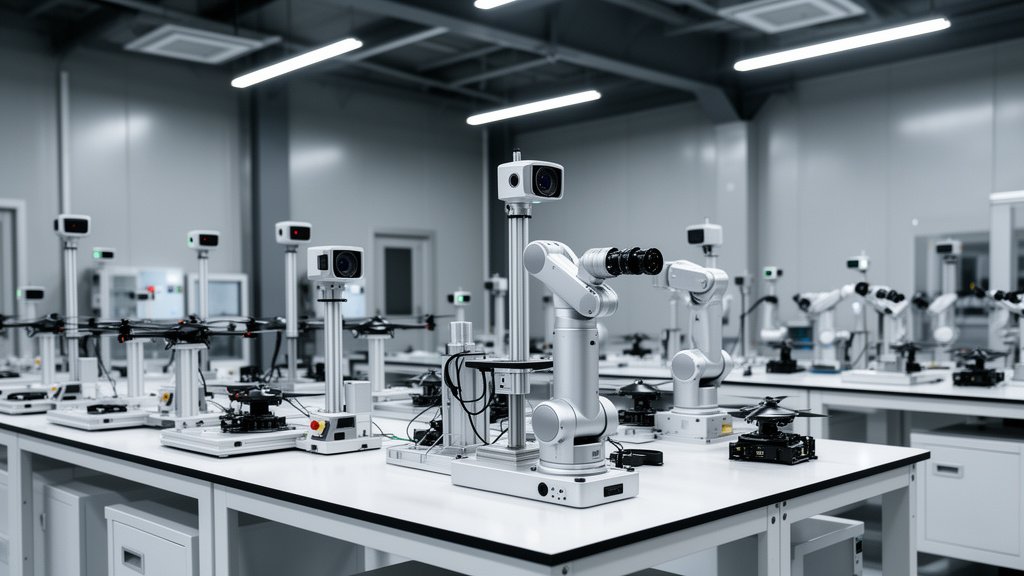
The specific targets of these controls are not arbitrary. The restrictions focus on performance thresholds that delineate consumer-grade drones from those capable of strategic surveillance or reconnaissance. Key components now subject to review include:
1. High-Performance Optics and Thermal Sensors: These are vital for night-time operation and intelligence gathering, areas where Chinese manufacturers have historically maintained a significant cost and performance lead.
2. LIDAR and Specialized Avionics: Crucial for autonomous flight, collision avoidance, and mapping, these technologies are the backbone of modern commercial drone applications.
3. Long-Endurance Power Systems: Specialized battery chemistries and power management circuits that allow for extended flight times are now under restricted status, effectively tightening the leash on the high-end drone market.
By controlling these specific nodes, MOFCOM is not necessarily banning exports, but rather ensuring that every significant shipment undergoes a political evaluation. This ‘licensing by audit’ model forces U.S.-based firms to navigate a labyrinth of bureaucracy, effectively creating a time-lag that disadvantages Western manufacturers during rapid innovation cycles.
Beijing’s Strategic Playbook: Response to U.S. Entity Lists
The geopolitical context of this move cannot be understated. The Chinese government has long signaled frustration with the U.S. ‘Entity List’—a mechanism used by the Bureau of Industry and Security (BIS) to restrict access to U.S. technology for Chinese companies like DJI, Hikvision, and various semiconductor manufacturers. Beijing’s current drone-related controls are a mirror image of this tactic.
By targeting specific U.S. organizations with sanctions and simultaneously strangling the supply of dual-use components, China is attempting to demonstrate to the global market that the U.S. tech ecosystem is vulnerable. This ‘tit-for-tat’ dynamic is shifting from trade tariffs to structural supply chain control, where the objective is to make the cost of U.S. restrictive policies prohibitively high for domestic American companies.
Global Supply Chain Shockwaves: Who Loses?
The immediate impact is being felt by American drone integrators—companies that design drones in the U.S. but rely on global supply chains for critical components. The sudden uncertainty regarding the availability of Chinese-made sensors or battery modules is forcing many of these firms to rapidly pivot toward more expensive, non-Chinese alternatives. While this aligns with the long-term goal of domestic reshoring, the short-term result is a sharp increase in production costs and potential delays in delivering mission-critical technology to U.S. infrastructure and security sectors.
Furthermore, the ambiguity of these regulations creates a ‘chilling effect’ on international business. When technology controls are subject to political winds rather than predictable trade laws, companies tend to become risk-averse. This hesitation can stifle investment in the very R&D needed to compete with the technology currently being restricted, creating a paradox where U.S. firms are caught between needing the technology to innovate and fearing the regulatory entanglement that comes with purchasing it.
FAQ: People Also Ask
What does ‘dual-use’ mean in the context of these export controls?
‘Dual-use’ refers to technology, components, or software that can be used for both benign civilian purposes (such as agricultural monitoring, surveying, or photography) and military or intelligence applications (such as surveillance, reconnaissance, or kinetic weapon delivery). China’s export controls target this category because of the potential for civilian technology to be re-purposed for defense.
How are U.S.-based drone manufacturers supposed to respond to these restrictions?
U.S. manufacturers are forced to diversify their supply chains. This involves moving away from Chinese-sourced components and finding alternative vendors in friendly nations, or accelerating domestic R&D for high-performance optics, LIDAR, and power systems. This is a capital-intensive process that will likely drive up the cost of U.S.-manufactured drones in the short-to-medium term.
Are these sanctions an end to all trade in drone technology?
No. The controls establish a licensing regime. This means that exports are not automatically banned, but they must be approved by the Chinese government. This gives Beijing the power to grant or deny permits based on the specific company, the end-user, and the geopolitical context of the transaction, effectively turning trade into a tool of diplomacy.
Why are LIDAR and thermal sensors specifically targeted?
These technologies are the ‘eyes’ of autonomous systems. LIDAR is essential for navigation and spatial awareness without GPS, while high-performance thermal imaging allows for object detection in low-light conditions. Both are critical for both commercial autonomous flight and tactical military operations, making them highly sensitive strategic assets.


Related Posts