
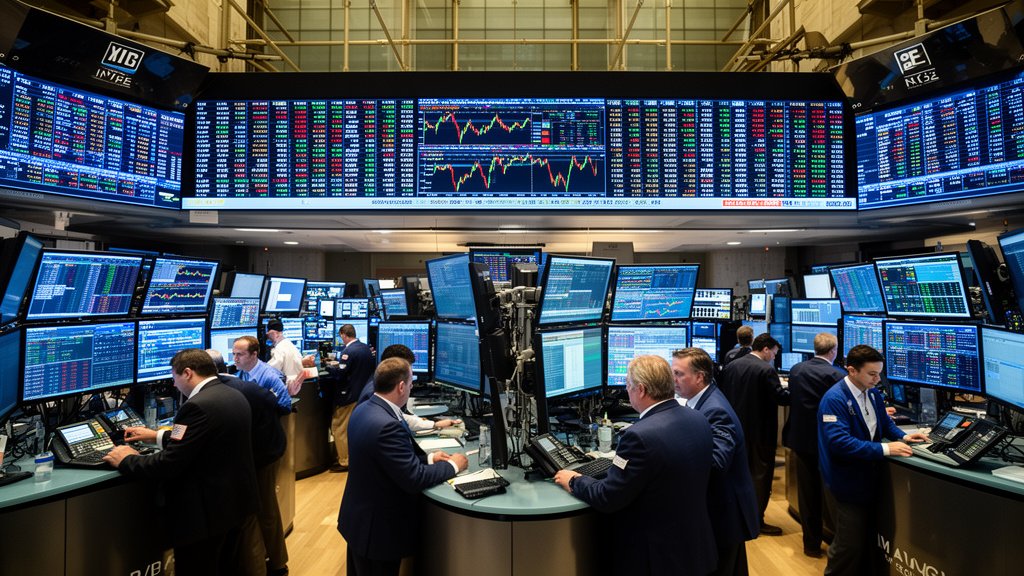
Dow Climbs Despite July Jobs Miss: Market Defies Weak Data
On August 7, 2026, the Dow Jones Industrial Average (DJIA) demonstrated significant resilience, closing in positive territory despite a sobering labor market report that signaled unexpected job losses throughout July. The session was defined by a classic Wall Street paradox: bad economic news was effectively treated as good news by investors, who interpreted the cooling labor market as a clear signal for potential future intervention by the Federal Reserve. As trading concluded, the index managed to hold its gains, defying the skepticism that typically follows poor employment data.
The Market Paradox: Why Equities Defied the Data
For many market observers, the immediate reaction to the July jobs data was expected to be bearish. Historically, a weakening labor market is viewed as a precursor to reduced consumer spending, lower corporate profits, and ultimately, a tightening of economic belts. However, the market’s behavior on August 7 suggests a deeper, more nuanced sentiment shift. Investors are increasingly looking past the current employment contraction, focusing instead on the potential for the Federal Reserve to pivot or maintain a more accommodative stance.
This “bad news is good news” dynamic has become a defining characteristic of the 2026 market cycle. When the Bureau of Labor Statistics released the unexpected contraction numbers, the initial dip in futures markets was shallow and short-lived. By mid-morning, buying pressure materialized, particularly in blue-chip stocks that have traditionally been viewed as stable hedges against volatility. This surge indicates that the institutional money—the “smart money”—is perhaps more concerned with the timeline of interest rate cuts than with short-term employment fluctuations.
Analyzing the July Jobs Report
The July employment figures, which prompted the initial market jitters, pointed to a broader trend of cooling across several key sectors. Unlike the erratic data points seen earlier in the year, the July numbers showed a consistent pattern of job losses that spanned beyond just the manufacturing and construction sectors. Retail, hospitality, and even parts of the professional services sector—industries that had remained relatively buoyant throughout the first half of 2026—all reported unexpected shrinkage in their payrolls.
This trend is critical for the Federal Reserve to analyze. If the labor market is truly beginning to lose its grip, the urgency for the central bank to adjust monetary policy increases. The market’s rally today suggests that investors have priced in a higher probability of an interest rate cut before the end of the third quarter. The disconnect here is between the reality of the labor market and the optimism regarding central bank policy. If the Fed does not act, or if they continue to emphasize a “higher for longer” approach, the market’s current optimism could be short-lived.
The Role of Sector Rotation
Within the Dow, the performance was not uniform. While the overall index rose, the composition of the rally reveals where investors are placing their bets. Defensive sectors, such as utilities and consumer staples, saw increased inflows. These sectors often outperform when employment data is weak, as investors rotate out of high-growth tech and cyclical industrial stocks in favor of companies with steady dividends and predictable revenue streams.
However, the strength in the Dow wasn’t solely defensive. Certain industrial conglomerates within the Dow component list also saw gains, potentially driven by reports of increased infrastructure spending projects that are beginning to break ground in Q3. This suggests that while the broader labor market is struggling, there are pockets of industrial activity that remain insulated from the current employment malaise.
Future Outlook: The Balancing Act
Looking ahead, the market is entering a precarious phase. The dual narrative of a weakening labor market and the ongoing search for an economic soft landing will dominate the headlines for the remainder of the summer. Traders and long-term investors alike must grapple with the question of whether this job loss is a momentary stumble or the beginning of a sustained trend toward recession.
If future data releases confirm that the July job losses were not an outlier but the start of a trend, the Dow may face renewed pressure. The rally on August 7, while impressive, leaves little room for error. Should corporate earnings start to decline in tandem with the labor market, the argument for a recession will become much harder for the bulls to ignore. For now, however, the market remains in a state of hopeful anticipation, banking on the idea that the economy is resilient enough to handle a cooling period without entering a full-scale contraction.
The Psychological Component: Fear vs. Opportunity
It is essential to recognize the psychological element driving the current market sentiment. The Fear of Missing Out (FOMO) remains a powerful force in 2026. Many institutional investors are wary of exiting the market completely, fearing that if they move to cash, they will miss the rally that inevitably follows a Federal Reserve pivot. This fear of being on the sidelines prevents the kind of mass sell-offs that might otherwise occur during a negative jobs report. Consequently, the Dow is buoyed not just by fundamental data, but by the defensive positioning of capital that is afraid of missing a turning point in the economic cycle.
FAQ: People Also Ask
1. Why did the Dow Jones rise despite negative job numbers?
The market often interprets weak economic data as a signal that the Federal Reserve will likely lower interest rates or stop hiking them. Lower interest rates generally encourage borrowing and investment, which can boost stock prices, even if the underlying labor data is poor.
2. What exactly did the July jobs report reveal?
The report indicated unexpected job losses across multiple sectors, including retail, hospitality, and professional services. This was viewed as a sign of economic cooling, contrary to earlier projections that expected modest growth.
3. Should investors worry about a recession based on this report?
While the jobs report is a lagging indicator and not a definitive map of a recession, the data does show a cooling labor market. Investors are weighing this risk against the potential for central bank policy intervention, leading to a period of heightened uncertainty.


Related Posts