Beyond Screens: Inside Anthropic’s New ‘Model Hardware Standard’
Anthropic has officially launched a research preview of its “Model Hardware Standard,” a foundational framework designed to standardize the way AI agents interact with and control physical machinery. As the industry pivots from chatbots to autonomous agentic workflows, this initiative marks a critical step toward solving the inherent trust and safety challenges that arise when Large Language Models (LLMs) transition from generating text to manipulating the physical world. This initiative is not merely a technical update; it represents a broader, necessary evolution in the infrastructure required for the next generation of industrial automation.
The Fragmentation of Physical Control
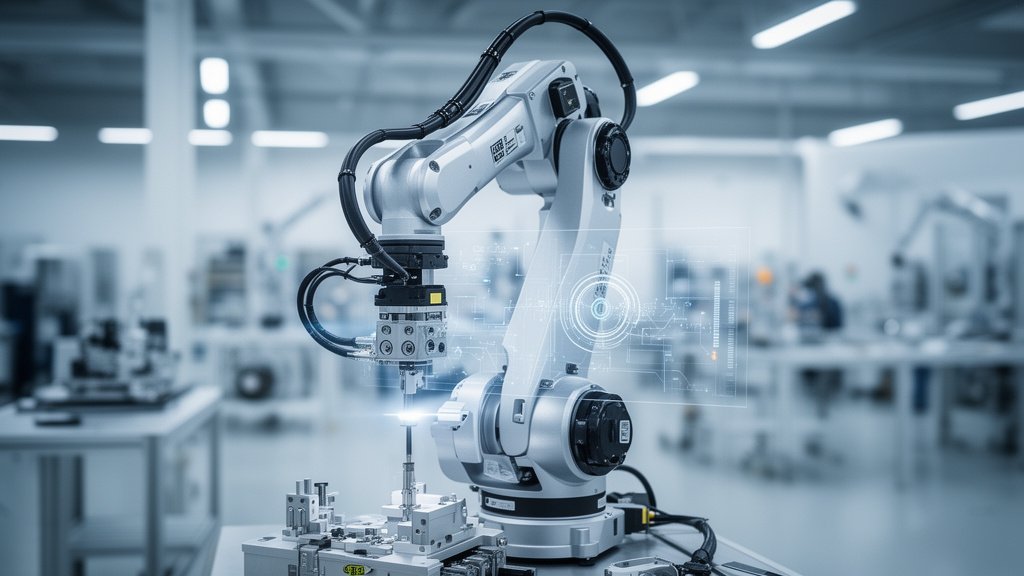
For years, the development of artificial intelligence has been largely confined to digital environments—coding, writing, and analyzing data. However, as organizations seek to deploy AI agents in complex environments like manufacturing plants, laboratories, and logistics warehouses, they face a “language barrier” between high-level logic and low-level mechanical command. Currently, AI agents often struggle to interface with heterogeneous hardware sets.
Each manufacturer employs unique protocols, proprietary software interfaces, and distinct safety parameters. Without a unified standard, AI agents rely on fragmented, often brittle, API integrations that are prone to hallucination or catastrophic misunderstanding. An AI model might misinterpret a sensor reading or fail to adhere to specific torque limits on a robotic arm, leading to equipment damage or safety risks. Anthropic’s Model Hardware Standard seeks to eliminate this friction by providing a common specification that bridges the gap between the sophisticated reasoning capabilities of advanced AI and the deterministic constraints of physical machinery.
Deciphering the Model Hardware Standard
The Model Hardware Standard is structured to function as a communication layer, effectively serving as a “Rosetta Stone” for AI-to-machine interactions. By establishing a shared specification, Anthropic aims to enable developers to build agents that are “hardware-aware.” This means that an AI, when prompted to perform a task—such as “move the assembly component to the staging area”—is grounded by a standard protocol that inherently understands the limitations, requirements, and safety protocols of the physical machine it is controlling.
This standard focuses on three core pillars: command standardization, telemetry feedback, and safety verification. By standardizing how commands are sent (e.g., ensuring a move command is validated against machine constraints before execution), the standard reduces the risk of “out-of-bounds” instructions. Furthermore, the telemetry feedback loop ensures that the AI receives machine data in a format it can reliably process, allowing for real-time adjustments and error detection. This creates a closed-loop system that is significantly more resilient than current, ad-hoc integrations.
Mitigating Risk in Autonomous Environments
The stakes of integrating AI into physical environments are high. Unlike a chatbot hallucination, where the consequence is misinformation, an error in a robotic environment can lead to significant material destruction or workplace injury. The Model Hardware Standard explicitly addresses these safety risks by integrating guardrails directly into the communication protocol.
By defining a standard set of interactions, the framework allows for “safety-by-design” implementations. For example, if an AI agent attempts to command a machine to operate outside its rated parameters (e.g., moving a hydraulic press too quickly), the interface—governed by the Model Hardware Standard—can reject the command at the hardware level before it reaches the actuator. This layer of abstraction provides a critical safeguard, ensuring that the AI’s reasoning engine remains separated from the machine’s critical operating logic.
Economic and Industrial Ramifications
The economic impact of this standardization could be profound. Currently, integrating AI into existing manufacturing lines is a capital-intensive, bespoke process requiring thousands of hours of specialized software engineering to create custom bridges between LLMs and industrial controllers. By providing a scalable, documented standard, Anthropic could drastically reduce the “integration tax” currently paid by manufacturers looking to modernize their facilities.
This shift allows for the democratization of intelligent automation. Smaller labs and mid-sized manufacturing firms, which previously lacked the resources to develop proprietary AI interfaces, could soon leverage off-the-shelf, standard-compliant agents to optimize production lines. This could lead to a wave of efficiency gains, enabling factories to adapt more dynamically to changing market demands, reducing downtime, and allowing for rapid re-tooling that was previously impossible without massive human oversight.
The Future of Agentic Workflows
Looking ahead, the Model Hardware Standard may prove to be a precursor to a wider ecosystem of interoperability. As research labs and manufacturers begin to adopt these shared specifications, we may see the emergence of a “plug-and-play” culture for industrial AI agents. Just as USB standardized peripheral connectivity, this initiative could standardize how digital intelligence connects to the physical world.
However, success hinges on industry-wide adoption. For this standard to become a true benchmark, it must gain traction among major industrial hardware manufacturers. If achieved, the result will be a more reliable, scalable, and safer integration of AI into our physical infrastructure, marking the official end of the era where AI was only allowed to live on our screens.


Related Posts