
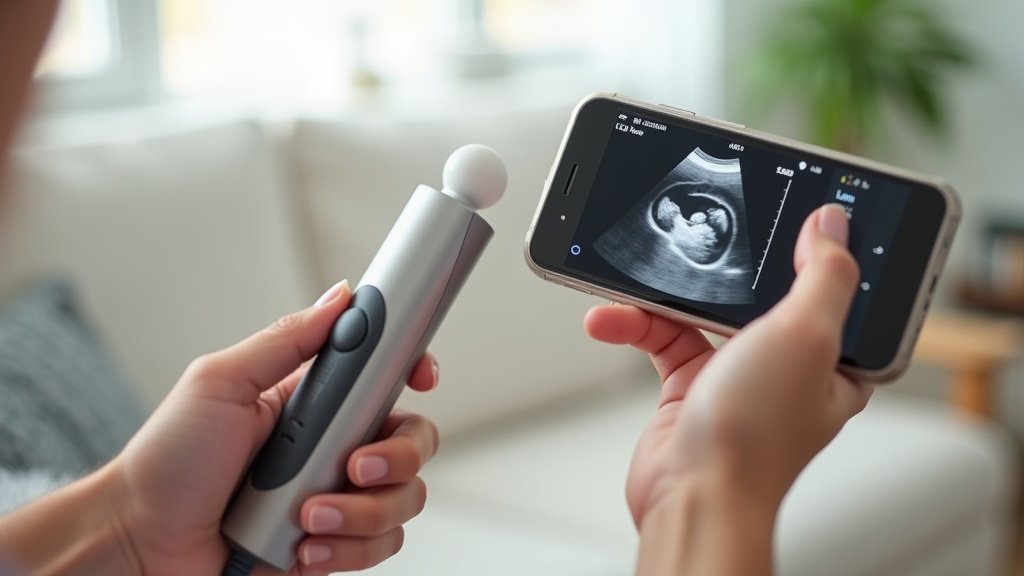
Pulsenmore Hits U.S. Market Milestone in Strong H1 2026 Report
Pulsenmore Ltd. has officially reported its financial results and key operational milestones for the first half of 2026, underscored by a massive expansion into the U.S. market. The medical technology firm, which specializes in innovative remote maternal-fetal healthcare solutions, has leveraged this period to solidify its position as a global leader in home-based ultrasound monitoring, with H1 2026 serving as the platform for its most aggressive international expansion to date.
Key Highlights
- U.S. Market Entry: Successfully established an operational foothold in the U.S., fulfilling a critical roadmap goal for the 2026 fiscal year.
- Strategic Commercial Partnerships: Secured foundational partnerships with major U.S. healthcare providers to integrate remote monitoring into standard prenatal care pathways.
- Patient Adoption: Validated the clinical deployment model by successfully initiating the first wave of remote patient scans in the U.S., demonstrating high usability and data accuracy.
- Financial Growth: Reported sustained revenue momentum aligned with increased market penetration, showcasing the scalability of the Pulsenmore business model in international markets.
Advancing the Frontier of Maternal-Fetal Healthcare
The financial disclosure for the first half of 2026 reveals more than just topline figures; it highlights a company successfully bridging the gap between clinical-grade diagnostic imaging and the convenience of home-based care. For years, the bottleneck in maternal healthcare has been the frequency of in-office visits. By successfully entering the U.S. market—a notoriously complex and highly regulated environment—Pulsenmore has demonstrated the clinical and economic viability of its technology.
The Strategic U.S. Pivot
The U.S. market represents the largest healthcare economy in the world, and Pulsenmore’s entry is not merely a geographic expansion but a strategic validation of its “virtualized care” model. The company has focused on identifying commercial partners—including hospital systems and telehealth networks—that are currently struggling with the burden of high-risk pregnancy monitoring and the logistical challenges of scheduling frequent, in-person ultrasound appointments.
By deploying its proprietary, smartphone-connected ultrasound devices, Pulsenmore enables patients to perform scans at home, with data seamlessly transmitted to clinicians for review. The H1 2026 report highlights the first successful initiation of these scans, confirming that the technology functions reliably within the U.S. telecommunications and clinical infrastructure. This data is critical because it signals to investors that the transition from a research-and-development focus to a commercial-deployment focus is well underway.
Financial Performance and Operational Scalability
While the company is in a phase of heavy investment to support its U.S. growth, the financial data from H1 2026 suggests a disciplined approach to cash flow management. The company has successfully balanced the cost of regulatory compliance and market entry with steady growth in its established territories. Investors were particularly focused on how the company would manage the overhead of launching in the U.S. versus the potential for long-term recurring revenue generated through its SaaS-enabled diagnostic platform.
The business model relies on a combination of hardware sales and service contracts. As the volume of scans increases, the recurring revenue component—driven by the platform’s utilization—is expected to become a larger share of the overall financial picture. The successful partnership signings mentioned in the H1 report are a leading indicator of this future recurring revenue stream.
The Tech-Enabled Clinical Evolution
At the core of this growth is the Pulsenmore ES technology. Unlike traditional ultrasound systems that require bulky consoles, the Pulsenmore device is a lightweight, handheld transducer that pairs with a standard smartphone. This miniaturization is the catalyst for the shift in maternal healthcare. By allowing obstetricians to review images remotely, the system effectively democratizes access to fetal health data.
This shift addresses three secondary angles that are reshaping the industry:
1. The Telehealth Integration Angle: As the U.S. moves toward a “hybrid” care model post-2025, Pulsenmore is positioned as an essential tool for OB-GYN practices looking to decrease the foot traffic in their clinics while maintaining or increasing the quality of oversight for expectant mothers.
2. The Economic Impact on Maternal Care: High-risk pregnancies are expensive for insurance providers. By identifying potential issues early through more frequent, home-based monitoring, the potential for preventing complications—and thus reducing hospital readmissions—is significant. The H1 data collection from these initial U.S. scans will likely serve as the bedrock for future insurance reimbursement studies.
3. Patient Experience and Psychological Benefit: The reduction in travel stress for patients, particularly in rural or underserved areas of the U.S., cannot be overstated. By integrating the patient into the loop of care, Pulsenmore is not just selling a device; it is selling a shift in the patient-physician relationship that prioritizes convenience and constant contact.
As the company moves into the second half of 2026, the industry will be watching closely to see how the initial partnership trials scale into broader, system-wide deployments. The H1 results provide the evidence that the infrastructure is ready, the technology is stable, and the market is receptive.
FAQ: People Also Ask
1. What is the significance of Pulsenmore entering the U.S. market in 2026?
It marks the company’s expansion into the world’s largest healthcare market, validating their remote ultrasound technology for large-scale clinical use in the American healthcare system.
2. How does the Pulsenmore system work for patients?
The system consists of a handheld ultrasound transducer that connects to a smartphone, allowing patients to perform self-scans at home. The images are then transmitted to healthcare professionals for remote assessment.
3. What was the main takeaway from the H1 2026 financial report?
The key takeaway was the successful operationalization of U.S. partnerships and the initiation of actual patient scans, proving that the company’s business model is scalable across different regulatory and healthcare environments.
4. Is the Pulsenmore device only for high-risk pregnancies?
While its primary utility currently supports high-risk monitoring, the technology is designed to improve prenatal care access broadly, potentially benefiting any pregnancy requiring frequent ultrasound monitoring.


Related Posts