
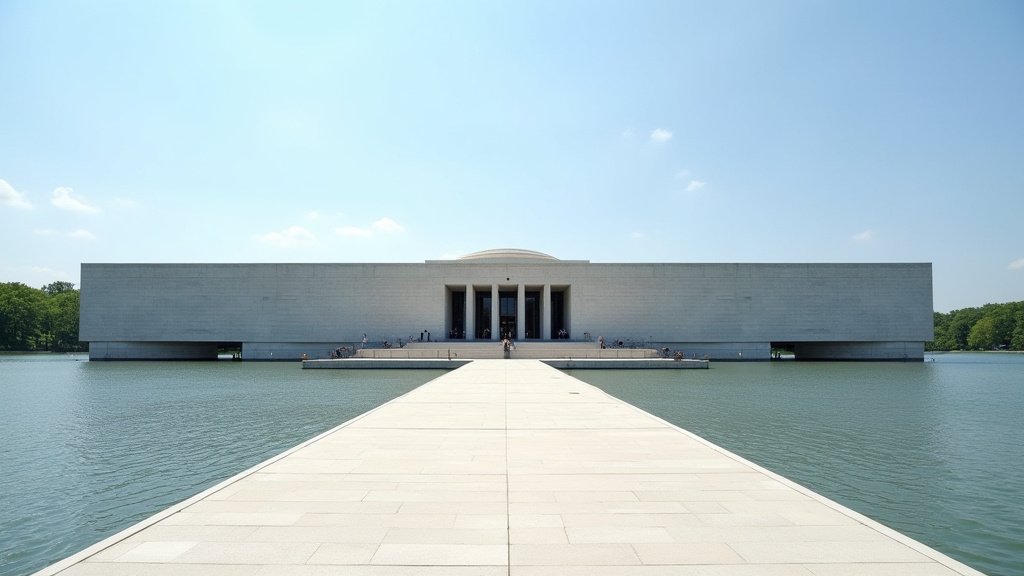
Trump-Appointed Board Mandates Two-Year Kennedy Center Closure
The John F. Kennedy Center for the Performing Arts, a cornerstone of American culture and the nation’s living memorial to the 35th president, is facing an unprecedented interruption to its operations. In a move that has sent shockwaves through the performing arts community and political circles alike, the Board of Trustees, composed of members appointed by the Trump administration, has officially authorized a comprehensive two-year closure of the institution. This directive, approved during a recent session, marks a stark pivot for the center, which serves as a hub for the National Symphony Orchestra, the Washington National Opera, and countless touring Broadway productions.
The Board’s Mandate and Operational Shift
The decision to shutter the massive Potomac-side complex stems from a series of internal reports highlighting significant changes in the center’s financial health and operational trajectory. While the Kennedy Center has historically balanced federal appropriations with private fundraising and ticket revenue, the Board of Trustees has characterized this two-year cessation of activity as a necessary “restructuring period.”
According to the documentation released by the board, the closure is not merely a pause but a strategic “reset.” This involves a complete cessation of all public performances, educational programming, and event hosting starting from the effective date of the mandate. The financial reasoning cited by the board points to rising maintenance costs, shifting donor demographics, and a projected deficit that the current business model could no longer sustain without federal intervention, which the board opted to forgo in favor of this complete operational halt.
The Logistics of a National Silence
For an institution of the Kennedy Center’s scale—which hosts over 2,000 performances annually—a two-year closure is a logistical undertaking of monumental proportions. The facility, designed by architect Edward Durell Stone, is not simply a stage but a complex infrastructure requiring constant climate control, security, and staffing.
Industry experts are already questioning the viability of such an extended shutdown. The displacement of the National Symphony Orchestra (NSO) and the Washington National Opera (WNO) alone poses a crisis for the local arts scene. These organizations, which rely on the Kennedy Center’s acoustic environment and administrative support, are now effectively homeless for the duration of the 24-month period. Furthermore, the cancellation of high-profile Broadway tours and cultural summits disrupts global artistic contracts that were solidified years in advance. The operational ripple effect will likely result in thousands of layoffs, affecting stagehands, administrative staff, ushers, and contractors who depend on the center’s daily activity.
Financial Trajectory and Donor Uncertainty
Central to the board’s justification was a deep-dive analysis of the center’s financial trajectory. Sources indicate that the report commissioned by the Trump-appointed board suggested that the institution’s current path was “unsustainable” and “vulnerable to market volatility.” By closing the venue, the board intends to preserve the capital reserve of the Kennedy Center, effectively putting the building into a state of suspended animation.
However, this decision has ignited a firestorm among private donors and institutional partners. The Kennedy Center relies heavily on private philanthropy, and the suddenness of this closure has left major donors in the dark regarding the status of their endowments and named spaces. The board claims that the pause will allow for “capital improvements” and a “strategic rebranding,” yet critics argue that a two-year dark period risks permanently alienating the loyal patron base that the center has cultivated since its opening in 1971.
Historical Context and Political Oversight
The Kennedy Center serves as both a private non-profit and a federally recognized institution, with its Board of Trustees partially appointed by the President of the United States. This unique structure has always made it a subject of political debate, but never before has it been the center of a maneuver this drastic.
Historically, the board has worked to insulate the institution from the ebbs and flows of Washington politics. This new directive, however, underscores the influence that executive appointments can have on cultural landmarks. Supporters of the board’s decision suggest that fiscal responsibility must take precedence over cultural continuity, arguing that “tough choices” were required to ensure the long-term survival of the landmark. Conversely, detractors argue that the institution serves a public mission that transcends balance sheets, and that closing its doors for two years fundamentally abdicates the center’s responsibility to the American public and the artistic community it was created to serve.
FAQ: People Also Ask
Q: What happens to the National Symphony Orchestra during the closure?
A: The National Symphony Orchestra (NSO) will be forced to suspend its residency at the Kennedy Center. While the board has not released a comprehensive relocation plan, the orchestra will likely need to seek alternative venues in the D.C. metropolitan area or cancel its season entirely for the duration of the two-year period.
Q: Are all events at the Kennedy Center cancelled for two years?
A: Yes. The board’s directive mandates a comprehensive closure, which includes all performances, touring productions, educational programs, and public events scheduled within the facility.
Q: What is the primary reason given for the two-year shutdown?
A: The Board of Trustees cited “significant changes in the center’s financial and operational trajectory” as the primary driver. They argued that the institution’s current financial path was unsustainable and required an immediate, long-term pause to restructure and preserve assets.
Q: How does the Trump-appointed board justify this decision against public outcry?
A: The board emphasizes “fiscal responsibility” and the need for a “strategic reset” of the institution. They maintain that the closure is a proactive measure to prevent deeper financial insolvency and to allow for necessary structural improvements that cannot be completed while the building is occupied.


Related Posts


