Trump Signs Sweeping Sanctions Act; H-1B Fees Hit $100K
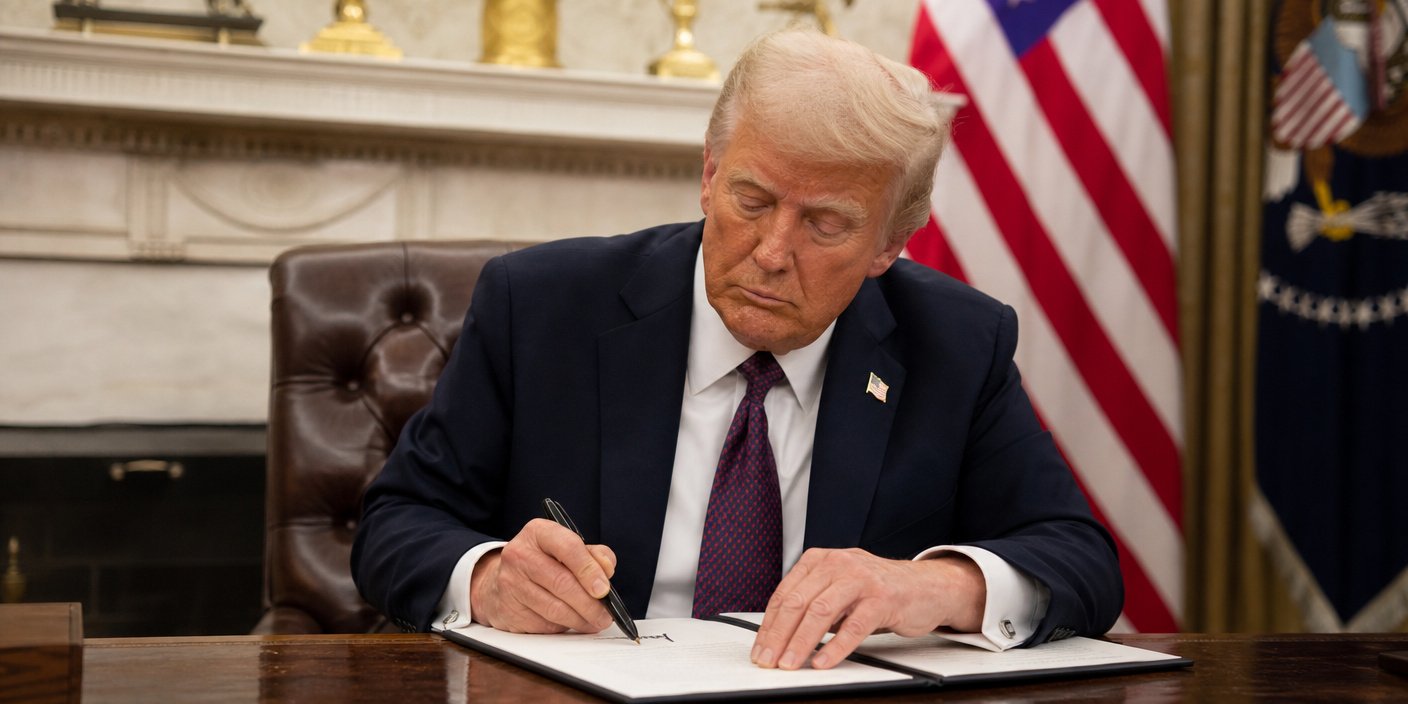
President Trump has officially signed the ‘Sanctioning Russia and Iran Act’ into law, a legislative maneuver that marks a significant escalation in geopolitical tension and domestic economic policy. The new law imposes rigorous economic levies not only on Russia and Iran but also extends penalties to key international energy buyers, specifically targeting China and India. Parallel to these foreign policy measures, the administration has enacted a drastic shift in labor policy, mandating a $100,000 fee for H-1B visa renewals and introducing heightened regulatory oversight for corporate layoffs.
Key Highlights
- New Sanctions Regime: The ‘Sanctioning Russia and Iran Act’ imposes severe economic levies aimed at choking revenue streams from Russian and Iranian energy exports.
- Global Supply Chain Impact: The legislation specifically targets major energy buyers, including China and India, creating potential friction in global energy markets.
- H-1B Visa Overhaul: The administration has formally renewed and enforced a $100,000 fee for H-1B visas, signaling a massive shift in the cost of high-skilled foreign labor.
- Corporate Accountability: New regulatory frameworks have been initiated to provide increased oversight regarding domestic mass layoffs.
The Dual-Front Economic Strategy
The signing of the ‘Sanctioning Russia and Iran Act’ represents a calculated effort by the Trump administration to leverage economic instruments to alter international behavior. By extending the reach of these sanctions to include third-party buyers like China and India, the U.S. is signaling that the era of ‘business as usual’ regarding trade with these sanctioned nations is over. This move forces a difficult choice for major economies: continue purchasing energy at the risk of losing access to the U.S. financial system, or pivot to alternative energy suppliers.
Impact on Global Energy Markets
For decades, Russia and Iran have relied on a network of buyers to sustain their economic output. By placing the onus on the purchasers—specifically large, industrial economies—the new legislation disrupts the status quo. Analysts anticipate that this will drive up global energy prices in the short term, as buyers navigate the legal and economic risks of maintaining current supply contracts. China and India, which have historically maintained strategic neutrality and consistent trade ties with both nations, now face a complex compliance landscape. The ripple effect of this act will likely be felt in commodities markets for months to come, as energy logistics adjust to the new regulatory reality.
The $100,000 H-1B Policy: A Protectionist Shift
The most shocking aspect of the new legislation for the domestic tech and professional sectors is the solidification of the $100,000 H-1B visa fee. This drastic increase is designed to prioritize domestic employment over foreign high-skilled talent acquisition. For many companies in Silicon Valley and across the technology sector, this fee structure fundamentally alters the cost-benefit analysis of hiring international talent.
Critics argue that such a high barrier to entry could stifle innovation and force companies to relocate operations to countries with more favorable labor costs and visa regulations. Conversely, proponents within the administration argue that this policy encourages corporations to invest in, train, and hire from the domestic American workforce, potentially reducing reliance on temporary visa programs. The long-term consequence remains to be seen, but the immediate reaction from corporate HR departments is one of alarm and rapid strategic adjustment.
Regulatory Oversight on Corporate Layoffs
Beyond the visa costs, the administration has initiated a new wave of regulatory oversight concerning domestic layoffs. This policy aims to ensure that when companies undergo restructuring or downsizing, the impact on the local labor force is scrutinized. This is particularly relevant in the technology and manufacturing sectors, where mass layoffs have been prevalent in recent years. By introducing federal oversight, the government intends to prevent potential misuse of visa programs and ensure that companies are not prioritizing cheap labor over American workers during times of economic contraction. This interventionist approach signals a shift toward a more managed labor market, where federal agencies are expected to play a more active role in the employment decisions of private corporations.
FAQ: People Also Ask
Q: What is the primary purpose of the ‘Sanctioning Russia and Iran Act’?
A: The act is designed to restrict the economic revenue available to Russia and Iran by imposing levies on these nations and, significantly, on the third-party countries that purchase their energy resources.
Q: How does the new H-1B visa fee impact companies?
A: The $100,000 fee represents a substantial increase in overhead for companies relying on H-1B talent. It effectively forces firms to reassess their dependency on foreign labor versus domestic hiring.
Q: Which countries are most affected by the new energy sanctions?
A: While Russia and Iran are the primary targets, major industrial buyers like China and India are the secondary targets, as the sanctions now penalize the purchase of energy from the primary sanctioned nations.
Q: What does the new regulatory oversight on layoffs entail?
A: It involves increased federal scrutiny of corporate downsizing events, aiming to protect the domestic labor market and curb the perceived abuse of visa programs during periods of company restructuring.


Related Posts