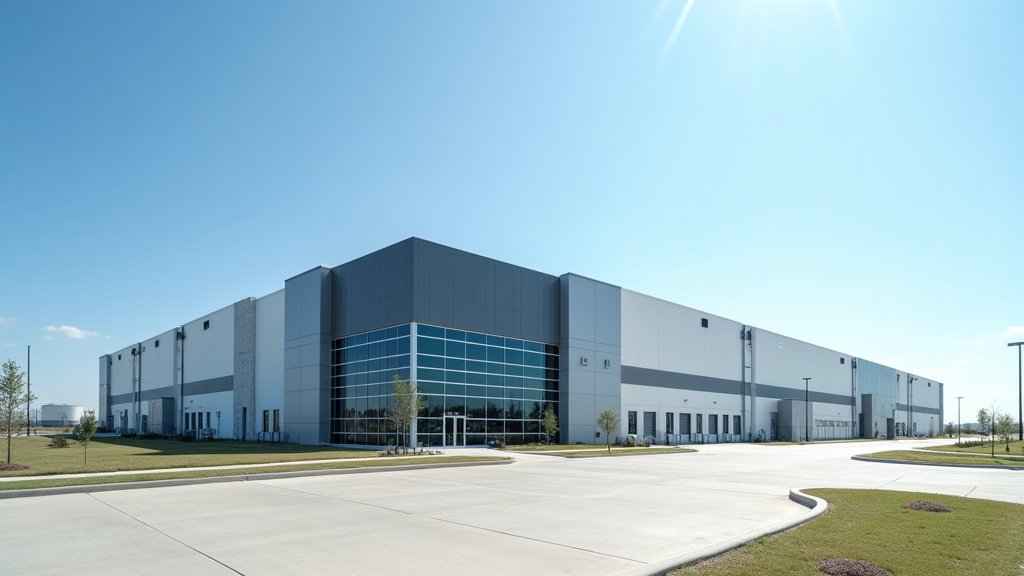
Australian Defense Giant ACS Chooses Arlington for U.S. HQ
In a significant boost to the North Texas defense industrial base, Advanced Composite Structures (ACS), a premier Australian defense manufacturer, has officially selected Arlington, Texas, as the location for its new United States headquarters. The move, underscored by a $1.2 million incentive grant provided by the Arlington Economic Development Corporation (AEDC), signals a major shift in how foreign defense firms are positioning their supply chains to align with domestic U.S. security requirements. This expansion is expected to anchor ACS within the burgeoning aerospace and defense cluster that defines the DFW Metroplex.
Key Highlights
- Strategic Relocation: Australian defense firm Advanced Composite Structures (ACS) is establishing its U.S. headquarters in Arlington, Texas.
- Economic Incentive: The Arlington Economic Development Corporation (AEDC) has finalized a $1.2 million grant agreement to support the relocation and operational setup.
- Defense Ecosystem: The move strengthens the DFW region’s status as a critical hub for global defense manufacturing and aerospace innovation.
- Advanced Capabilities: ACS specializes in high-strength composite materials essential for next-generation military and aerospace applications.
The Strategic Pivot to North Texas
The decision by Advanced Composite Structures to drop anchor in Arlington is not merely a geographic convenience; it is a calculated business maneuver. In the modern era of global defense, the proximity to established primes—such as Lockheed Martin and Bell, both of which have massive footprints in the Fort Worth-Arlington corridor—creates a gravitational pull for subcontractors and specialized manufacturers.
By establishing a U.S. headquarters, ACS is effectively bridging the gap between international capability and domestic delivery. This move addresses the critical need for resilient, onshore supply chains in the defense sector. For the Arlington Economic Development Corporation, the $1.2 million grant is more than a standard incentive package; it is an investment in specialized technological capacity. The grant structure is designed to offset the capital expenditure costs associated with setting up a specialized manufacturing facility, ensuring that ACS can scale its operations rapidly to meet U.S. government and commercial contract demands.
The Anatomy of the Incentive Deal
Economic development incentives, when deployed correctly, act as a force multiplier. The AEDC’s $1.2 million investment into ACS is predicated on performance metrics, including job creation, capital investment within the city, and long-term operational commitment. By incentivizing ACS to bring its specific engineering expertise to Arlington, the city is not just filling office space; it is importing high-end manufacturing intellectual property.
This capital infusion will likely be directed toward equipping the new facility with state-of-the-art curing ovens, clean rooms, and automated layup technology—equipment necessary for the production of advanced composite materials. These materials are the lifeblood of modern aviation, enabling the construction of aircraft and defense systems that are lighter, stronger, and more radar-absorbent than traditional metallic structures.
Why Advanced Composites Matter in Defense
To understand the significance of ACS, one must understand the shift toward composite technology in modern warfare. We are currently witnessing a transition away from traditional aluminum-skinned aircraft and toward advanced carbon-fiber reinforced polymers (CFRP) and other composite materials. These materials allow for complex, aerodynamic shapes that were previously impossible to manufacture at scale.
ACS has made a name for itself by mastering the manufacturing processes for these components. Their expertise is highly sought after for structural components in drones, unmanned aerial systems (UAS), and advanced tactical aircraft. By bringing this manufacturing capability to Texas, ACS becomes a more accessible partner for the U.S. Department of Defense and major contractors looking to integrate domestic-made, specialized components into their platforms.
Strengthening the DFW Defense Corridor
North Texas has long served as a backbone for U.S. aviation. With companies like Lockheed Martin, Bell, and a host of supporting tiers of the supply chain already present, the region boasts an unparalleled workforce pool. The arrival of ACS reinforces this ecosystem. When a specialized firm like ACS enters the market, it creates a ‘clustering effect’ where other complementary businesses are encouraged to follow, sensing the stability and growth potential of the region.
The presence of an Australian firm also highlights the deepening of AUKUS-related industrial integration. As the U.S., UK, and Australia deepen their defense ties, we can expect to see an increase in companies like ACS establishing trans-Pacific operational bases to ensure supply chain security and interoperability. Arlington, by securing this win, has positioned itself as a lead beneficiary of this geopolitical trend.
FAQ: People Also Ask
Q: What does Advanced Composite Structures (ACS) actually manufacture?
A: ACS specializes in the design and production of high-performance composite materials, including carbon fiber and reinforced polymers, used primarily in aerospace, maritime, and defense platforms.
Q: Why did ACS choose Arlington, Texas, for its U.S. headquarters?
A: Arlington provides a strategic location within the Dallas-Fort Worth defense corridor, offering proximity to major aerospace primes, a skilled labor market, and competitive economic incentives provided by the AEDC.
Q: What is the purpose of the $1.2 million grant?
A: The grant from the Arlington Economic Development Corporation is an incentive package designed to offset capital expenditures for the new facility and to attract high-value manufacturing jobs and R&D capabilities to the city.
Q: How does this impact the local Arlington economy?
A: The move is expected to bring specialized high-tech manufacturing jobs to the area, increase the local tax base, and cement Arlington’s role as a vital node in the national defense supply chain, potentially attracting further investment from related industry players.


Related Posts