
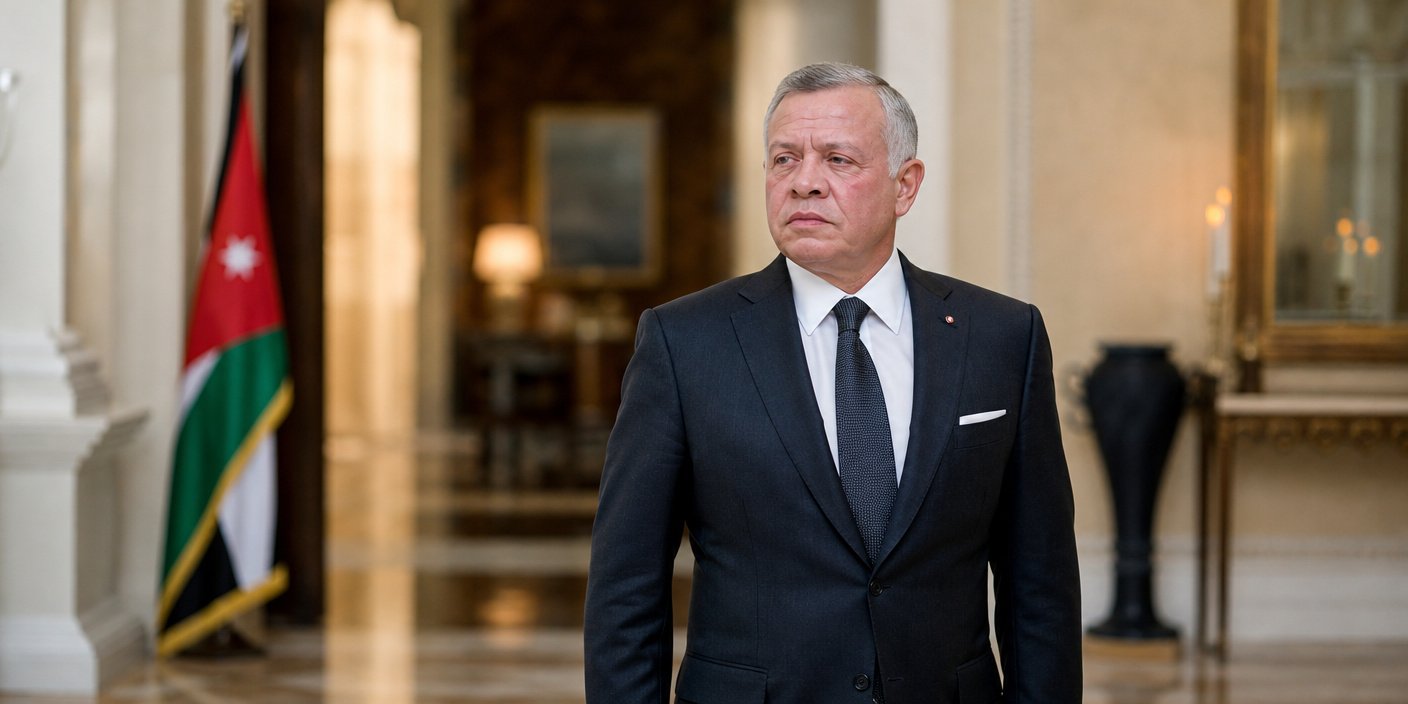
Jordan Mourns: King Abdullah Vows Retaliation After Church Attack
Jordan has entered a somber three-day period of national mourning following a devastating terrorist assault on a Greek Orthodox church in the Karak governorate, a tragedy that claimed at least seven lives and left 28 individuals injured. The attack, which struck a gathering during a funeral service, has sent shockwaves through the Kingdom, shattering a perceived sense of security in the historic region. In a rapid and forceful response to the atrocity, King Abdullah II has pledged that the state will pursue the ‘harshest retaliation’ against the perpetrators, signaling a zero-tolerance policy toward those attempting to destabilize the nation’s internal security.
Key Highlights
- National Mourning Period: The Jordanian government has officially mandated a three-day period of national mourning to honor the victims of the attack in Karak.
- Casualty Statistics: The assault resulted in at least seven confirmed deaths and 28 injuries, marking one of the most violent incidents in the region in recent years.
- Royal Directive: King Abdullah II has publicly committed to a stern security response, vowing the “harshest retaliation” to ensure such acts of terror do not disrupt the Kingdom’s sovereignty.
- Targeted Tragedy: The attack specifically targeted a congregation at a Greek Orthodox church, an event that has drawn widespread condemnation and international calls for solidarity with Jordan’s Christian minority.
The Anatomy of the Karak Crisis and State Response
The attack in the Karak governorate represents a significant escalation in the security challenges facing Jordan. Karak, known for its historic Crusader castle and deep-rooted cultural heritage, has historically remained a relatively stable region within the Kingdom. However, the unexpected nature of the strike—targeting mourners during a funeral at a Greek Orthodox church—has forced a recalibration of local security protocols.
Assessing the Security Vacuum
Intelligence and security services in Jordan have immediately initiated a comprehensive crackdown in the aftermath of the violence. The focus of this operation is multi-pronged: identifying the cell responsible for the attack, tracing the provenance of the weaponry used, and neutralizing any remaining threats within the governorate. King Abdullah II’s rhetoric regarding the ‘harshest retaliation’ is not merely symbolic; it reflects the Hashemite Kingdom’s strategic doctrine of proactive defense. By swiftly declaring three days of national mourning, the administration aims to unify the country under a banner of shared grief, effectively neutralizing attempts by extremist elements to sow sectarian discord between the nation’s Muslim and Christian communities.
The Historical Significance of Karak
Karak is not merely a geographic location; it is a symbol of Jordanian history and diverse cultural identity. The targeting of a Greek Orthodox institution here is widely viewed by analysts as a strategic attempt to undermine the Kingdom’s reputation as an oasis of religious coexistence in a volatile Middle East. The state’s response, therefore, must balance the immediate need for security with the long-term imperative of social cohesion. The government’s rapid deployment of security assets indicates that they view the protection of all religious institutions—regardless of denomination—as a paramount national security priority.
The Path Forward: Stability vs. Extremism
Moving forward, the primary challenge for the Jordanian security apparatus will be the prevention of ‘copycat’ incidents and the management of public anxiety. In the wake of the 28 injuries and seven fatalities, the strain on local medical infrastructure in Karak has been acute, leading to an outpouring of support from across the country. Citizens have reportedly rushed to blood banks, demonstrating the resilience of the Jordanian social fabric. The King’s commitment to a firm response is designed to reassure the populace that the state remains fully capable of protecting its citizens from domestic threats.
Geopolitical Implications
Jordan occupies a pivotal geopolitical position, acting as a crucial buffer zone and a key ally in international efforts against terrorism. This attack serves as a stark reminder of the persistent threats posed by localized extremist groups that seek to exploit regional instabilities. The international community is watching Jordan’s response closely; the ability of the Kingdom to suppress these elements while maintaining domestic tranquility will determine its continued status as a regional anchor of stability. The ‘harshest retaliation’ promised by the King is a signal not only to domestic actors but also to external observers that the Hashemite throne is unyielding in the face of terror.
FAQ: People Also Ask
1. What is the current status of the investigation into the Karak church attack?
The Jordanian security services have launched an intensive, multi-agency investigation. They are currently focusing on the identification and apprehension of all individuals involved, with the goal of completely dismantling the cell responsible for the attack.
2. Why was a 3-day mourning period declared?
The declaration of a three-day national mourning period is a formal gesture by the Jordanian government to honor the seven individuals who lost their lives. It serves to express national unity, provide the victims’ families with state-level recognition, and foster social solidarity in the face of the tragedy.
3. How has the international community responded to the King’s vow?
Global leaders have largely expressed support for Jordan, condemning the act of terrorism and acknowledging the country’s significant role in regional counter-terrorism efforts. Many nations have pledged to continue intelligence sharing and cooperation with Jordanian authorities to prevent future incidents.


Related Posts


