
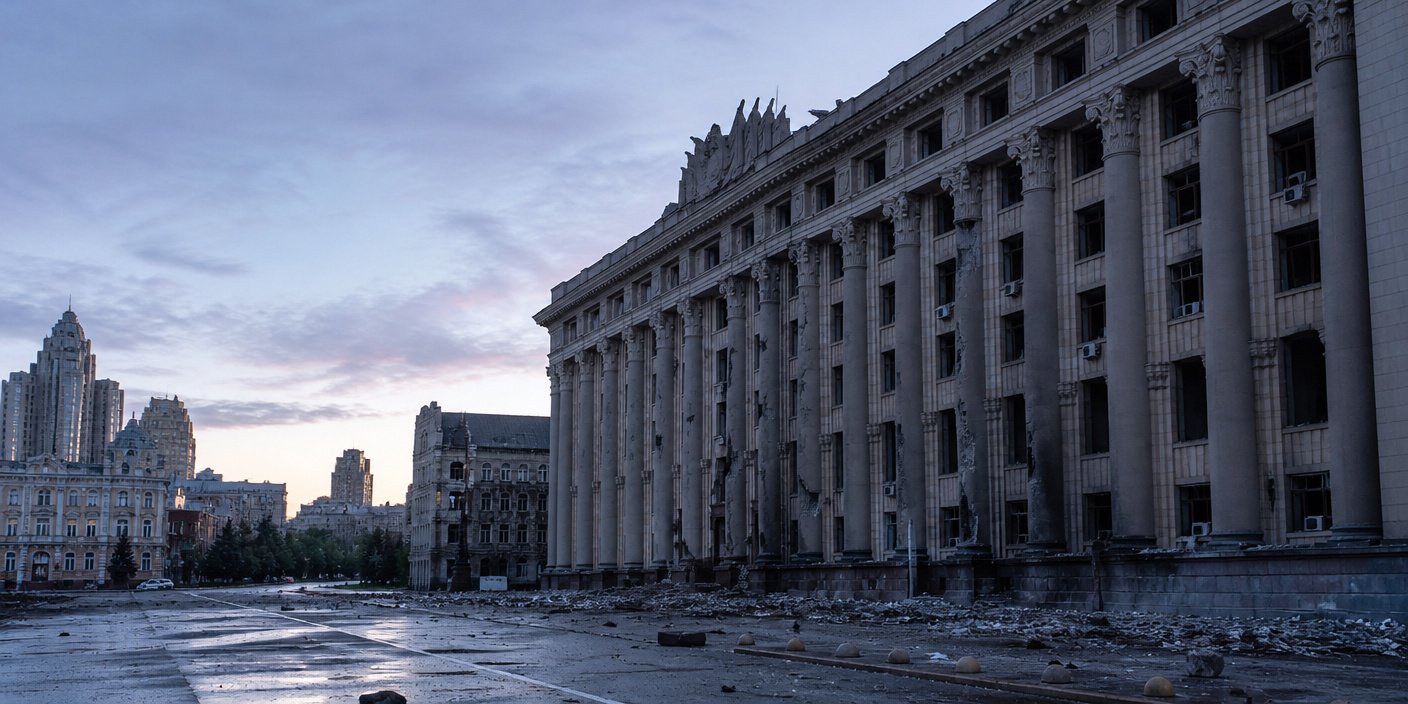
Kyiv Under Fire: Missile Barrage Shatters Diplomatic Hopes
The skies over Kyiv were violently illuminated overnight on Thursday as Russian forces executed three distinct waves of ballistic missile strikes, a coordinated assault that has abruptly halted momentum toward potential peace negotiations. This escalation arrives with jarring precision, occurring merely hours after Russian President Vladimir Putin signaled a theoretical readiness to engage in diplomatic discourse. The timing is particularly conspicuous, following a significant three-hour closed-door meeting between Putin and U.S. special envoy Steve Witkoff. As the smoke clears and damage assessments begin, the international community is left to reckon with a stark, brutal reality: the path to de-escalation appears to be paved with broken promises and ballistic trajectories.
Key Highlights
- Coordinated Assault: Russia executed three consecutive waves of ballistic missile strikes targeting Kyiv throughout the night on Thursday.
- Diplomatic Friction: The attacks immediately followed a high-stakes, three-hour discussion between U.S. envoy Steve Witkoff and Vladimir Putin.
- Zelenskyy’s Response: President Volodymyr Zelenskyy has labeled the strikes as a clear intensification of Russian aggression, demanding an immediate surge in Western-supplied air defense systems.
- Peace Talks Stalled: The brazen nature of the attack has cast significant doubt on the sincerity of recent signals regarding Russia’s openness to peace negotiations.
The Strategic Disconnect: Diplomacy Versus Firepower
The events of the past 24 hours have created a volatile paradox in the ongoing geopolitical struggle. On one side, the diplomatic channels, symbolized by the recent visit of Steve Witkoff, suggested a fragile opening for potential dialogue. Witkoff, tasked with navigating the complex friction points between Moscow and the West, spent three hours in direct negotiation with Vladimir Putin. Yet, the tactical response from Moscow was swift and contradictory. Instead of a cooling-off period, the Russian military launched three waves of ballistic missiles at the Ukrainian capital, signaling that while political envoys may sit at tables, the command structure remains committed to a strategy of attrition.
The Nature of the Threat
Ballistic missiles represent a tier-one threat in the current conflict. Unlike cruise missiles, which can sometimes be tracked and engaged by a wider array of air defense systems, ballistic missiles descend at hypersonic speeds, offering significantly shorter reaction windows. The decision to employ three successive waves suggests a deliberate attempt to saturate Kyiv’s air defense grid. Experts note that this tactic is designed not just to cause infrastructure damage, but to force Ukraine to expend critical interceptor ammunition. By drawing out these resources, Russia creates a dual-pressure environment: economic strain through infrastructure destruction and military strain through the depletion of air defense capabilities.
The Diplomatic Fallout
President Volodymyr Zelenskyy’s reaction was swift and unambiguous. In a public address, he framed the overnight strikes not as an isolated incident, but as a calculated continuation of Russian aggression. By launching these attacks, the Kremlin has effectively challenged the perceived progress of the Witkoff meetings. For Washington and Kyiv, the question now shifts from ‘how to negotiate’ to ‘how to survive the next escalation.’ The strikes have acted as a cooling agent on the diplomatic fever, forcing Western powers to recalibrate their expectations regarding the efficacy of direct engagement with the Kremlin.
Strategic Implications for Air Defense
With Western air defense support now elevated to an ‘urgent’ status, the geopolitical landscape shifts toward a supply-side crisis. The efficacy of the Patriot and IRIS-T systems has been the thin line between survival and devastation for Kyiv. However, the intensity of these three waves demonstrates that Russia is actively testing the limits of this shield. The coming days will likely see intensified lobbying from Kyiv for additional missile batteries, shifting the conversation from peace proposals back to the cold mathematics of munitions availability.
Historical Context and Future Outlook
To understand the gravity of this moment, one must look at the historical pattern of ‘diplomacy-under-fire.’ In previous iterations of this conflict, strategic pauses were often used by the Kremlin to regroup, while overtures of peace were frequently used as tactical misdirection to maintain military momentum. The current situation mirrors this trend, suggesting that any future diplomatic efforts must be accompanied by ironclad guarantees or a shift in the battlefield calculus. Predicting the future of these talks requires acknowledging that for the Kremlin, these strikes may serve as a ‘demonstration of force’—a way to enter any future negotiation room with the leverage of kinetic destruction already firmly established.
FAQ: People Also Ask
Q: How do these strikes impact the credibility of the Witkoff-Putin meeting?
A: The strikes have severely undermined the perceived outcomes of the meeting. While Witkoff engaged in a three-hour dialogue, the military action immediately following suggests that the diplomatic conversation did not lead to any immediate military de-escalation, effectively stalling potential progress.
Q: Were these strikes specifically targeting high-value infrastructure?
A: While specific target details are often restricted, ballistic missile strikes in Kyiv are almost exclusively aimed at critical power, communication, or military command infrastructure to exert maximum pressure on both the population and the government.
Q: What is the significance of the ‘three waves’ tactic?
A: Three waves are designed to exhaust interceptor stocks. By forcing air defense systems to engage repeatedly in short succession, the attacker hopes to overwhelm the reload cycle and the supply of interceptor missiles, creating openings for subsequent waves to impact their intended targets.
Q: Has the U.S. responded to the renewed aggression?
A: While the U.S. has not officially commented on the specific failure of the diplomatic talks following the strikes, the urgency of Zelenskyy’s call for defense support puts immense pressure on the Biden administration to accelerate military aid packages, effectively signaling a shift back to defensive posturing.


Related Posts


