
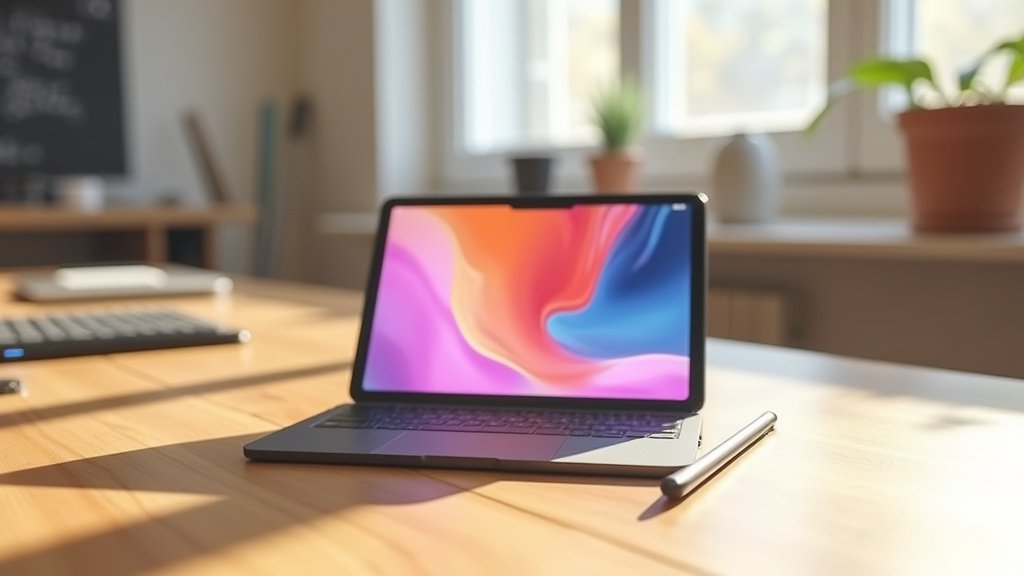
Apple Reimagines the iPad mini: Power and Precision Redefined
Apple has officially redefined the small-form tablet category, launching an iPad mini that bridges the gap between extreme portability and high-end professional performance. With the strategic integration of a brilliant OLED display, the bleeding-edge A20 Pro chip, and robust water and dust resistance, this refresh marks the most significant architectural overhaul in the device’s history, signaling a clear shift in how Apple views the “mini” form factor: no longer just a companion device, but a primary machine for the creative professional on the move.
Key Highlights
- Next-Gen OLED Display: A massive leap in visual fidelity, offering deeper blacks, infinite contrast, and professional-grade color accuracy previously reserved for the high-end iPad Pro models.
- A20 Pro Performance: The inclusion of the A20 Pro silicon transforms the device into a desktop-class workstation capable of handling complex 3D rendering, high-resolution video editing, and advanced multitasking.
- Unmatched Durability: With newfound water and dust resistance, the iPad mini breaks free from the constraints of the desk, becoming a truly all-weather, all-terrain device for field work and travel.
The Engineering Renaissance: Inside the New iPad mini
The decision to equip the iPad mini with the A20 Pro chip is a clear statement of intent from Cupertino. Historically, the mini was viewed as a media consumption device—a lighter alternative to the flagship iPad Air or Pro. By introducing the A20 Pro, Apple has effectively inverted this dynamic. The architecture within the new chassis manages heat dissipation more efficiently than ever before, allowing for sustained performance during intense computational tasks.
The OLED Advantage
The transition to OLED technology is arguably the most impactful change for the user experience. By eliminating the backlight used in traditional LCD panels, the new display provides a distinct visual clarity. Each pixel is self-emissive, allowing for true blacks and significantly better power management. For digital illustrators, photo editors, and videographers, this means a portable canvas that is finally capable of professional-grade color grading and precision work.
Durability Meets Portability
The addition of water and dust resistance addresses the primary “pain point” for the mobile professional. Tablets have traditionally been fragile tools, best suited for controlled environments. By engineering an chassis that can withstand environmental ingress, Apple has unlocked new use cases. Whether it is architectural site planning in the field, outdoor sketching, or simply the peace of mind while traveling, the device now matches the rugged lifestyle of the modern “pro” user.
Secondary Angles: The Future of the Compact Ecosystem
1. The Death of the “Companion Device” Myth
For years, the tablet market was segmented by size: small meant casual, large meant professional. The new iPad mini shatters this paradigm. With the processing power of the A20 Pro, we are witnessing the convergence of laptop performance and smartphone convenience. This device challenges the necessity of a laptop for the average professional, provided their workflow is optimized for touch and stylus input.
2. Economic Impact on the Tablet Sector
By pushing premium features down into the smaller form factor, Apple is effectively creating a new price-to-performance tier. This will likely force competitors to either increase the durability and processing power of their own small tablets or risk obsolescence. The value proposition here is heavily weighted toward the user, providing a workstation-grade tool in a sub-8-inch package.
3. The Gaming Renaissance
With the A20 Pro, the iPad mini has quietly become the most powerful portable gaming console on the market. The combination of the new OLED display’s rapid response time and the GPU power of the A20 Pro architecture suggests that Apple is aggressively targeting the high-performance gaming segment, positioning the iPad mini as a viable alternative to dedicated handheld gaming PCs.
FAQ: People Also Ask
Q: How does the new OLED display improve the iPad mini experience?
A: The OLED display offers significantly improved contrast ratios and color accuracy compared to previous LCD models. By allowing for individual pixel control, it provides deeper blacks and more vibrant highlights, making it ideal for creative professionals and media consumption.
Q: Is the new iPad mini truly waterproof?
A: The device now features improved durability, specifically rated for water and dust resistance. While this significantly improves its resilience in harsh environments, standard care is still advised to avoid prolonged submersion.
Q: Does the A20 Pro chip make a noticeable difference in daily use?
A: Absolutely. The A20 Pro is designed for high-performance tasks, including video rendering, gaming, and complex multitasking. It allows the iPad mini to handle applications that would typically cause thermal throttling or performance slowdowns on older or less powerful chips.
Q: Who is this new iPad mini for?
A: It is designed for creative professionals, mobile workers, and power users who require desktop-class performance in a highly portable form factor, without the bulk of a 13-inch laptop.


Related Posts


