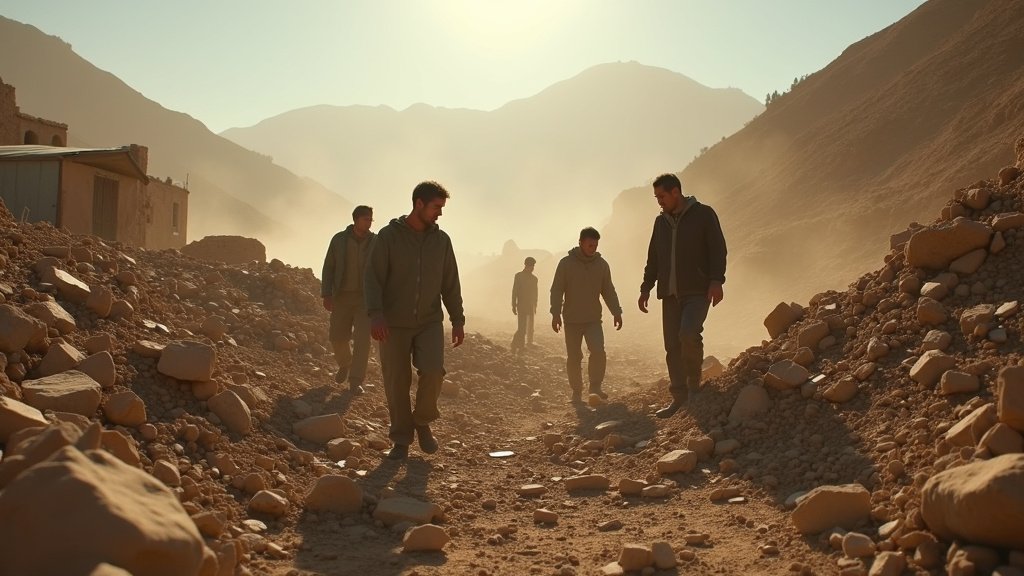
Afghanistan Earthquake: Over 2,200 Dead, Massive Rescue Operation Underway Amidst Mounting Humanitarian Crisis
Afghanistan Rocked by Deadly Earthquake: Massive Rescue Operation Underway Amidst Devastating Loss
A powerful 6.0 magnitude earthquake struck eastern Afghanistan on the night of August 31, 2025, unleashing catastrophic destruction across remote, mountainous regions. The tremor, followed by numerous aftershocks, has resulted in a tragic loss of life, with official figures reporting over 2,200 fatalities and more than 3,600 injuries. The devastating event has flattened thousands of homes, leaving an estimated 56,000 people directly affected and over 3,000 families displaced. The Taliban-led government has issued an urgent plea for international humanitarian aid, as rescue and recovery efforts grapple with immense challenges.
Epicenter and Affected Regions
The earthquake’s epicenter was located approximately 8 kilometers beneath the surface in Nurgal District, Kunar Province, near the border with Pakistan. The shallow depth of the quake, combined with the region’s mountainous topography and poor construction quality, amplified its destructive impact. Nangarhar and Kunar provinces bore the brunt of the disaster, with entire villages wiped out in districts like Chawkay, Nurgal, Dara-e-Pech, and Watapur in Kunar, and Dara-e-Nur, Behsud, and Kuz Kunar in Nangarhar. Tremors were felt as far away as Kabul, the capital, and even in Islamabad, Pakistan.
The Human Toll
The human cost of the earthquake is staggering. As of late September 2025, over 1,992 people had been confirmed dead, with 52% of fatalities being women and girls. More than 3,631 individuals sustained injuries, with 54% also being women and girls. Reports indicate that many buildings, predominantly traditional mud-brick and stone structures, collapsed immediately during the tremor due to their low-quality construction. The disaster also claimed the lives of at least 391 schoolchildren and several teachers when classrooms collapsed, underscoring the profound impact on the nation’s future. Over 8,400 homes were destroyed or severely damaged, leaving survivors in dire need of shelter.
Challenges Hampering Rescue and Relief Efforts
The scale of devastation is compounded by significant logistical and environmental hurdles. The rugged, mountainous terrain makes accessing many of the hardest-hit areas extremely difficult, with landslides triggered by the earthquake blocking crucial roads and access routes. In some instances, communities have become isolated, reachable only by foot with hours of travel from the nearest accessible point.
The Taliban government, while mobilizing its own resources including helicopters for critical medical evacuations, faces limitations in its capacity for sustained long-term assistance. The coordination between the de facto authorities and international humanitarian agencies is active, but the sheer magnitude of the disaster strains all available resources. Aftershocks, including a magnitude 5.2 event on September 4 and another on September 23, have continued to cause damage and hinder rescue operations.
International Response and Humanitarian Aid
The Taliban has appealed for international humanitarian assistance, highlighting the critical need for medical supplies, shelter, food, and winter supplies as temperatures begin to drop. Several neighboring countries, including Iran, Pakistan, and China, have offered support. The United Nations, through agencies like OCHA, WHO, and UNICEF, has been on the ground, providing immediate life-saving interventions, including trauma kits, emergency health supplies, mobile health teams, and hygiene kits. The World Food Programme is also distributing ready-to-eat food and facing significant funding shortfalls.
The European Union has pledged €1 million in humanitarian funding and 130 tonnes of in-kind assistance, while the Australian Government committed $1 million towards the relief efforts. However, concerns linger among international donors regarding the diversion of aid by the Taliban regime, leading some nations, like the UK and Australia, to emphasize channeling aid through experienced partners to ensure it reaches those in need and not the authorities. The UN Central Emergency Response Fund (CERF) has released $5 million, and the Afghanistan Humanitarian Fund is set to allocate an additional $5 million to support the response. A UN appeal for the Eastern Afghanistan Earthquake Response Plan is requesting $16.8 million for emergency and early recovery needs.
Compounding Crises and Long-Term Concerns
The earthquake has struck a nation already grappling with severe humanitarian and economic crises. Millions of Afghans had already returned from Iran and Pakistan since January 2025, adding to the internal displacement caused by conflict, drought, and economic collapse. The destruction of water sources and sanitation infrastructure has heightened the risk of disease outbreaks, with over 212,000 children at risk of acute watery diarrhea. The approaching winter, with temperatures predicted to drop as low as -20 degrees Celsius in higher altitudes, presents a critical need for winterization support and adequate shelter to prevent further loss of life.
Furthermore, the Taliban’s restrictive policies, particularly concerning women’s rights, have complicated humanitarian efforts. Restrictions on female aid workers and cultural norms have hampered rescue and medical assistance for women and girls, who constitute a significant portion of the affected population. The UN has warned that these limitations could jeopardize aid efforts and has called for the lifting of restrictions.
The long-term recovery prospects are challenging, compounded by Afghanistan’s diplomatic isolation and declining international funding for infrastructure and emergency relief. Scientists from the United Nations University have warned that without sustained investment in safer construction and disaster risk reduction, similar disasters are likely to recur. The international community is urged to recommit to Afghanistan for the long haul, not only to fund immediate relief but also to support a future beyond perpetual emergency.


Related Posts