Chicago Braces for Mega-Weekend Gridlock
Chicago is preparing for an unprecedented convergence of culture, sports, and culinary tradition this weekend, as the city braces for a massive influx of tourists and residents alike. The synergy of Lollapalooza’s sprawling footprint at Grant Park, the community-focused Italian Beef Fest, and the high-profile three-game series between the Chicago Cubs and the New York Yankees at Wrigley Field has placed city infrastructure under a magnifying glass. Authorities have issued widespread advisories regarding security protocols and public transit congestion, urging attendees to plan their movements hours in advance as the city navigates one of its busiest stretches of the calendar year.
Key Highlights
- Lollapalooza Footprint: Over 100,000 daily attendees are expected at Grant Park, prompting strict perimeter security and bag policies implemented by C3 Presents and the Chicago Police Department.
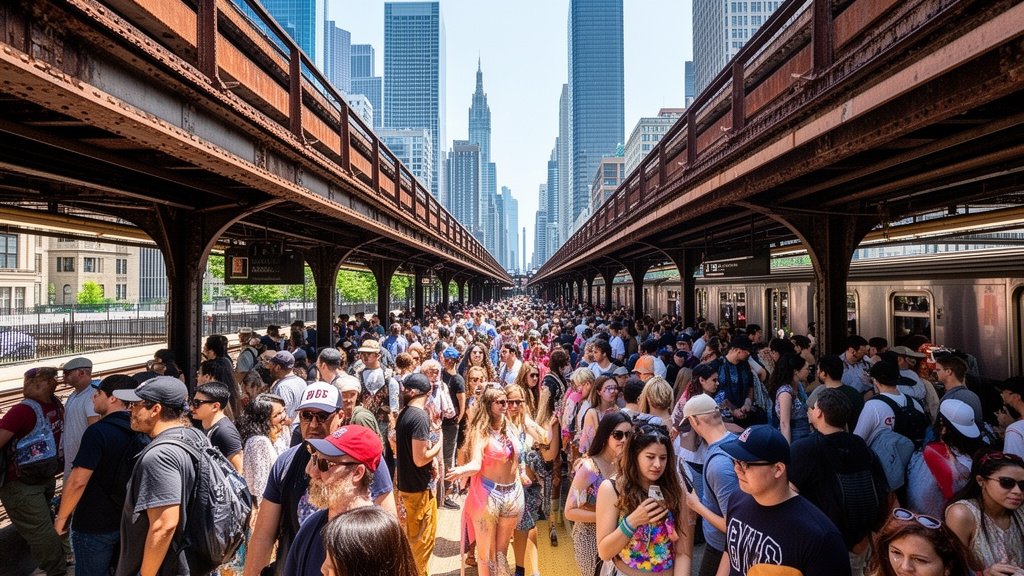
- Sports Rivalry: The Cubs vs. Yankees series at Wrigley Field has driven ticket prices to premium levels, creating a secondary traffic bottleneck on the North Side, particularly impacting the CTA Red Line.
- Culinary Events: The Italian Beef Fest is expected to draw significant crowds, creating localized traffic disruptions in its designated neighborhood, serving as a reminder of Chicago’s identity as a culinary capital.
- Infrastructure Strain: The Office of Emergency Management and Communications (OEMC) has escalated transit surveillance and staffing, advising commuters to anticipate heavy delays and utilize real-time transit apps for rerouting.
The Chicago Congestion Conundrum: A City at Capacity
The convergence of these specific events is not merely a scheduling coincidence; it represents the operational pinnacle of a modern metropolitan center managing a “mega-weekend.” When a city hosts a major music festival of Lollapalooza’s scale simultaneously with professional sports rivalries and localized neighborhood celebrations like the Italian Beef Fest, the friction points are predictable but intense. For Chicago, this weekend is a stress test of urban mobility and public safety integration.
The Lollapalooza Logistical Footprint
Lollapalooza remains the gravitational center of this weekend’s activity. Spanning the entirety of Grant Park, the festival requires complex coordination between private event security and city resources. The primary challenge for law enforcement is managing the flow of pedestrian traffic into and out of the park, particularly near the Michigan Avenue and Columbus Drive corridors. From a logistical standpoint, the festival’s impact is felt most acutely in the downtown core, where hotel occupancy rates typically reach near-capacity during the event’s four-day run. The economic ripple effect is massive, benefiting the hospitality sector while simultaneously pushing the city’s sanitation and waste management services to their limits.
The Wrigley Field Factor: Cubs vs. Yankees
While Lollapalooza dominates the downtown corridor, the North Side faces its own set of pressures. A series between the Chicago Cubs and the New York Yankees is a high-demand ticket. Unlike a standard midweek game, a series of this prestige attracts a high percentage of out-of-town visitors who are unfamiliar with local transit nuances. This adds a layer of complexity to the Wrigleyville neighborhood, where parking is notoriously scarce. The CTA Red Line acts as the primary artery connecting these two distinct zones of activity—the downtown festival grounds and the North Side stadium—creating a unified, city-wide transit network under extreme pressure. This interconnection requires a level of coordination rarely seen outside of major holidays or political conventions.
Culinary Culture as a Crowd Magnet: Italian Beef Fest
Incorporating a neighborhood-centric event like the Italian Beef Fest into the weekend creates a unique dynamic. While music festivals and major league baseball are regional draws, the Italian Beef Fest operates on a more granular, local level. It forces a collision between the international festival-goer and the domestic culinary tourist. This event highlights the “neighborhoodization” of Chicago’s summer calendar—a trend where smaller, niche events are increasingly becoming major attractions. For the city, this means managing crowds not just in the central business district, but in neighborhood corridors that may not be optimized for mass-transit saturation.
Strategic Analysis: The Infrastructure Challenge
From a civic management perspective, the primary concern is the resiliency of the Chicago Transit Authority (CTA). The combination of these events creates a bidirectional surge in ridership. Attendees leaving Grant Park often move north, while those exiting Wrigley Field disperse throughout the city. The OEMC has emphasized the need for real-time traffic management, utilizing traffic control aides to prioritize pedestrian safety over vehicular flow during peak exit times.
Looking beyond the immediate logistics, three secondary angles define this weekend’s significance:
1. The Evolution of the Summer Economy: The modern summer festival season has shifted from single-purpose trips to multi-event weekends. Tourists are no longer just visiting for a concert; they are curating a “Chicago experience” that includes stadium sports and local culinary exploration. This represents a significant shift in tourism marketing, favoring experiential packages.
2. The Role of Public Transit as a Stabilizer: The success of such a weekend relies almost entirely on the efficacy of the Red and Blue lines. If these transit arteries fail, the city gridlocks. This highlights the critical need for continued municipal investment in public transit as a primary tool for event management, rather than an afterthought.
3. Public-Private Coordination: The cooperation between private entities (C3 Presents, MLB) and public agencies (Chicago Police, OEMC, CTA) serves as a blueprint for how major American cities handle mega-events. This weekend effectively acts as a dress rehearsal for larger international events, demonstrating the city’s ability to scale resources rapidly.
As Chicago moves through this weekend, the success of these events will be measured not just by attendance numbers or economic output, but by the city’s ability to maintain order and mobility amid the chaos. It is a balancing act of massive proportions, requiring vigilance from authorities and patience from the public.
FAQ: People Also Ask
1. How are security protocols handled for simultaneous events like Lollapalooza and Cubs games?
The Office of Emergency Management and Communications (OEMC) utilizes a tiered deployment strategy. They coordinate with private security teams at venues (like C3 Presents at Grant Park) to ensure that police and traffic control aides are positioned to handle spillover, while stadium security at Wrigley Field manages the perimeter of the ballpark independently but reports to a unified command center for major incidents.
2. What is the best way to travel around Chicago during this weekend?
Authorities strongly advise against driving. The sheer volume of pedestrian traffic makes navigating downtown and Lakeview via car inefficient. The CTA rail lines (specifically the Red and Blue lines) are the most reliable methods of transport, though riders should anticipate significant crowding. Using ride-share apps is cautioned, as surge pricing and street closures make pickup/drop-off points difficult to access.
3. Will parking be restricted near these event venues?
Yes. Expect “No Parking” zones to be strictly enforced around Grant Park and Wrigley Field. The city frequently implements temporary street closures to facilitate pedestrian movement and emergency vehicle access. It is recommended to use official event parking garages if driving is unavoidable, though these will sell out quickly.
4. Is there an economic impact study available for this specific weekend?
While real-time data for a single weekend is rarely published instantly, historically, weekends of this scale generate tens of millions in revenue for the hospitality, food, and retail sectors. Chicago’s summer tourism peak, supported by such high-density scheduling, is a critical component of the city’s annual fiscal health, particularly for the downtown core.


Related Posts