
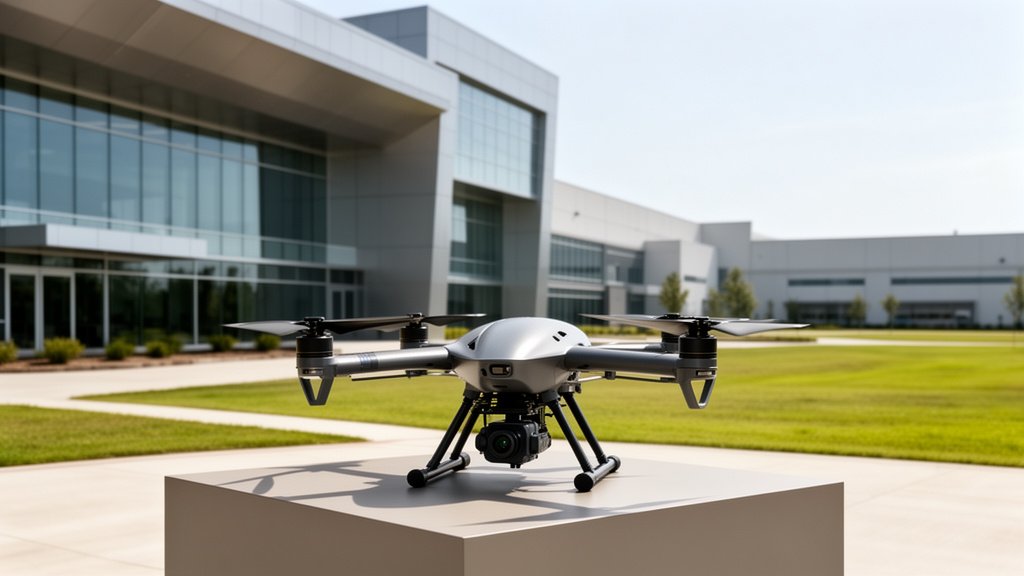
Skyeton Chooses Fayetteville for First U.S. Drone Hub
Skyeton, Inc., a prominent international unmanned aerial systems (UAS) manufacturer, has officially selected Fayetteville, North Carolina, as the site for its first flagship U.S. manufacturing facility. Announced by Governor Josh Stein, the strategic investment represents a significant win for North Carolina’s growing aerospace and defense sector, promising to bring 162 high-skilled jobs to the region. This move signifies a pivotal shift in the local economic landscape, signaling Fayetteville’s emergence as a premier destination for high-tech international manufacturing.
Key Highlights
- Skyeton, Inc. will open its premier U.S. manufacturing facility in Fayetteville, NC, targeting the North American market.
- The expansion project is projected to create 162 new full-time positions, ranging from engineering to assembly.
- Governor Josh Stein facilitated the announcement, bolstering North Carolina’s reputation as a critical hub for the Unmanned Aerial Systems (UAS) industry.
- This investment marks a major international expansion for the drone manufacturer, bridging European engineering expertise with American production capability.
Advancing North Carolina’s Aerospace Future
The selection of Fayetteville by Skyeton, Inc. is more than a standard corporate relocation; it is a calculated strategic move that underscores North Carolina’s increasing dominance in the aerospace and defense technology corridor. Governor Josh Stein’s administration has prioritized economic development initiatives that attract global technology firms, and the arrival of Skyeton is a testament to the effectiveness of the North Carolina Department of Commerce’s outreach efforts. The decision to establish a flagship facility in this specific region of the state suggests a long-term commitment to integrating with the local supply chain and leveraging the skilled labor force inherent to the Fayetteville-Cumberland County area.
The Economic Impact: Beyond the Bottom Line
While the headline figure of 162 jobs is the primary economic driver for the immediate announcement, the secondary economic impact is likely to be far-reaching. Manufacturing facilities of this caliber act as catalysts for auxiliary business growth. Suppliers, logistics firms, and specialized component manufacturers often cluster around flagship production hubs, creating a regional ecosystem that fosters further innovation.
For Fayetteville, this development helps diversify the local economy, which has historically relied heavily on the military presence at nearby Fort Liberty. By introducing a high-tech manufacturing sector, the city is effectively insulating itself against fluctuations in federal spending and creating a broader employment base for the local workforce. This transition toward technology-driven manufacturing is vital for the region’s long-term prosperity, offering competitive, high-wage roles that retain local talent and attract specialized professionals from across the country.
Strategic Synergies in UAS Manufacturing
Skyeton, Inc.’s expertise in Unmanned Aerial Systems places them at the intersection of defense, logistics, and surveillance technology. The decision to manufacture in the U.S. allows the company to navigate international regulatory frameworks more effectively, particularly concerning ITAR (International Traffic in Arms Regulations) compliance and domestic supply chain security requirements.
By localizing their production, Skyeton can provide American clients—including federal and state government entities—with rapid deployment capabilities. This proximity to the end-user is critical in the UAS market, where maintenance, upgrades, and operational training are just as significant as the hardware itself. The Fayetteville facility is expected to be more than just an assembly line; it will likely function as a comprehensive hub for testing, rapid prototyping, and client integration, ensuring that Skyeton remains at the cutting edge of drone technology.
The Regional Competitive Advantage
Why did Skyeton choose Fayetteville? The answer lies in the intersection of infrastructure, cost-of-doing-business, and proximity to specialized talent. North Carolina has consistently ranked as one of the best states for business, characterized by its favorable tax structure, robust university research pipelines, and established industrial zones.
Fayetteville, in particular, offers an unique advantage: a workforce with a high concentration of veterans and military personnel who possess the technical aptitude and discipline required for advanced drone manufacturing. This demographic alignment is a distinct selling point for companies in the defense-adjacent sector. The partnership between Skyeton and the local economic development organizations was likely driven by these structural advantages, combined with significant incentive packages designed to derisk the company’s initial capital expenditure in the U.S.
Scaling the Future of Aerial Operations
As the demand for unmanned aerial systems continues to skyrocket across sectors—ranging from agricultural monitoring and search-and-rescue operations to critical infrastructure surveillance—the need for robust, reliable manufacturing becomes paramount. Skyeton’s arrival in North Carolina positions the state at the forefront of this industrial revolution.
Moving forward, the success of this facility will be measured not only by the 162 jobs filled but by the company’s ability to scale production and integrate into the broader U.S. defense and commercial drone architecture. If successful, the Fayetteville plant could serve as a blueprint for international companies looking to enter the American market, potentially leading to further investment and the establishment of a localized drone manufacturing cluster. This development marks the dawn of a new, highly specialized chapter in Fayetteville’s industrial history.
FAQ: People Also Ask
Q: What specific types of drones will Skyeton be manufacturing in Fayetteville?
A: While specific product models are subject to competitive strategy, Skyeton specializes in versatile unmanned aerial systems (UAS) capable of performing long-range, high-endurance missions for both commercial and defensive applications.
Q: When will the new Fayetteville facility officially begin operations?
A: While the official announcement confirmed the selection, detailed timelines regarding groundbreaking and full operational status are expected to be shared by the North Carolina Department of Commerce and Skyeton leadership in the coming months.
Q: How does this project impact the local Fayetteville workforce?
A: The project creates 162 high-skilled jobs, which will include roles in engineering, precision assembly, systems integration, and quality control, offering new employment pathways for the region’s technical and veteran workforce.


Related Posts