
USDA Injects $26M to Supercharge Beef & Ag Producers
The U.S. Department of Agriculture (USDA) has officially greenlit a significant financial injection into the nation’s agricultural heartland, awarding over $26 million in grants through the Value-Added Producer Grant (VAPG) Program. This sweeping initiative impacts 194 distinct projects across the country, aiming to catalyze economic development by helping farmers and ranchers transition from traditional commodity production to higher-value goods. Of particular note is the aggressive prioritization of the American beef industry, which secured $11.6 million of this total funding, directly supporting 80 beef-centric projects. This move is designed not just to subsidize production, but to foster long-term economic independence for rural enterprises by improving marketing strategies, modernizing processing capabilities, and strengthening local supply chain resilience against global market volatility.
Key Highlights
- Massive Investment: The USDA has awarded over $26 million in total grants through the VAPG Program to support 194 projects nationwide.
- Beef Industry Priority: A staggering $11.6 million—nearly half of the total allocation—is dedicated to 80 specific beef producer projects to bolster domestic meat production.
- Economic Strategy: The VAPG program funds are aimed at helping producers enter new markets, develop value-added products, and improve rural economic resilience.
- Modernizing Ag-Business: Recipients will use funds for diverse activities ranging from processing and packaging to advanced marketing and distribution, helping small producers capture a larger share of the food dollar.
Empowering the Backbone of the American Food Supply
The Strategic Shift: Why Beef Matters
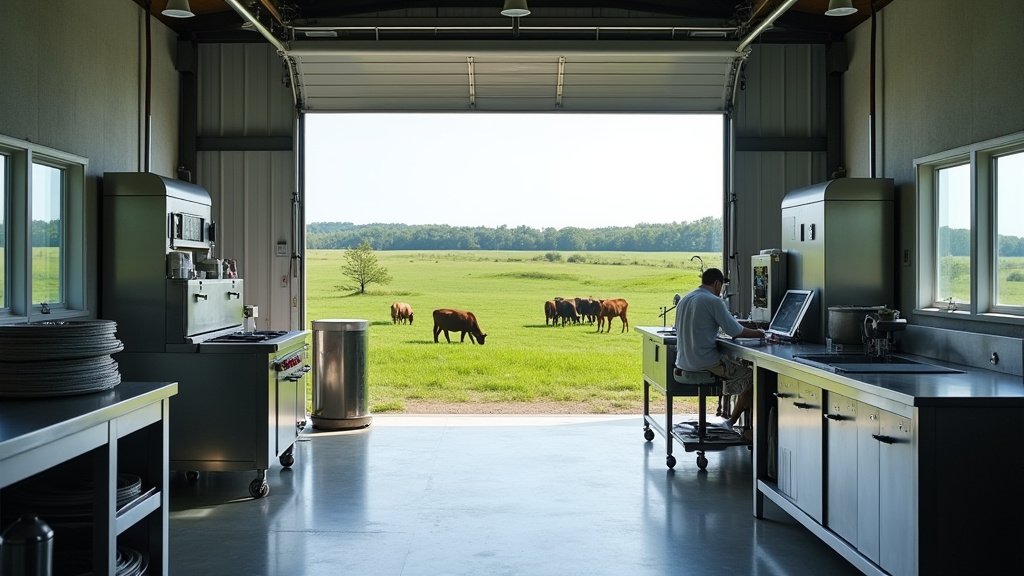
The allocation of $11.6 million to 80 beef producer projects represents more than just a fiscal statistic; it reflects a strategic pivot in how the USDA views the stability of the American food supply. For decades, the beef industry has faced structural consolidation, leaving many small and mid-sized ranchers vulnerable to the whims of the dominant processing giants. By injecting targeted capital into these 80 projects, the USDA is effectively helping ranchers build their own “value-added” pathways. This means that instead of simply selling cattle at live auction, these producers are gaining the capital necessary to invest in on-farm processing, branding, specialty cut packaging, and direct-to-consumer marketing channels.
This shift allows beef producers to capture a significantly larger margin of the final retail price. When a rancher moves from being a raw-commodity supplier to a branded product manufacturer, they gain immunity against the middleman-heavy volatility that has plagued the industry. The 80 funded projects are likely to focus on initiatives like USDA-inspected local processing facilities, e-commerce infrastructure for regional delivery, and certifications that allow for higher price points in specialty retail environments.
Understanding the Value-Added Producer Grant (VAPG) Mechanism
The VAPG program is a unique instrument in the USDA’s economic development arsenal because it does not simply hand out cash for operational expenses; it funds the growth and diversification of a business. To qualify for these grants, producers must demonstrate that they are adding value to their raw product. For instance, a corn farmer converting grain into ethanol or cornmeal, or a cattle rancher converting live weight into premium, packaged steaks, exemplifies this. The $26 million distributed across 194 projects is aimed at this specific transformation.
The multiplier effect of these grants is substantial. By fostering locally-owned processing and marketing entities, the funding ensures that capital stays within rural communities. When a small beef producer in a rural county adds a packaging facility, they are not just increasing their own revenue; they are hiring local workers, engaging local logistics firms, and contributing to the tax base of their town. The VAPG program essentially acts as seed money for small businesses to modernize their operations to compete with larger, more integrated national players.
Future-Proofing Rural Economic Resilience
The broader implications of this $26 million investment extend beyond the balance sheets of individual farms. By diversifying the income streams of 194 rural enterprises, the USDA is arguably building a more resilient, decentralized food system. This is a critical secondary angle often overlooked in agricultural economics: the fragility of a highly centralized supply chain. During periods of disruption—whether caused by pandemics, geopolitical conflict, or logistical bottlenecks—centralized food networks often fail. Decentralized, value-added operations like those funded in this round of VAPG grants provide a crucial buffer, ensuring that regional and local food supplies remain stable even when national networks are strained.
Furthermore, this investment helps producers embrace digital innovation. Many of the 80 beef projects will likely leverage a portion of their grants to build robust online distribution platforms. In an era where consumers are increasingly demanding transparency, traceability, and “farm-to-table” narratives, these producers are being handed the financial keys to tell their stories directly to the end-user. This is not just agriculture; it is the modernization of the American rural economy through digital literacy and branding.
FAQ: People Also Ask
What exactly is a ‘Value-Added’ product in agriculture?
A value-added product is a raw agricultural commodity that has been modified to increase its value. Examples include turning raw beef into pre-packaged steaks, milk into artisanal cheese, or wheat into specialized flour. The VAPG program funds the equipment, processing, and marketing required to make this transition.
How does this funding specifically help the average beef rancher?
It helps by providing the capital needed to bypass traditional, low-margin supply chains. With $11.6 million targeted at 80 projects, ranchers can build their own processing capacity or branding capabilities, allowing them to sell directly to consumers or high-end markets where profit margins are significantly higher than selling cattle on the hoof.
What are the long-term goals of the USDA VAPG program?
The primary goal is to foster rural economic resilience. By helping small-to-medium-sized producers capture a larger share of the food dollar, the USDA aims to create sustainable jobs in rural areas, encourage business diversification, and ensure that independent farmers can remain profitable despite market consolidation.
Can any farm apply for these grants?
The VAPG program has strict eligibility requirements, focusing on independent producers, agricultural producer groups, farmer-cooperatives, and majority-controlled producer-based business ventures. Applicants must submit a detailed business plan showing the economic viability of their proposed value-added project.
Will this $26 million investment impact consumer prices at the grocery store?
While this specific grant round is aimed at supporting producers rather than lowering consumer prices, the proliferation of more small-scale, value-added beef producers increases market competition. Over time, a more decentralized market can lead to greater product variety and more stable pricing for consumers, though the immediate intent is to boost the financial stability of the rancher.


Related Posts