
UNESCO Mobilizes $5.85M for Gaza Recovery Efforts
UNESCO has officially mobilized $5.85 million to spearhead critical recovery initiatives in Gaza, focusing on the restoration of educational access, the protection of cultural heritage, and the safeguarding of information and journalistic freedom. This emergency funding represents a pivotal effort to stabilize sectors vital to the long-term resilience and identity of the region.
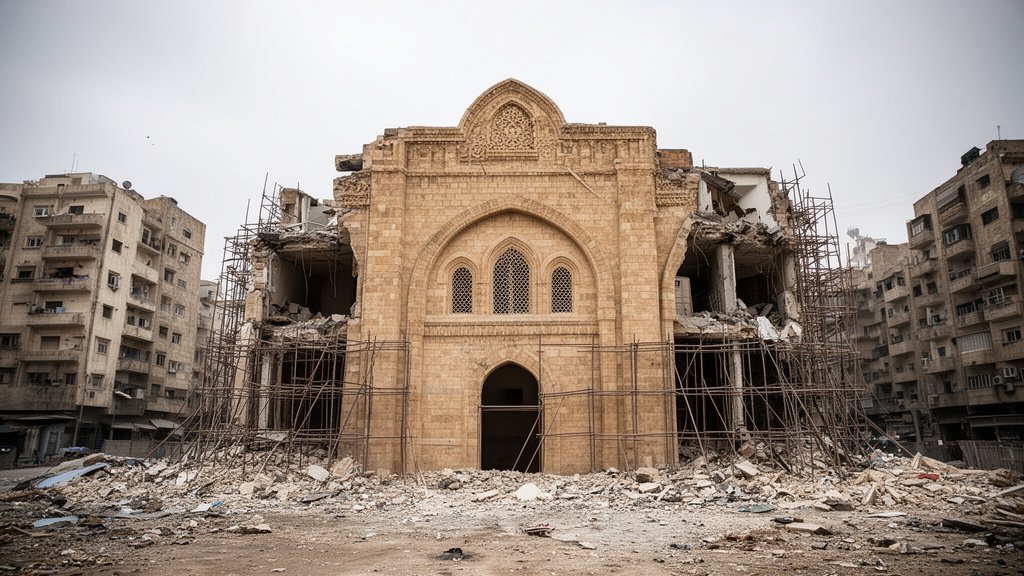
As part of its mandate, the organization has identified and reported that 164 cultural heritage sites have sustained varying degrees of damage, necessitating urgent intervention to prevent further degradation of Gaza’s historical narrative.
The Financial Commitment: Investing in Resilience
The mobilization of $5.85 million is not merely a financial transaction; it is a strategic investment in the foundational elements of civil society. UNESCO’s allocation is designed to address the immediate collapse of educational infrastructure, which has left thousands of students without safe learning environments. By prioritizing the repair of schools and the provision of educational resources, the organization aims to mitigate the long-term socio-economic consequences of interrupted schooling.
Experts have long warned that the loss of schooling during active conflict creates a ‘lost generation’ gap in literacy, skill development, and economic opportunity. This funding seeks to bridge that divide by coordinating with local and international partners to deploy rapid-response education materials and establish temporary learning spaces where permanent structures have been rendered unusable.
Safeguarding Cultural Heritage: 164 Sites Under Threat
One of the most concerning developments during the conflict has been the impact on Gaza’s rich architectural and archaeological history. UNESCO’s latest data confirms that 164 cultural heritage sites have been damaged. These sites range from ancient Byzantine churches and historic mosques to traditional Ottoman-era structures and museums that serve as touchstones of Palestinian heritage.
Damage to these sites is often irreversible, representing a loss of historical records and cultural identity. UNESCO is deploying digital documentation tools to map the extent of the damage, creating a comprehensive registry that will serve as the blueprint for future restoration projects. This documentation is crucial; it ensures that even if immediate physical reconstruction is delayed by ongoing security concerns, the technical specifications and historical context of the structures are preserved for posterity. The effort highlights the organization’s commitment to the 1954 Hague Convention, which mandates the protection of cultural property during armed conflict.
Information Integrity and Journalist Safety
Beyond education and physical heritage, the third pillar of this initiative is the protection of information. UNESCO has prioritized the safety of journalists and media workers operating in Gaza, acknowledging that their ability to report factually is essential for public accountability. The organization is providing safety equipment and specialized training to those working on the frontlines.
Moreover, the initiative addresses the spread of misinformation by supporting independent media outlets. By ensuring that reliable, fact-checked information remains available to the public, UNESCO is attempting to maintain a semblance of normalcy in a landscape where communication infrastructure has been severely crippled. The integrity of the information ecosystem is viewed by the organization as a key component of the eventual ‘return to normalcy,’ as it allows the population to access health services, humanitarian aid, and other essential updates.
The Long-Term Socio-Economic Impact
The intersection of these three sectors—education, culture, and information—forms a nexus of stability. The economic recovery of Gaza will eventually rely on a literate, skilled workforce and a stable informational environment. Furthermore, the preservation of cultural heritage is a vital component of tourism and local identity, which will be essential when reconstruction efforts move into a stabilization phase.
By integrating these efforts under a single funding umbrella, UNESCO is creating a unified approach that avoids the pitfalls of fragmented humanitarian aid. This strategy ensures that schools, cultural preservation projects, and media organizations are not competing for attention, but are instead aligned as mutually reinforcing pillars of recovery. As the situation remains fluid, UNESCO has stated that this $5.85 million is an initial mobilization, with plans to scale operations as security conditions permit. The international community is closely watching these efforts, as they represent one of the most structured attempts to preserve the intellectual and historical fabric of a region currently defined by its physical challenges.


Related Posts


