Fashion’s Power Week: Pattinson, Sink, and NYC Icons
The fashion industry operates in a relentless cycle of reinvention, but this week, the narrative shifted toward the intersection of legacy craftsmanship and modern cultural ubiquity. Major houses have strategically aligned themselves with stars who transcend their primary mediums—acting, music, and modeling—to bridge the gap between traditional prestige and digital-age relevance. From the precise world of Swiss horology to the raw, aesthetic appeal of global denim campaigns, this week’s developments illustrate a clear trend: the professional ambassador is no longer just a face; they are a multi-platform storytelling asset.
Time and Precision: Robert Pattinson’s Jaeger-LeCoultre Era
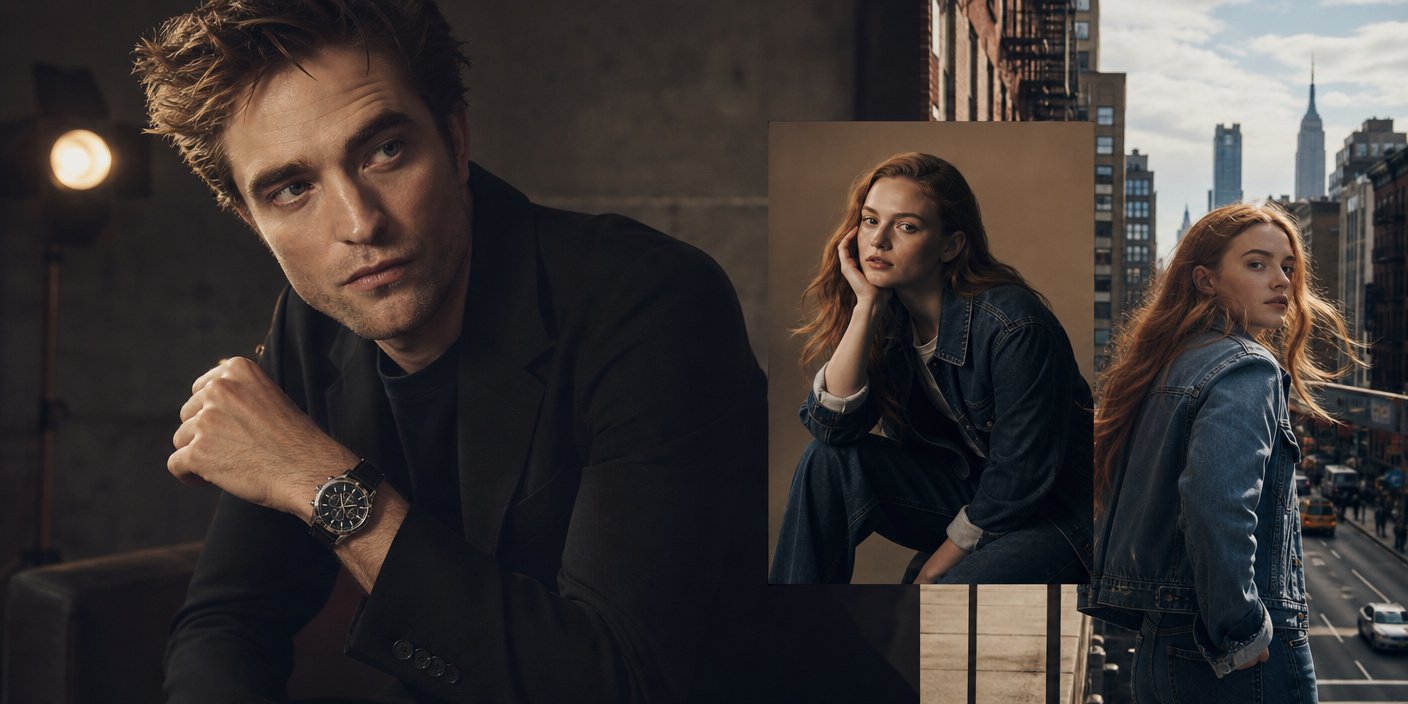
The most significant movement in the luxury watch sector this week is the solidified partnership between Robert Pattinson and Jaeger-LeCoultre. While celebrity-watch pairings are common, the selection of Pattinson signals a specific strategic pivot for the Maison. Jaeger-LeCoultre has long occupied a space defined by technical excellence and a reserved, “watchmaker’s watchmaker” reputation. By aligning with Pattinson—an actor whose career choices favor intellectual, auteur-driven cinema—the brand is effectively rebranding its heritage as a pursuit of the extraordinary. This is not merely an endorsement; it is a brand positioning exercise. Pattinson’s aesthetic, characterized by an effortless, moody sophistication, aligns perfectly with the brand’s ‘Reverso’ and ‘Master Control’ lines. This collaboration underscores a secondary trend: the “Intellectual Luxury” pivot, where heritage brands are betting that the modern consumer values gravitas over flash.
The Denim Renaissance: Sadie Sink and Calvin Klein
In the realm of accessible luxury, Calvin Klein’s latest campaign featuring Sadie Sink has reignited the conversation around the power of nostalgic branding. Sink, best known for her role in Stranger Things, brings a distinct ‘Girl Next Door’ energy that Calvin Klein has masterfully juxtaposed against its signature minimalist, slightly provocative aesthetic. The campaign serves as a masterclass in demographic capture—bridging the gap between Gen Z’s appreciation for the 90s revival and the brand’s established reputation for quality basics. By placing Sink at the forefront, Calvin Klein is reinforcing its dominance in the denim market, leveraging the star’s relatability to drive seasonal sales. This move highlights an economic reality: denim is no longer just a commodity; it is a canvas for identity expression, and Calvin Klein is successfully owning that narrative space.
The ‘Only in New York’ Effect: Tommy Hilfiger’s Star Power
Finally, Tommy Hilfiger has unveiled its “Only in New York” campaign, a blockbuster marketing effort that defines the current industry standard for “Global Reach.” The campaign is notable not just for its aesthetic quality, but for its strategic cast assembly: Gigi Hadid, Jisoo of Blackpink, and Peggy Gou. This trio represents a triangulation of fashion, K-Pop, and global electronic music culture. By aggregating these specific entities, Tommy Hilfiger is signaling a shift away from traditional American-centric marketing toward a truly global, interconnected audience. The campaign serves as a case study for future branding efforts: multi-hyphenate marketing is the only way to ensure cultural saturation in 2024. The inclusion of Jisoo, in particular, is a tactical maneuver to capture the insatiable loyalty of the K-Pop demographic, while Hadid provides the established fashion authority, and Gou lends an element of underground cool. Together, they create a brand ecosystem that feels both exclusive and hyper-accessible.
Secondary Angles: The Future of Brand Identity
To understand the broader implications of these shifts, we must analyze the changing landscape of brand identity.
1. The K-Pop Dominance: The strategic inclusion of artists like Jisoo in major Western campaigns is not just about reach; it is about cultural dominance. K-Pop stars are currently the highest-performing marketing assets, consistently delivering engagement rates that eclipse traditional Hollywood celebrities.
2. The ‘NYC Core’ Aesthetic: Tommy Hilfiger’s return to the “Only in New York” theme reflects a broader industry nostalgia. As digital worlds expand, brands are doubling down on “Place-Based Branding” to create tangible, real-world connections with consumers who crave authenticity.
3. The Actor as Curator: As seen with Pattinson and Jaeger-LeCoultre, the era of the “passive model” is fading. Today’s ambassadors are curators of their own image, bringing a layer of personal branding that adds perceived value and depth to the luxury products they represent.
FAQ: People Also Ask
Why are heritage luxury brands choosing actors over traditional models?
Heritage brands are seeking “cultural weight.” Actors bring a narrative and a dedicated fanbase that provides a deeper layer of storytelling than a traditional model, making the product feel more like a piece of art than a mass-market commodity.
How does the K-Pop effect influence global fashion marketing?
K-Pop stars provide unparalleled access to a global, digital-native demographic. Brands utilize these partnerships to break into high-growth markets, particularly in Asia, while simultaneously gaining massive social media traction that translates directly to high-impact sales.
What does the ‘Only in New York’ campaign signify for Tommy Hilfiger?
It signals a pivot back to the brand’s core identity—American heritage—while updating the aesthetic for a global, modern audience. By casting a diverse group of international icons, they are globalizing the ‘New York’ dream.
Is the partnership between Robert Pattinson and Jaeger-LeCoultre permanent?
While contract terms are private, such high-profile “Maison Ambassador” roles are typically multi-year commitments designed to create long-term brand association, rather than short-term product placement.


Related Posts