Industry Shift: Martens Exits Diesel; Versace Joins Revolve
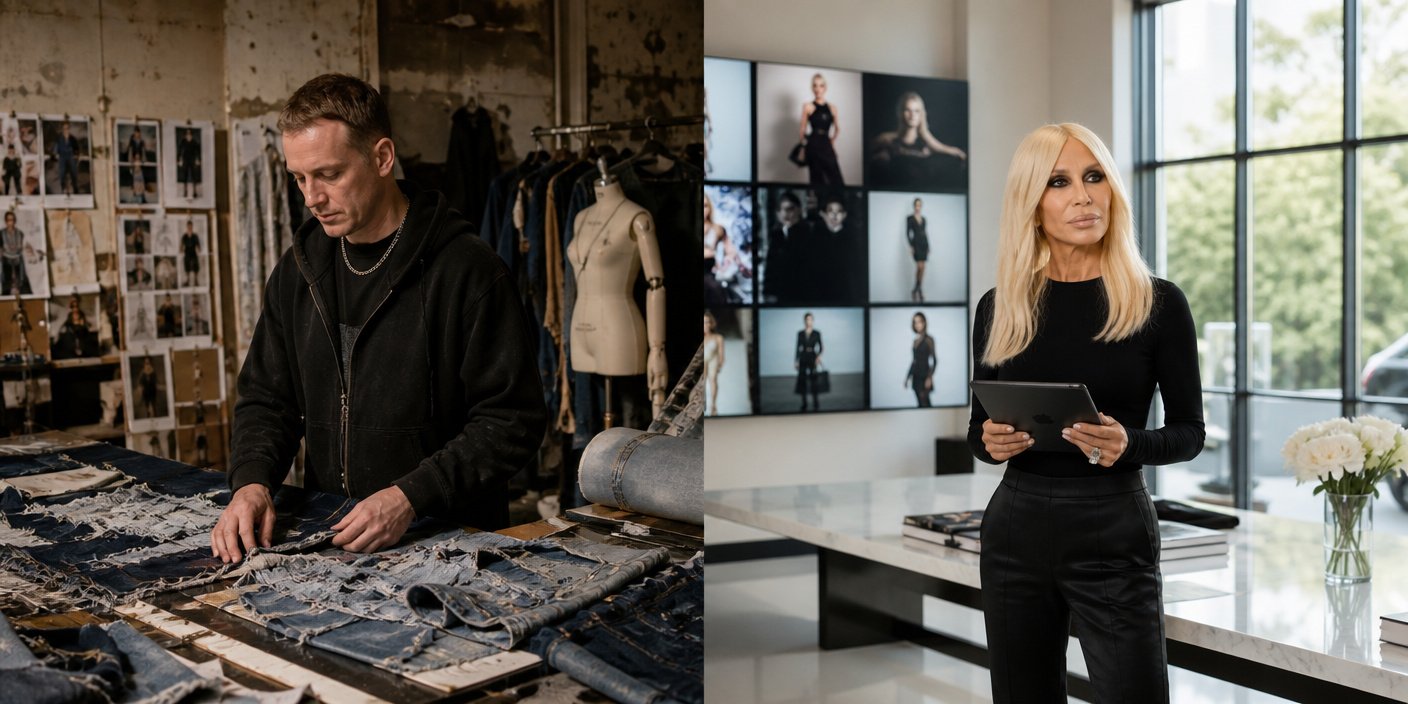
The global fashion landscape is undergoing a significant transformation as creative leadership shifts and corporate conglomerates realign strategies for a post-2025 consumer environment. Glenn Martens has officially concluded his influential six-year tenure at Diesel following the conclusion of the Spring/Summer 2027 runway presentation, a move that marks the end of a pivotal era for the Italian denim giant. Simultaneously, industry titan Donatella Versace has confirmed a landmark strategic partnership with e-commerce powerhouse Revolve Group to develop an exclusive, unnamed fashion and beauty brand slated for a 2027 launch, highlighting an aggressive shift toward digital-native luxury distribution.
Key Highlights
- Glenn Martens has officially departed from Diesel, ending a highly successful six-year creative directorship that redefined the brand’s aesthetic.
- The Spring/Summer 2027 collection served as the final chapter for Martens, leaving a legacy of denim innovation and cultural relevance.
- Donatella Versace has entered into a strategic joint venture with Revolve Group, aiming to capitalize on digital-first retail models.
- The upcoming Versace-Revolve collaborative brand is currently in development and is scheduled to debut in 2027.
- These events signify a broader trend of luxury houses seeking agility through creative restructuring and innovative retail partnerships.
The Great Realignment: Fashion’s 2027 Pivot Point
The dual announcement of Martens’ departure from Diesel and Versace’s pivot toward a Revolve-backed venture underscores a deepening divide—and simultaneously, a convergence—in the way luxury fashion is conceived and sold. For nearly a decade, the industry has wrestled with the tension between heritage craftsmanship and the rapid, data-driven demands of modern digital consumers. These two developments, while distinct in their mechanics, serve as bookends to the current state of the industry.
The End of an Era: Martens’ Diesel Legacy
Glenn Martens did more than design clothes for Diesel; he successfully navigated the brand back to the center of global pop culture. Taking the helm in 2020, Martens inherited a legacy label that was struggling to retain its relevance among a new generation of shoppers. Through his mastery of deconstruction, manipulation of textiles—specifically denim—and an irreverent, club-kid aesthetic, Martens transformed Diesel into a must-watch highlight of Milan Fashion Week.
His departure, following the Spring/Summer 2027 show, leaves a significant void in the OTB Group’s portfolio. The challenge for Diesel moving forward is maintaining the momentum Martens built. Analysts suggest that the brand has now solidified a “high-fashion denim” category that did not exist in the same capacity before his arrival. As the industry looks toward the next creative director, the question remains: will the brand double down on Martens’ experimentalism, or will it pivot toward a more commercial, wearable strategy? The success of Martens proves that even established heritage brands can undergo rapid, successful reinvention if given the right creative vision.
The Revolve Effect: Versace’s Digital Strategy
Conversely, the partnership between Donatella Versace and Revolve Group represents a pragmatic look at the future of retail. Versace, a house built on high-octane glamour and runway exclusivity, entering a partnership with a platform known for influencer-driven, accessible luxury is a tactical maneuver of significant weight. Revolve Group has historically excelled at curating a lifestyle that resonates with millennials and Gen Z, leveraging data to drive production and sales.
This partnership indicates that Donatella Versace is looking beyond traditional department store distribution. By building a new, unnamed brand from the ground up with a partner like Revolve, Versace is essentially creating a “digital-first” luxury entity. This strategy allows the brand to bypass the friction of traditional supply chains and engage directly with a built-in community of consumers. The 2027 launch date suggests a long-term development cycle, focusing on beauty and apparel products designed specifically for the digital shopper who values accessibility as much as brand prestige.
Market Implications: Why 2027 is a Critical Year
Why does 2027 matter so much to these stakeholders? The fashion calendar is cyclical, but the economic environment for luxury goods has become increasingly volatile. By 2027, the market expects a stabilization of consumer spending, provided brands can offer unique value propositions. Martens leaving Diesel opens the door for a new creative direction just as the market settles into a new rhythm, while the Versace-Revolve venture is a preemptive strike to capture market share among younger consumers who are moving away from traditional gatekept luxury.
Furthermore, the convergence of beauty and fashion—a trend that has accelerated throughout the 2020s—is central to the Versace-Revolve project. As fashion houses realize that beauty categories often yield higher margins and offer lower barriers to entry for consumers, this new brand likely intends to capture the loyalty of the Revolve customer base by offering a lifestyle ecosystem rather than just individual apparel items. This is not just a brand launch; it is a fundamental shift in how luxury heritage interacts with platform-based retail.
FAQ: People Also Ask
Q: Who will replace Glenn Martens at Diesel?
A: As of the latest reports, Diesel has not announced a successor to Glenn Martens. The industry is currently watching OTB Group closely for news on the next creative direction.
Q: Is the new Versace and Revolve brand replacing the main Versace line?
A: No. The collaboration is for a separate, new, unnamed fashion and beauty brand. It is an additional project, not a replacement for the primary Versace house or its existing diffusion lines.
Q: Why is a luxury icon like Donatella Versace partnering with a retailer like Revolve?
A: This partnership allows for a digital-first approach, leveraging Revolve’s logistics, influencer marketing network, and direct consumer data to launch a brand that is optimized for modern digital shopping habits.
Q: How long was Glenn Martens at Diesel?
A: Glenn Martens served as the creative director of Diesel for six years, a tenure that began in 2020 and concluded with the Spring/Summer 2027 collection.


Related Posts