Egypt Hosts Crucial Gaza Ceasefire Talks: Trump’s 20-Point Plan Centers on Hostage Exchange Amid Renewed Diplomatic Push and Ongoing Violence
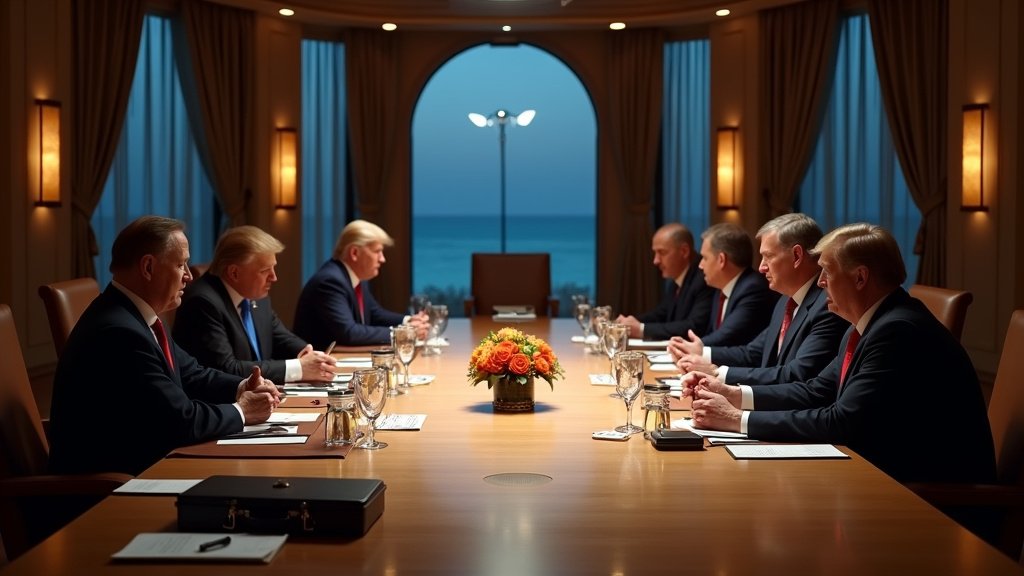
SHARM EL-SHEIKH, Egypt – October 6, 2025 – High-stakes negotiations aimed at securing a ceasefire in the Gaza Strip commenced today in Egypt, marking a significant diplomatic push to end the protracted conflict. Representatives from Hamas and Israel, alongside a U.S. delegation, are gathered at the Red Sea resort of Sharm el-Sheikh to deliberate on a comprehensive 20-point plan brokered by former U.S. President Donald Trump. The talks, which began amidst a backdrop of continued hostilities and mounting international pressure, hinge on a critical framework for hostage and prisoner exchanges and an eventual Israeli military withdrawal from Gaza.
Diplomatic Push for an End to Hostilities
U.S. Special Envoy Steve Witkoff and President Trump’s son-in-law, Jared Kushner, are spearheading the American mediation efforts. The core of the proposed agreement, detailed in Trump’s 20-point plan, outlines a phased approach to de-escalation. The initial stage focuses on an immediate ceasefire and the release of all remaining hostages held in Gaza by Hamas in exchange for a substantial number of Palestinian prisoners detained by Israel. The plan also calls for a partial withdrawal of Israeli forces from frontline positions within Gaza. This latest initiative follows months of deadlock and intense diplomatic engagement involving Egypt, Qatar, and the United States.
The Trump Peace Plan: Key Provisions
President Trump’s 20-point peace plan, announced on September 29, 2025, serves as the foundation for the current negotiations. The initial phase of the proposed deal includes a ceasefire to be implemented within 72 hours of mutual public acceptance, during which Hamas would release approximately 48 hostages, with about 20 believed to be alive. In return, Israel would release around 2,000 Palestinian prisoners, including 250 serving life sentences, and an additional 1,700 detainees arrested since October 7, 2023. The plan also envisions the reopening of five border crossings to facilitate humanitarian aid into the devastated Gaza Strip, where famine conditions have been confirmed.
Beyond the immediate exchange, the longer-term objectives of the plan include a complete Israeli military withdrawal from Gaza, the disarmament of Hamas, and the establishment of Gaza as a “deradicalized, terror-free zone”. It also proposes redevelopment initiatives for Gaza and a potential pathway toward Palestinian self-rule or statehood, to be overseen by a restructured Palestinian Authority and an International Stabilization Force.
Persistent Hostilities and Mounting Casualties
Despite the commencement of these critical talks, the reality on the ground remains fraught with violence. On October 5th and 6th, Israeli forces continued their operations in Gaza, resulting in the deaths of at least 31 Palestinians, underscoring the urgency and fragility of the ongoing diplomatic efforts. Since the conflict began nearly two years ago, the Gaza Health Ministry has reported over 71,200 deaths as of October 22, 2025, with a significant majority being civilians, including thousands of children. This ongoing toll highlights the severe humanitarian crisis and the pressing need for an immediate and lasting cessation of hostilities.
Public Sentiment and Family Agitation
Back in Israel, public sentiment is sharply divided, with a strong contingent demanding the immediate release of hostages. Tens of thousands rallied in Tel Aviv’s Hostages Square over the weekend to voice support for a deal, emphasizing the critical need for the captives’ return. Hostage families have been actively protesting outside the Israeli Prime Minister’s residence, imploring leaders to do everything possible to secure the safe return of their loved ones. The Hostages and Missing Families Forum has declared these “decisive days” and called for unwavering national solidarity.
Sticking Points and Uncertain Futures
While significant progress has been made in reaching an agreement in principle on parts of the plan, substantial points of contention persist between Hamas and Israel. Key disagreements reportedly revolve around the exact sequencing of Israeli troop withdrawals and hostage releases, and the ultimate fate of Hamas’s disarmament, a core Israeli demand. Hamas has also raised concerns regarding the “field conditions” for the prisoner exchange and has cautioned that locating and transferring bodies might take longer than the stipulated 72 hours. The exclusion of prominent Palestinian leader Marwan Barghouti from the prisoner exchange list also presents a complex challenge.
A Fragile Path Forward
The negotiations taking place in Egypt represent a crucial juncture in the long-running conflict. The involvement of key international players and a detailed peace proposal offer a glimmer of hope, yet the deep-seated issues and the volatile situation on the ground present formidable obstacles. As talks continue, the world watches closely, hoping that this renewed diplomatic push will finally pave the way for an end to the suffering and the restoration of peace to Gaza and the wider region. This development is a significant piece of recent news, featured as a top story across global outlets.


Related Posts