
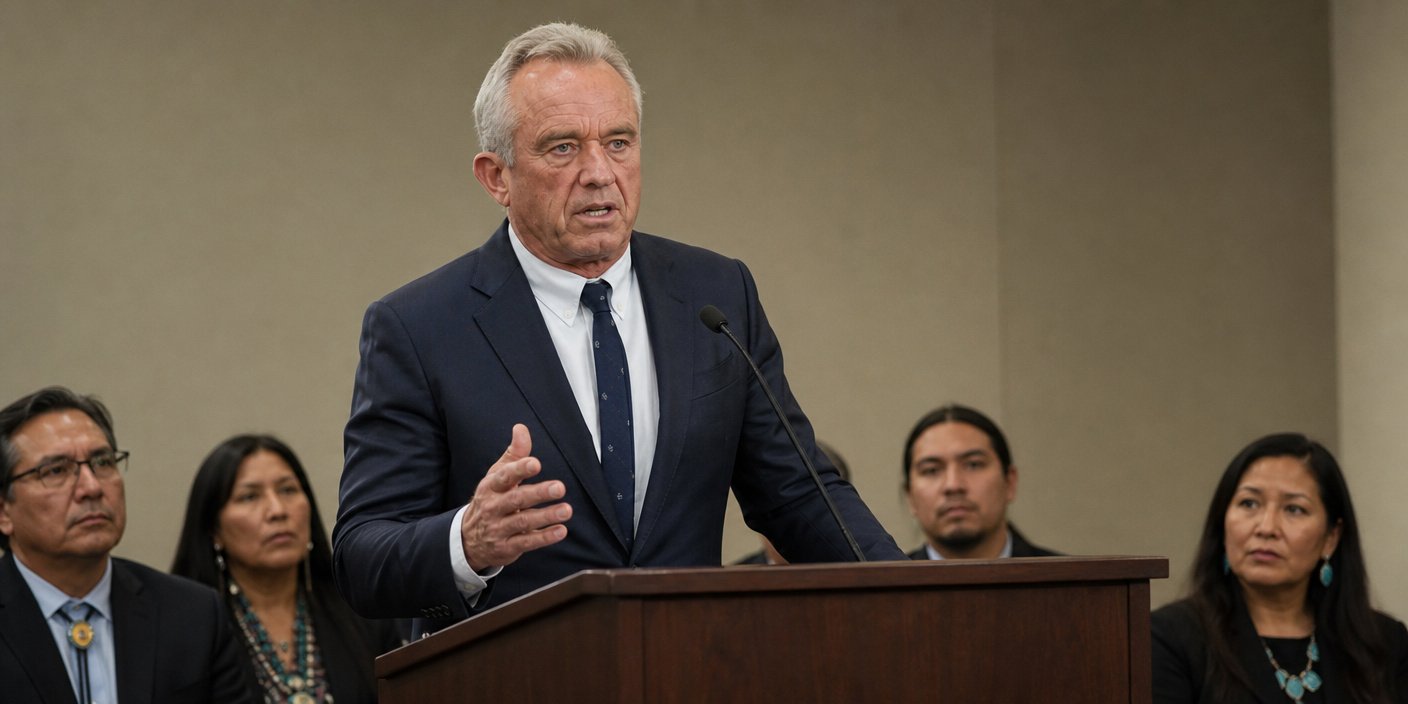
Kennedy Targets $1.86B for Indian Health Service Overhaul
Health and Human Services Secretary Robert F. Kennedy Jr. has officially notified Congress of a comprehensive $1.86 billion investment strategy aimed at fundamentally restructuring the Indian Health Service (IHS). This proposed capital injection represents a significant pivot in how the federal government approaches the intersection of infrastructure development and digital modernization for tribal healthcare providers. The proposal prioritizes the urgent construction of new, resilient healthcare facilities alongside a massive overhaul of aging electronic health records (EHR) systems, signaling a move toward centralized, data-driven patient management across rural and tribal communities.
Key Highlights
- Total Investment: A proposed $1.86 billion budget allocation dedicated specifically to IHS infrastructure and technological modernization.
- Digital Transformation: Deployment of modernized electronic health records (EHR) systems to improve cross-agency interoperability and patient data access.
- Physical Infrastructure: Prioritization of new healthcare facility construction to replace or upgrade aging clinics in underserved areas.
- Strategic Focus: Addressing long-standing disparities in access to care for Native American communities through targeted capital improvements.
Modernizing Tribal Health: The Path Forward
The $1.86 billion commitment serves as a cornerstone of the current administration’s health agenda, specifically addressing the infrastructure crisis that has long plagued the Indian Health Service. Historically, the IHS has struggled with outdated facilities and fragmented patient record systems that impede the efficient delivery of care. By tackling these two pillars—physical construction and digital infrastructure—the department aims to create a more responsive health system that can better handle the unique challenges faced by diverse tribal populations.
The Digital Integration Strategy
The modernization of Electronic Health Records (EHR) systems is arguably the most critical component of this investment. Currently, many IHS facilities operate on legacy software platforms that lack the interoperability required for modern tele-health and multi-specialty coordination. The infusion of capital is expected to fund a transition to a unified, cloud-integrated architecture. This shift is designed to ensure that patient medical history is portable and accessible regardless of whether a patient is receiving care at a small reservation clinic or a larger urban tribal health center. The integration of advanced analytics within these new EHR systems will also allow administrators to better track health trends, such as chronic disease prevalence and vaccination rates, thereby enabling more proactive resource allocation.
Addressing the Physical Infrastructure Deficit
Beyond digital transformation, the investment addresses the physical decay of existing clinics. Many IHS facilities, some of which were constructed decades ago, are currently struggling with compliance issues, capacity constraints, and maintenance backlogs. The strategy involves a targeted construction program, prioritizing facilities in remote regions where geography serves as a primary barrier to health access. The objective is to design modular, high-efficiency clinics that can be scaled based on the population needs of specific tribes. By investing in modern materials and sustainable energy practices, the IHS hopes to reduce the long-term operational costs of these buildings, ensuring that more funding is directed toward clinical staff and patient services rather than facilities maintenance.
Historical Context: The Long Road to Reform
The Indian Health Service has been subject to chronic underfunding and oversight scrutiny for decades. Advocates for tribal health have long argued that the federal trust responsibility to provide healthcare to Native Americans has been hindered by a lack of capital for basic infrastructure. This $1.86 billion investment is being viewed by policy analysts as a rare, large-scale attempt to address the ‘facility gap.’ While the proposal is ambitious, the success of this initiative will likely depend on the department’s ability to coordinate with tribal governments, who must be treated as equal partners in the planning and execution of these construction projects. The emphasis on collaborative design suggests that the administration is attempting to move away from top-down directives in favor of a more nuanced, community-responsive model.
Economic and Social Implications
The economic ripple effect of this investment is expected to be substantial. The construction of new healthcare facilities in rural and often economically distressed areas serves as a dual-purpose intervention: it improves health outcomes while creating local jobs and infrastructure development opportunities. Furthermore, by improving the quality of care available locally, tribes can reduce the need for expensive medical travel, keeping families closer to home and preserving the community fabric. As these facilities become modernized, there is also the potential to expand local services to include specialized care—such as oncology, dialysis, or advanced diagnostics—that currently require lengthy travel to non-IHS facilities, thereby increasing the health autonomy of tribal nations.
FAQ: People Also Ask
1. What is the primary focus of the $1.86 billion investment?
The investment is primarily split between two major initiatives: the construction and renovation of physical healthcare facilities and the complete modernization of the Indian Health Service’s electronic health records (EHR) systems to improve data management and patient care coordination.
2. How will this investment impact patient care for tribal members?
By upgrading facilities, patients will have access to more modern, efficient clinics closer to their communities. The EHR modernization will ensure that medical records are accurate, portable, and easily shared between providers, reducing the risk of errors and improving the quality of preventative and specialized care.
3. Is this a one-time payment or a long-term strategy?
The $1.86 billion is a strategic investment package notified to Congress; while the capital is intended for specific projects, it is part of a broader, multi-year shift toward sustainable infrastructure management and digital health interoperability.
4. Why is the EHR update considered ‘critical’ for the IHS?
Currently, outdated digital systems often prevent effective communication between tribal clinics and outside specialists. A modern, unified EHR system allows for seamless medical data integration, which is essential for managing chronic diseases and coordinating emergency services in rural settings.


Related Posts


