
North Korea Links Hypersonic Missile Drill to Venezuela Crisis, Bolsters Nuclear Deterrent
The recent **North Korea Missile Drill**, a significant demonstration of its advanced capabilities, was overseen by leader Kim Jong Un, who asserted the necessity of this **North Korea Missile Drill** amidst a “recent geopolitical crisis,” widely interpreted as a reaction to recent U.S. action in Venezuela. This **North Korea Missile Drill** represents a critical moment in regional security.
North Korea Missile Drill: Details of the Hypersonic Launch
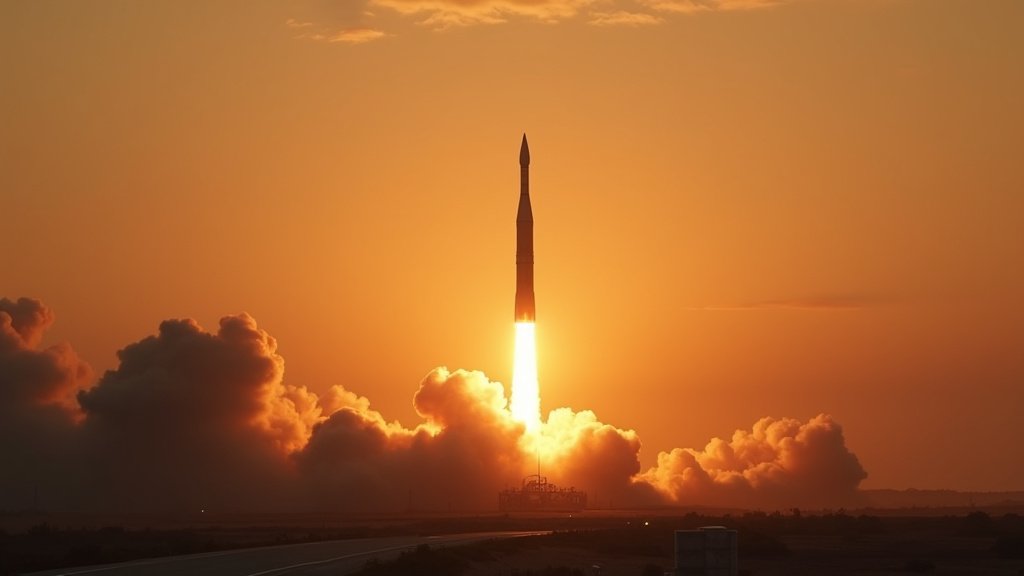
The **North Korea Missile Drill** featured state-of-the-art hypersonic missiles, described as “cutting-edge” offensive weapon systems by state media. The exercise involved launching these missiles from Pyongyang’s Ryokpo district, with reports indicating they successfully struck targets approximately 1,000 kilometers away, flying over the East Sea. This marks North Korea’s first major hypersonic missile test of 2026. The development of such offensive weapon systems presents substantial challenges for existing defense systems due to their exceptional speed and maneuverability, making interception a complex task. This **North Korea Missile Drill** highlights their technological advancements in this crucial area.
Kim Jong Un’s Response to U.S. Action in Venezuela
The “geopolitical crisis” referenced by Kim Jong Un appears to stem from the U.S. apprehension of Venezuelan President Nicolas Maduro, an event that preceded the missile drill. North Korea vehemently condemned this U.S. action, denouncing it as a “blatant violation of international law” and a “serious encroachment of sovereignty.” Pyongyang characterized the U.S. move as indicative of Washington’s “rogue and brutal nature.” This U.S. Venezuela action is perceived as a deeply concerning development for North Korea’s leadership, who have long harbored fears of similar U.S.-orchestrated regime change operations. The current events surrounding the Venezuela crisis intensify these concerns, making the **North Korea Missile Drill** a strategic statement of defiance.
Strategic Justification for Military Build-up: The North Korea Missile Drill’s Role
Kim Jong Un underscored the strategic importance of the recent **North Korea Missile Drill**, stating that “important achievements” were made in preparing its nuclear forces for “an actual war.” He further emphasized the ongoing efforts to upgrade “offensive weapon systems.” The drill is intended to elevate North Korea’s “nuclear war deterrent on a high-developed basis.” Pyongyang consistently justifies its extensive weapons programs as a necessary nuclear deterrent against purported U.S. regime change intentions. The current geopolitical climate, particularly concerning the Venezuela crisis, is being leveraged to reinforce this narrative and legitimize further military development, including the latest **North Korea Missile Drill** and its role in demonstrating their nuclear war deterrent.
Broader Regional Context and the North Korea Missile Drill
This latest Pyongyang missile launch occurs amidst escalating regional tensions. The missile drill took place just hours before South Korean President Lee Jae Myung’s planned visit to China, aimed at discussing Korean Peninsula stability. North Korea’s pattern of assertive weapons demonstrations, including recent cruise missile tests and progress in submarine development, continues to complicate international non-proliferation efforts. These actions significantly influence security calculations across Asia. International observers, including NATO members, are closely monitoring these developments. The recent **North Korea Missile Drill**, linked to the U.S. Venezuela action, underscores persistent global concerns regarding North Korea’s weapons programs and the ensuing geopolitical crisis.

Related Posts