Space Tourism Boom: Blue Origin & SpaceX Lead Charge
The burgeoning private spaceflight industry is poised for significant expansion, with companies like Blue Origin and SpaceX spearheading a new era of space tourism. As technological advancements accelerate and costs gradually decrease, suborbital and orbital journeys are transitioning from ambitious concepts to tangible realities for a growing segment of the population. This development signals a potential democratization of space access, albeit initially for the ultra-wealthy.
Key Highlights:
- New Space Race: Private companies are driving innovation in space tourism, challenging traditional government-led space exploration.
- Technological Advancements: Reusable rocket technology and improved life support systems are making space travel more feasible and potentially safer.
- Economic Viability: While still prohibitively expensive, the growing number of missions and investment suggest a path towards greater accessibility.
- Regulatory Landscape: Governments are grappling with establishing frameworks for commercial space activities and ensuring passenger safety.
The Ascent of Private Spaceflight
Pioneering Companies Drive Innovation
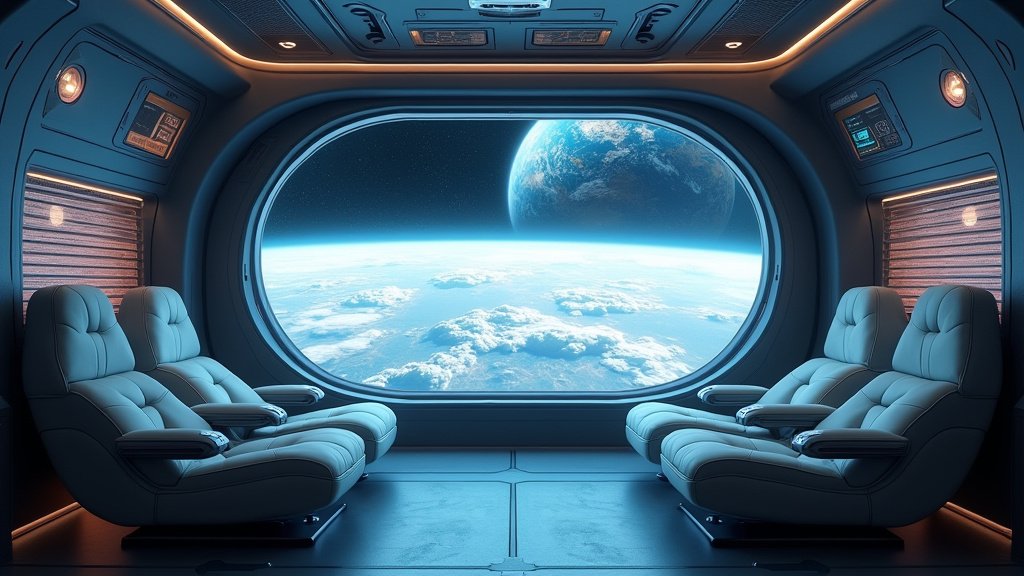
The landscape of space exploration has dramatically shifted, with private entities now at the forefront of commercial space travel. Blue Origin, founded by Jeff Bezos, and SpaceX, led by Elon Musk, are the most prominent players, each with distinct approaches to achieving orbital and suborbital flights. Blue Origin’s New Shepard suborbital rocket system offers passengers a brief but breathtaking experience of space, including several minutes of weightlessness and stunning views of Earth. Their focus has been on reliable, repeatable suborbital flights.
SpaceX, on the other hand, has a more ambitious trajectory, aiming for orbital missions and even interplanetary travel with its Starship program. Their Dragon spacecraft has already ferried astronauts to the International Space Station (ISS) for NASA, demonstrating their capability in human spaceflight. The company’s development of Starship, a fully reusable super heavy-lift launch vehicle, is seen as a critical step towards establishing a permanent human presence on the Moon and Mars, with space tourism being a logical intermediate step. The investment in reusable rocket technology by both companies is a critical factor in reducing launch costs, a key barrier to widespread space tourism.
The Evolving Economics of Space Tourism
Currently, the cost of a ticket for a suborbital flight with Blue Origin or a potential orbital trip with SpaceX remains in the hundreds of thousands, if not millions, of dollars. This places space tourism firmly in the realm of the ultra-wealthy. However, the increasing frequency of flights and the competitive nature of the market are expected to drive down prices over time. Historical parallels can be drawn to the early days of air travel, which was initially a luxury accessible only to a select few before becoming commonplace. The development of more efficient propulsion systems, increased manufacturing scale, and further innovation in life support and crew safety are all crucial for making space tourism more economically viable for a broader audience. The potential for microgravity research, in-space manufacturing, and even extraterrestrial resource utilization are long-term economic drivers that could further subsidize the cost of space access.
Navigating the Regulatory Frontier
As commercial spaceflight expands, so does the need for robust regulatory frameworks. While the Federal Aviation Administration (FAA) in the United States oversees commercial space transportation, the specifics of space tourism, particularly regarding passenger safety and liability, are still evolving. International cooperation will also be essential as space becomes a more crowded domain. Ensuring that these nascent industries adhere to high safety standards is paramount to public trust and the long-term success of space tourism. Discussions around space traffic management, debris mitigation, and astronaut training protocols are ongoing and will become increasingly important as the number of private missions grows. The definition of ‘space’ itself, often cited as the Kármán line at 100 kilometers (62 miles) above sea level, also plays a role in regulatory distinctions between suborbital and orbital flights.
Secondary Angles and Future Outlook
Historical Context: The current surge in private spaceflight echoes the ‘Space Race’ of the mid-20th century, but with a commercial rather than purely geopolitical motivation. Early pioneers like Yuri Gagarin and Alan Shepard paved the way for human spaceflight, but their missions were government-funded and driven by national prestige. Today’s private ventures are more market-driven, seeking to create sustainable businesses.
Technological Domino Effect: Advancements in rocket technology for tourism, such as reusability and improved engines, have direct applications for scientific missions, satellite deployment, and potentially even rapid point-to-point travel on Earth. The innovations fostered by the pursuit of space tourism are likely to have a broad impact across various sectors.
Ethical and Environmental Considerations: As space tourism becomes more prevalent, questions arise about its environmental impact, particularly concerning rocket emissions and space debris. The long-term sustainability of frequent launches and the responsible use of space are critical ethical considerations that the industry and regulatory bodies must address proactively.
FAQ: People Also Ask
What is the current cost of space tourism?
As of mid-2026, the cost for a suborbital flight with companies like Blue Origin is estimated to be in the range of $250,000 to $450,000 USD. Orbital missions, such as those proposed by SpaceX, are expected to cost significantly more, potentially in the tens of millions of dollars for private individuals.
Which companies are leading the space tourism market?
Blue Origin and SpaceX are the primary leaders in the current space tourism market, focusing on suborbital and orbital flights, respectively. Other companies, such as Virgin Galactic, are also actively developing suborbital space tourism services.
What is the duration of a typical space tourism flight?
Suborbital flights, like those offered by Blue Origin, typically last around 10-15 minutes from liftoff to landing, with passengers experiencing a few minutes of weightlessness and views from the edge of space.
What are the training requirements for space tourists?
Training requirements vary by company and mission type. For suborbital flights, the training is relatively minimal, often involving a few days of preparation focused on safety procedures and acclimatization to microgravity. For longer orbital missions, more extensive training, similar to that for professional astronauts, may be required.
When will space tourism become more accessible to the general public?
Experts predict that space tourism will become more accessible to a wider audience within the next 10-20 years, contingent on continued technological advancements, cost reductions through reusability and increased flight cadence, and the development of more robust regulatory frameworks. However, it is likely to remain a premium travel experience for the foreseeable future.


Related Posts