
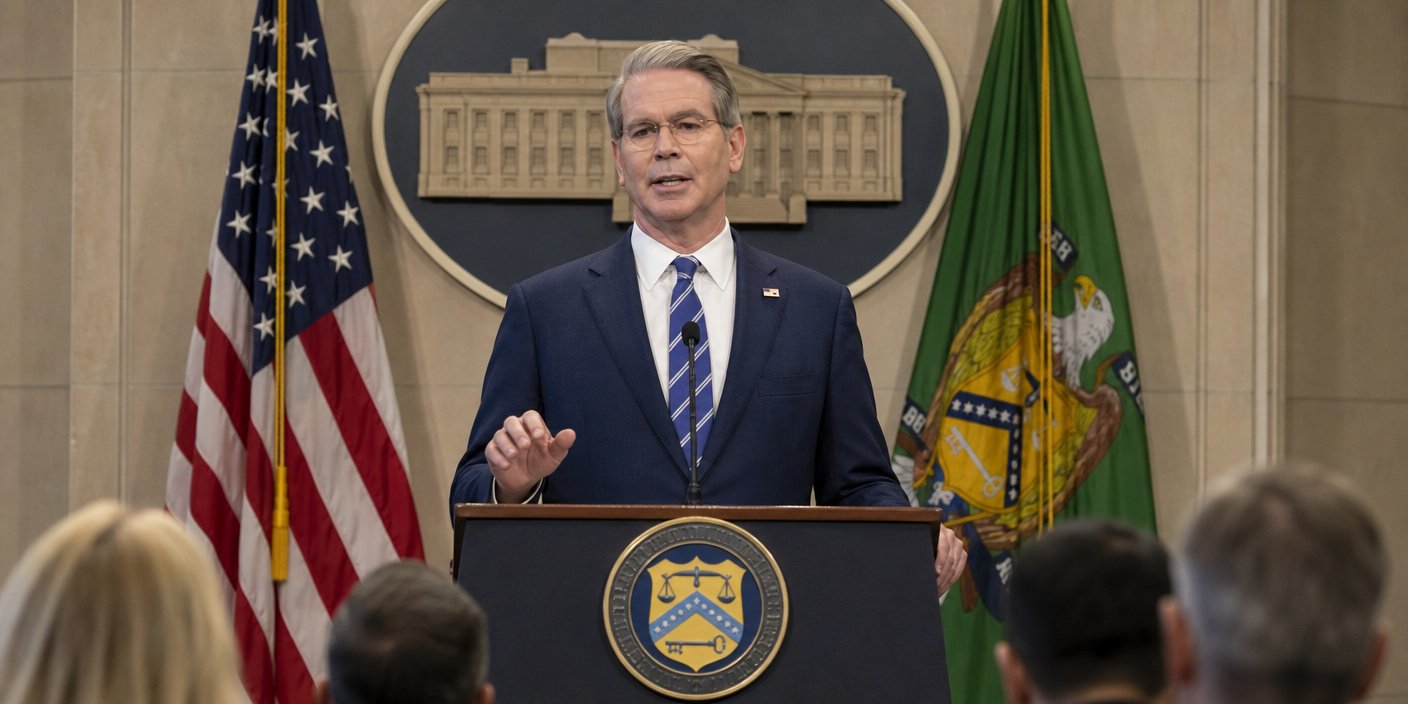
Treasury Secretary Bessent Unveils ‘Economic Asphyxiation’ Plan for Iran
Treasury Secretary Scott Bessent has introduced a hardline economic strategy aimed directly at the Iranian regime, characterizing the new policy as one of “economic asphyxiation.” The move signals a major pivot in US foreign policy, shifting from existing targeted measures toward a broader, more suffocating application of secondary sanctions designed to sever Iran’s access to global financial markets and international trade networks. This strategic hardening follows a period defined by persistent military stalemate in the region, prompting the Treasury to leverage its full regulatory apparatus to isolate the regime.
Key Highlights
- Economic Asphyxiation Strategy: The Treasury Department is implementing a comprehensive, multi-layered approach to cut off financial lifelines, aiming to starve the regime of liquidity.
- Secondary Sanctions Expansion: The policy significantly broadens the scope of secondary sanctions, effectively pressuring foreign banks and multinational corporations to choose between doing business with the US or Iran.
- Strategic Timing: The shift comes after a prolonged military stalemate, suggesting the administration is moving away from purely kinetic deterrence to financial neutralization.
- Objective of Isolation: The ultimate goal is to degrade the regime’s capacity to fund its regional activities by creating a hostile environment for any entity attempting to facilitate trade with Tehran.
The Strategic Escalation: A New Era of Financial Warfare
The announcement by Secretary Scott Bessent marks a defining moment for the current administration’s foreign policy framework. By explicitly invoking the term “economic asphyxiation,” the Treasury has moved beyond the vocabulary of “maximum pressure” seen in previous administrations, signaling a more surgical and unrelenting approach to financial enforcement. This policy is not merely about blocking assets; it is about raising the cost of Iranian business to a level that becomes prohibitive for even the most risk-tolerant global actors.
The Mechanism of Modern Secondary Sanctions
At the heart of this strategy lies the expanded use of secondary sanctions, which are arguably the most potent tools in the Treasury Department’s arsenal. Unlike primary sanctions, which govern US-based transactions, secondary sanctions threaten to cut off non-US entities from the US financial system if they engage in specific types of commerce with sanctioned Iranian sectors. By leveraging the dollar’s role as the global reserve currency, the Treasury essentially acts as a gatekeeper for the international banking system. When the Treasury designates an entity, foreign banks—fearing the loss of their own correspondent banking relationships in the US—are often forced to sever ties with that entity, effectively “asphyxiating” its ability to conduct international trade.
Navigating the Regional Stalemate
For months, the situation in the Middle East has been characterized by a tactical stalemate. Despite significant regional tensions, both sides have largely remained in a state of armed deadlock, unwilling to escalate into full-scale direct conflict. Secretary Bessent’s announcement indicates that the administration has identified this stalemate as an opportunity to change the battlefield. By focusing on economic pressure, the US aims to erode the regime’s long-term capability to project power, procure military equipment, and maintain its existing economic support systems. This shift reflects a belief that the regime’s survival is inextricably linked to its economic vitality, and that by constricting financial flows, the US can achieve strategic outcomes that military posturing has failed to deliver.
The Role of OFAC and Global Compliance
The Office of Foreign Assets Control (OFAC) is expected to play the lead role in implementing this new mandate. We anticipate a rapid increase in the number of “Designated Nationals” lists, targeting not just energy exports, but also the shipping, insurance, and logistical networks that facilitate trade. For multinational corporations and global shipping conglomerates, this creates a high-stakes compliance environment. The message from the Treasury is clear: the era of gray-area commerce with Iran is effectively coming to a close. Any entity found to be facilitating trade, regardless of their nationality, will face the full force of US financial retribution.
Potential Geopolitical and Market Ripple Effects
While the objective is clear, the secondary consequences are complex. Historically, intense sanctions regimes have triggered volatility in global energy markets. If this “asphyxiation” strategy successfully limits Iranian oil exports, the resulting supply squeeze could affect global oil prices, potentially forcing the Treasury to balance its geopolitical goals against domestic economic pressures. Furthermore, international partners—particularly those in Europe—may find themselves in a difficult position, as they are once again forced to reconcile their own diplomatic goals with the realities of US financial dominance.
FAQ: People Also Ask
Q: What is the primary difference between these new sanctions and previous policies?
A: While previous strategies focused on targeted pressure, the new “economic asphyxiation” plan is broader and more systemic, specifically designed to eliminate the ‘compliance gaps’ that have allowed trade to continue.
Q: How will this affect the average Iranian citizen?
A: Secondary sanctions are designed to isolate the regime’s financial infrastructure, but historically, they often have broad economic consequences that impact the entire national economy, frequently leading to currency devaluation and increased costs for imported goods.
Q: Why is the US focusing on economic measures now?
A: The administration has identified a prolonged military stalemate where further conventional military engagement may not yield the desired strategic outcomes, making economic and financial isolation the most viable path forward.
Q: Can foreign companies ignore these sanctions?
A: Practically speaking, no. Because these sanctions target access to the US financial system—the backbone of global trade—almost any significant multinational entity will prioritize maintaining access to the US market over trade with sanctioned Iranian sectors.


Related Posts


