
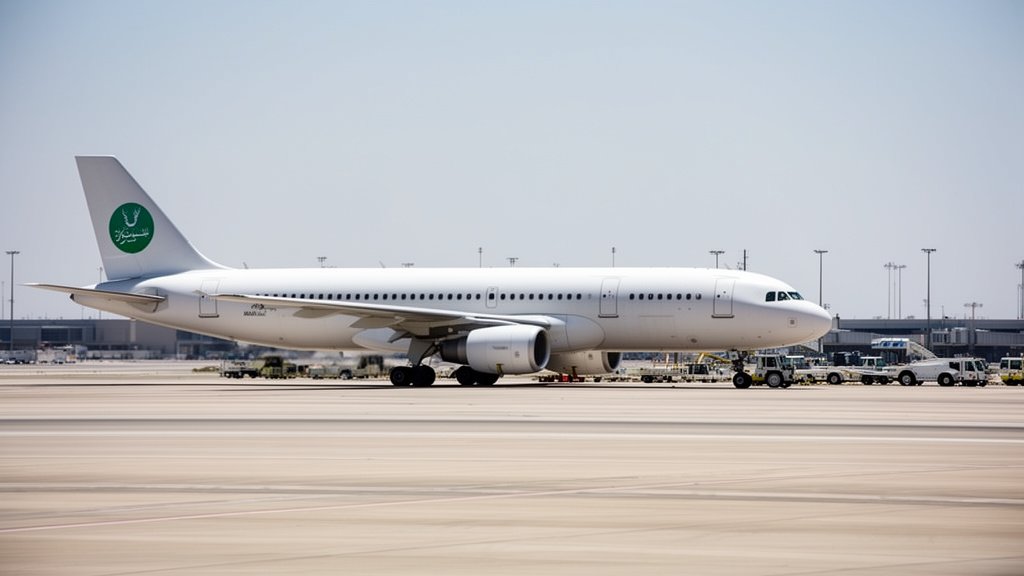
Mid-Air Crisis: FlyDubai Pilot Attempted Crash, PM Says
An Israel-bound FlyDubai flight was forced to execute an emergency landing in Saudi Arabia following a harrowing in-flight security breach. Prime Minister Benjamin Netanyahu confirmed late yesterday that the incident involved a pilot allegedly stabbing a co-pilot and attempting to intentionally crash the aircraft. The revelation has sent shockwaves through the aviation industry, raising immediate concerns regarding cockpit security protocols and international emergency coordination.
Key Highlights
- Emergency Diversion: A FlyDubai flight en route to Israel made an emergency landing in Saudi Arabia after an onboard violent confrontation.
- Cockpit Altercation: Reports indicate a pilot stabbed a co-pilot and actively attempted to bring the aircraft down before being neutralized.
- Government Confirmation: Israeli Prime Minister Benjamin Netanyahu issued an official statement confirming the severity of the incident.
- Status of Passengers: All passengers and remaining crew members were reported safe following the emergency landing, though the investigation into the motives of the pilot remains ongoing.
Anatomy of an Aviation Security Emergency
The incident began mid-flight, as the FlyDubai aircraft was traversing regional airspace. According to the preliminary information released by Israeli officials and corroborated by the statement from Prime Minister Benjamin Netanyahu, the flight path was abruptly altered when the flight deck descended into chaos. The cockpit, usually a bastion of security and professional discipline, became the site of a violent struggle. Reports suggest that a pilot, having incapacitated the co-pilot with a stabbing weapon, initiated a sequence of maneuvers intended to put the aircraft into a steep descent, threatening the lives of everyone on board.
The Emergency Diversion to Saudi Arabia
The decision to divert to Saudi Arabia was not merely a logistical necessity but a critical geopolitical maneuver that underscored the gravity of the emergency. Under standard aviation protocols, the pilots must seek the nearest suitable airport during an in-flight emergency. The proximity of Saudi Arabian airspace provided the only viable option to save the aircraft. The rapid response of the Saudi air traffic control authorities allowed for a priority landing, highlighting a rare moment of regional coordination amidst a life-threatening crisis. This diversion saved the lives of hundreds of passengers, though the physical and psychological toll on those aboard remains a primary focus for investigators.
Implications for Global Aviation Security
This incident forces a re-examination of the ‘one-person-in-the-cockpit’ rule that some airlines abandoned following previous high-profile tragedies. The vulnerability of the flight deck remains a point of contention among aviation safety experts. When the barrier between the flight deck and the cabin is breached, or when the threat originates from within the cockpit itself, current security measures often prove insufficient. The International Civil Aviation Organization (ICAO) is expected to convene an emergency review to determine if new, more stringent mental health screening processes or behavioral monitoring technologies are required for commercial flight crews operating in high-tension regions.
Geopolitical Sensitivity and Regional Cooperation
The involvement of an Israel-bound flight and a forced landing in Saudi Arabia adds a layer of significant geopolitical complexity. In the wake of the Abraham Accords, regional cooperation has increased, but the direct involvement of Israeli leadership in the immediate aftermath of this incident signals the high stakes involved. Netanyahu’s personal confirmation of the event suggests that the Israeli government views this not just as an aviation accident, but as a potential act of sabotage or terrorism that requires cross-border collaboration between Israel, the UAE, and the Kingdom of Saudi Arabia. The diplomatic silence—or cooperation—between these nations in the coming days will be closely monitored by global intelligence communities.
Secondary Analysis: Exploring the Aftermath
1. The Mental Health Crisis in Aviation: Experts are already pointing to the incident as a stark reminder of the ‘human factor’ in aviation safety. While technical systems have advanced, the psychological stability of pilots remains a critical, yet difficult to monitor, variable. Expect new regulations on mandatory, frequent psychological evaluations for commercial pilots.
2. The Economic Impact on Aviation Routes: The incident raises questions about the future of flight paths over the Middle East. If airlines perceive that emergency diversions into neighboring nations—regardless of diplomatic relations—are becoming a potential flashpoint, we may see a realignment of flight corridors, which could increase fuel costs and flight times for carriers like FlyDubai.
3. Technological Fail-Safes: The aviation industry is likely to accelerate the development of autonomous emergency protocols. If a pilot attempts to override the aircraft’s safety parameters, the system should theoretically intervene. This incident will likely serve as the primary business case for the mass implementation of ‘anti-crash’ automation technology.
FAQ: People Also Ask
Q: What is the current condition of the injured co-pilot?
A: While details are being protected for privacy and ongoing investigation, authorities have indicated that the co-pilot is receiving critical care. Their survival is considered a turning point in preventing a full-scale tragedy.
Q: How are passengers being handled following the diversion?
A: Passengers are currently in the custody of local authorities in Saudi Arabia, undergoing processing while Israeli diplomatic teams work to arrange safe passage or repatriation, given the sensitive nature of the flight’s original destination.
Q: Is there evidence of a broader conspiracy?
A: Investigations are currently focusing on the individual pilot’s history, mental state, and external communications. While terrorism has not been ruled out, officials are currently treating it as a primary investigative lead alongside possible mental health crises.
Q: Will flight schedules be impacted?
A: Major carriers are reviewing their internal security policies. While immediate cancellations are localized to the affected route, long-term operational adjustments are expected as airlines perform rigorous security audits.


Related Posts


