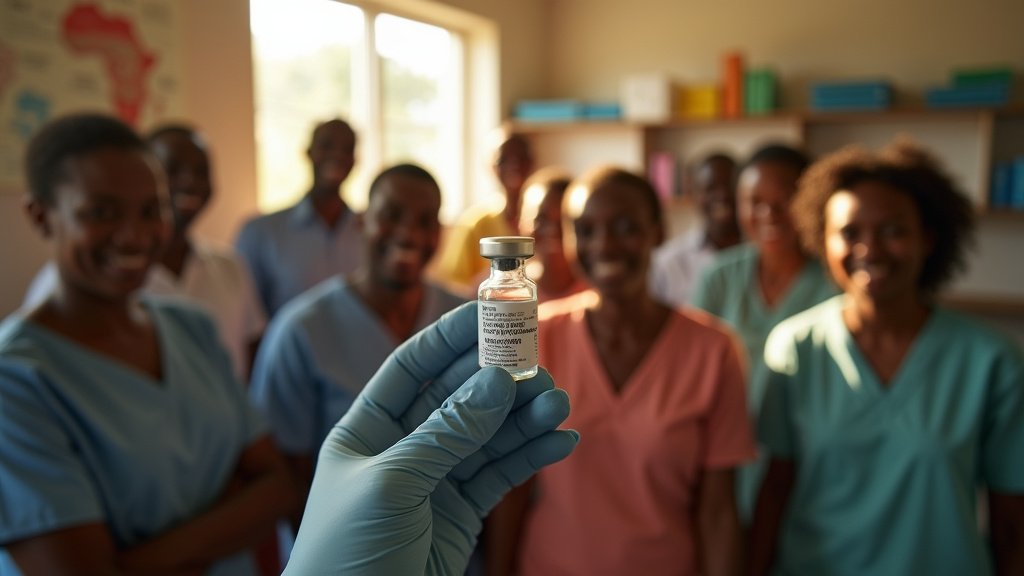
Revolutionary HIV Prevention Jab Becomes Dramatically Affordable for Poorer Nations: A Genuine Chance to End Global Epidemic
In a development heralded as a monumental stride for global health equity, a groundbreaking long-acting injectable HIV prevention drug is poised to become remarkably affordable in low- and middle-income countries. This significant recent news offers a tangible opportunity to dramatically reduce new HIV infections and bolster the ongoing global effort to end the AIDS epidemic.
A Transformative Breakthrough in HIV Prevention
Lenacapavir, an innovative antiviral medication, has emerged as a revolutionary tool in HIV prevention. Unlike traditional daily oral pills, this injectable jab offers protection for six months with just two doses per year. This long-acting formulation addresses critical challenges associated with daily PrEP (Pre-Exposure Prophylaxis), such as adherence issues and the stigma some individuals face in taking daily medication. Clinical trials have demonstrated its exceptional efficacy, with near 100% effectiveness in preventing HIV transmission in study participants. This makes it a powerful, convenient, and discreet option for those most at risk.
Global Partnerships Drive Unprecedented Affordability
The transformative impact of lenacapavir is being amplified by a series of unprecedented global collaborations aimed at slashing its cost. Gilead Sciences, the drug’s developer, has entered into licensing agreements with generic manufacturers, including Dr. Reddy’s Laboratories and Hetero Labs. These partnerships, facilitated by organizations like Unitaid, the Clinton Health Access Initiative (CHAI), the Wits RHI, and the Gates Foundation, are set to make generic versions of lenacapavir available for as little as $40 per person per year starting in 2027. This price point makes the advanced injectable comparable in cost to existing daily oral PrEP, a crucial step in ensuring widespread access in resource-limited settings.
A Genuine Chance to End the Epidemic
Health organizations worldwide are hailing this development as a pivotal moment in the fight against HIV. The World Health Organization (WHO) has described lenacapavir as the “next best thing” to an HIV vaccine, and UNAIDS has welcomed the agreements, stating they bring the world closer to achieving the goal of ending AIDS as a public health threat by 2030. Each year, approximately 1.3 million new HIV infections globally underscore the urgent need for more effective and accessible prevention methods. By making this highly effective, long-acting injectable available at an affordable price, the initiative directly targets populations in low- and middle-income countries that bear the highest burden of the epidemic and have the greatest unmet need.
The Road to Wider Access
While broad availability in 120 countries is anticipated by 2027, several nations are already moving to implement this new prevention strategy. South Africa, which has one of the highest HIV prevalence rates globally, has approved lenacapavir and plans a limited public sector rollout in early 2026. Eswatini is also set to receive the drug by November 2025. Organizations like ViiV Healthcare, the developer of another long-acting injectable PrEP, cabotegravir (CAB LA), have also committed to providing their product at a non-profit price in low-income countries, increasing the availability of such options. The success of this rollout will depend on continued collaboration between governments, healthcare providers, international funders, and communities to ensure equitable distribution and integration into existing HIV prevention programs.
This breakthrough represents more than just a new medication; it signifies a paradigm shift in how global health challenges can be addressed through innovative partnerships and a shared commitment to equity. The availability of an effective, affordable, and long-acting HIV prevention jab offers renewed hope for a future free from the scourge of AIDS.


Related Posts