
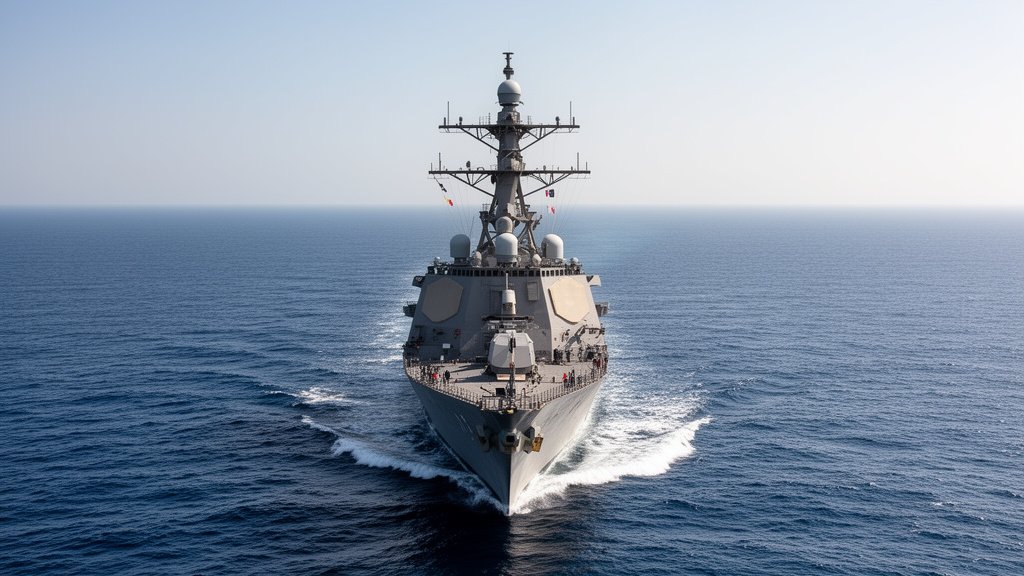
US Navy Strikes: 5 Iranian Tankers Destroyed After Attacks
In a rapid and decisive escalation of the ongoing regional conflict, US Central Command (CENTCOM) forces have successfully neutralized five Iranian crude oil carriers. This military operation was launched in direct retaliation for two separate ballistic missile attacks conducted by the Islamic Revolutionary Guard Corps (IRGC) against a US Navy warship over the previous 48 hours. The destruction of these vessels marks a significant shift in the rules of engagement in the Persian Gulf, transforming a cycle of harassment into a theater of active, kinetic maritime warfare.
Key Highlights
- Decisive Retaliation: CENTCOM confirmed the destruction of five Iranian crude oil carriers in response to hostile IRGC actions.
- Direct Provocation: The operation follows two consecutive days of ballistic missile strikes directed at a US Navy warship patrolling international waters.
- Rules of Engagement Shift: Analysts view this as a departure from traditional defensive posturing, signaling a new, aggressive deterrence strategy.
- Energy Market Volatility: The threat to the Strait of Hormuz, a critical maritime chokepoint, has triggered immediate concern regarding global oil supply chains.
The Strategic Pivot: From Deterrence to Active Denial
The destruction of the five Iranian tankers is not merely a tactical maneuver; it represents a fundamental change in the US military posture within the Middle East. For years, the interplay between the US Navy and the IRGC in the Persian Gulf was characterized by “gray zone” tactics: drone harassment, fast-attack boat swarms, and electronic interference. However, the use of ballistic missiles against a US Navy asset crosses a red line that Pentagon planners have historically treated with extreme gravity.
Escalation to Kinetic Warfare
By deploying ballistic missiles—likely variants of the Fateh or Qiam series—the IRGC attempted to challenge the multi-layered defense capabilities of the US Navy warship. While the ship’s Aegis Combat System effectively neutralized the inbound threats, the political calculus dictated that a passive defense was no longer sufficient to guarantee safety. The decision to target the tankers, which serve as the lifeblood of the Iranian regime’s economy, serves a dual purpose: it imposes an immediate economic cost while simultaneously removing the logistics assets the IRGC uses to project influence across the region. By degrading these capabilities, CENTCOM is forcing the IRGC leadership to reassess the cost of their aggression.
The Anatomy of the 48-Hour Conflict
The conflict began early Tuesday when radar signatures confirmed the first missile launch from a coastal battery on the Iranian mainland. The US Navy warship, conducting routine freedom of navigation operations, successfully intercepted the threat, deploying Standard Missile-3 (SM-3) interceptors. The second attack, occurring just 24 hours later, utilized a more sophisticated swarm pattern, attempting to saturate the warship’s radar tracking. The precision with which the US military responded to these attacks—tracking the tankers to their support ports before executing the strike—suggests a high degree of intelligence-sharing and pre-planned targeting, likely coordinated through the regional Joint Task Force.
The Economic and Geopolitical Shockwave
Beyond the military implications, this engagement places the Strait of Hormuz, through which roughly 20% of the world’s total oil consumption passes, at the center of a potential supply chain crisis. The destruction of these specific tankers, which were identified as strategic assets within the IRGC’s maritime logistical network, is expected to ripple through global energy markets. Traders are already accounting for increased insurance premiums for any vessel traversing the Gulf. If this escalation continues, we could see a total naval blockade scenario, which would force international shipping companies to reroute or pause operations, resulting in immediate price spikes in Brent and WTI crude.
Future Outlook: Can Escalation be Contained?
This “tit-for-tat” engagement leaves little room for de-escalation unless diplomatic backchannels—typically managed through regional intermediaries—are utilized immediately. The IRGC now faces a “lose-lose” scenario: cease their maritime attacks and lose their ability to project power, or continue the fight and risk losing the entirety of their oil-exporting fleet, which would effectively cripple the Iranian economy. Analysts at the Washington Institute and other defense think tanks suggest that the coming week will be critical. If Tehran chooses to retaliate again, the scope of US operations will likely expand from tactical retaliation to the systematic dismantling of IRGC coastal missile infrastructure.
FAQ: People Also Ask
1. Why did the US destroy the tankers instead of the launch sites?
Retaliating against tankers, which are clearly identifiable economic and logistical assets, provides a clear, high-impact message with manageable risks. Striking mainland missile sites risks a much wider, full-scale war, whereas targeting maritime assets contains the conflict to the naval domain.
2. Was the US Navy warship damaged during the missile attacks?
According to official CENTCOM reports, the US Navy warship sustained no damage. The ship’s advanced defense systems successfully tracked and intercepted all incoming ballistic missiles before they could strike the hull.
3. How will this impact global oil prices?
Any disruption in the Persian Gulf historically drives up oil prices. Given the importance of the Strait of Hormuz, markets are pricing in a “risk premium,” anticipating that ongoing conflict will make the transportation of oil through the region more dangerous and expensive.
4. Is this the start of a full-scale war?
While this is a significant escalation, military analysts categorize it as a “crisis management” event. Both sides are currently testing the limits of the other. Whether it devolves into a full-scale war depends entirely on the response from the Iranian leadership and whether they choose to escalate further or seek a diplomatic off-ramp.


Related Posts


