MindWalk’s ReefIQ Tech Steals Show at AMD’s 2026 AI Summit
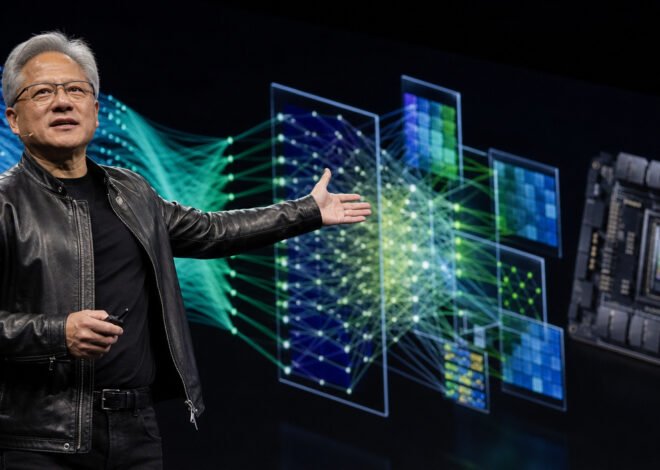
In a display of sheer computational force at the AMD Advancing AI 2026 event in San Francisco, MindWalk Holdings Corp. (HYFT) commanded the industry’s attention by unveiling ReefIQ, a revolutionary biological context layer specifically engineered to accelerate the notoriously slow and expensive drug discovery pipeline. By bridging the gap between massive-scale biological datasets and deep-learning architectures, MindWalk is leveraging the raw power of AMD Instinct hardware to solve the ‘context problem’ that has long plagued AI-driven pharmaceutical research, signaling a definitive shift in how the next generation of therapeutics will be developed, validated, and brought to market.
Key Highlights
- Launch Event: MindWalk Holdings Corp. demonstrated ReefIQ at the high-profile AMD Advancing AI 2026 event in San Francisco.
- Technical Core: ReefIQ functions as a biological context layer, allowing AI models to interpret complex protein interactions with unprecedented accuracy.
- Hardware Synergy: The system is optimized specifically for AMD Instinct hardware, utilizing its high-bandwidth memory architecture to process massive biological datasets.
- Industry Impact: This development promises to significantly compress timelines for Phase 1-3 clinical trial readiness by predicting molecular efficacy with higher precision.
The New Frontier of Biological Intelligence
The central challenge in drug discovery has never been the lack of data; rather, it has been the inability to interpret the biological context of that data at scale. Traditional AI models, while adept at pattern recognition, often struggle to understand the nuanced ‘language’ of human biology—the way proteins fold, interact, and evolve within specific environments. MindWalk Holdings (HYFT) has positioned ReefIQ as the bridge between raw computational power and biological reality. By moving beyond static sequence analysis, ReefIQ utilizes what the company terms a ‘biological context layer,’ which provides AI models with the necessary environmental awareness to predict not just if a molecule might bind, but how it will behave within a complex, living system.
This demonstration at the AMD Advancing AI 2026 summit serves as a watershed moment for the intersection of Silicon Valley and Big Pharma. While many startups claim to use AI to discover new drugs, MindWalk’s approach is fundamentally different because it treats the hardware-software stack as a cohesive unit. By optimizing ReefIQ to run on AMD Instinct architecture, MindWalk has managed to overcome the memory bottlenecks that typically force researchers to sacrifice granular detail for speed. With AMD’s hardware, the ReefIQ layer can handle massive, multi-dimensional protein data sets in real-time, effectively reducing the simulation time for new therapeutic candidates from months to mere days.
The Hardware-Software Symbiosis
Why does this matter for the pharmaceutical industry? The bottleneck in drug discovery is rarely the computational power itself, but the bandwidth and latency required to move massive biological datasets between the memory and the compute core. AMD Instinct hardware, known for its leading-edge high-bandwidth memory (HBM) capacity, provides the ideal infrastructure for ReefIQ.
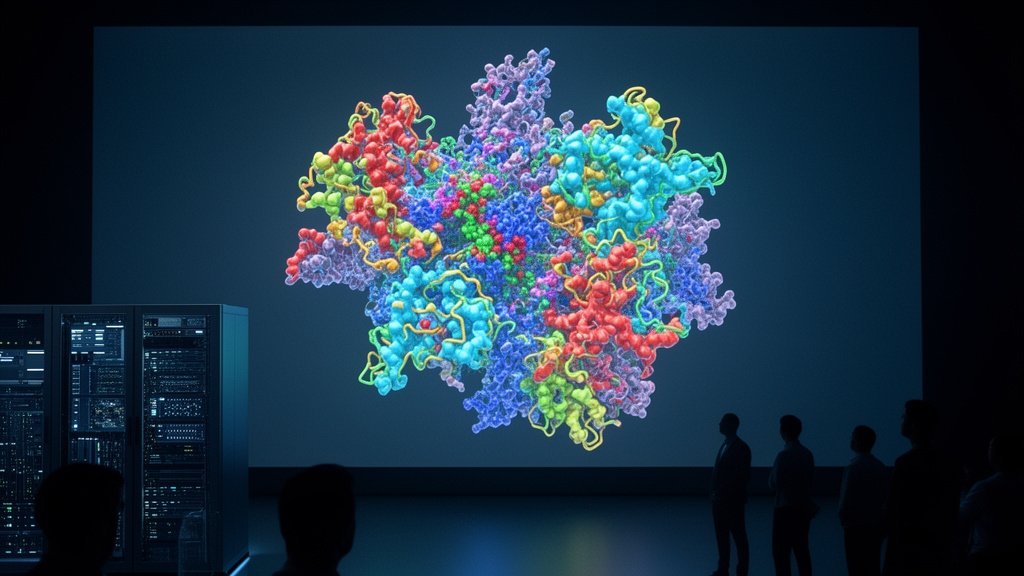
During the San Francisco demonstration, attendees witnessed a live simulation where ReefIQ mapped a complex protein interaction that would have traditionally required a server cluster a week to model. On the AMD Instinct platform, the visualization occurred almost instantaneously. This symbiotic relationship between MindWalk’s software layer and AMD’s hardware is not just an incremental improvement; it is a forced multiplier. If pharmaceutical companies can iterate on molecular candidates at this speed, the cost of bringing a drug to market—which currently hovers in the billions of dollars with a failure rate of over 90%—could be fundamentally disrupted.
Economic and Clinical Implications
The economic implications of ReefIQ’s public debut are massive. By increasing the accuracy of preclinical trial modeling, MindWalk aims to minimize the risk of late-stage failures. The current drug development model is effectively a ‘guess and check’ system, where companies move from digital design to lab validation, often finding that the lab results do not match the digital predictions.
ReefIQ’s biological context layer minimizes this ‘translational gap.’ If the industry adopts this technology, we may see a pivot toward ‘AI-first’ pipelines, where the primary investment occurs in the computational phase, ensuring that only the most promising candidates proceed to physical synthesis. This shift could potentially save the industry tens of billions of dollars annually and, more importantly, accelerate the availability of life-saving treatments for rare diseases, where the economic incentive to develop drugs is often low due to the sheer cost of R&D.
Challenges and The Road Ahead
Despite the excitement at the AMD event, the path forward for MindWalk and the broader AI-in-pharma sector is not without its hurdles. The primary challenge remains data quality. An AI model is only as good as the biological ground truth it is fed. While ReefIQ excels at context, it relies on high-quality structural data, which can still be difficult to aggregate across proprietary and siloed pharmaceutical databases.
Furthermore, regulatory bodies like the FDA are still determining how to handle drug candidates discovered primarily through AI-driven pipelines. MindWalk’s success will ultimately depend on its ability to prove that its ‘biological context’ is not just accurate in a digital environment, but predictive of real-world clinical safety and efficacy. The collaboration with AMD is a strong start, positioning the company to scale as hardware capabilities inevitably increase. As we look toward the remainder of 2026, the industry will be watching closely to see if ReefIQ becomes the new standard for computational drug discovery, or if the challenges of biological complexity prove too stubborn for even the most advanced AI layers.
FAQ: People Also Ask
Q: What exactly is a ‘biological context layer’ as used by MindWalk?
A: In the context of AI drug discovery, a biological context layer acts as a semantic bridge that helps AI models understand the environmental factors (such as pH, temperature, and cellular interaction) that influence how molecules behave, rather than just analyzing the static structure of the molecule itself.
Q: Why was the AMD Advancing AI 2026 event the chosen platform for this announcement?
A: AMD’s Advancing AI events are the primary venues for hardware-software integration announcements. MindWalk chose this platform to highlight the critical synergy between their software (ReefIQ) and AMD’s high-bandwidth Instinct hardware, which is required to process the massive datasets involved in drug discovery.
Q: How does ReefIQ specifically reduce drug discovery timelines?
A: By providing a ‘biological context,’ ReefIQ allows for more accurate predictive modeling. This reduces the number of failed ‘wet-lab’ experiments required, effectively shortening the timeline from initial molecular design to clinical-ready candidate by bypassing the iterative trial-and-error cycle.
Q: Is MindWalk Holdings (HYFT) the only company working on this?
A: No, the space is competitive, but MindWalk differentiates itself by creating a dedicated software layer designed to leverage specific hardware (AMD Instinct) rather than relying on generalized AI models that are not optimized for the nuances of biological data.


Related Posts