Hancock Wellness Center Harvests Future of Healthcare
Hancock Wellness Center in Greenfield, Indiana, has officially integrated high-tech vertical hydroponic gardening into its “Food Is Medicine” program, creating a localized, sustainable supply chain for fresh, nutrient-dense produce. This initiative represents a tangible shift in clinical wellness strategy, where the center transitions from merely providing fitness and health advice to actively cultivating the literal nutritional foundation of its patients’ recovery and maintenance. By leveraging space-efficient vertical farming, the center is bypassing traditional supply chain volatility to deliver produce directly to enrollees, marking a significant advancement in community health infrastructure.
Key Highlights
- Hyper-Local Nutrition: The hydroponic system produces fresh greens and vegetables year-round, eliminating ‘food desert’ barriers for participants in the ‘Food Is Medicine’ program.
- Space-Efficient Technology: Vertical farming methods allow the center to maximize harvest yields within a compact physical footprint, demonstrating an urban-friendly agricultural model.
- Integrative Health: The garden is not a standalone exhibit; it is a clinical tool integrated directly into nutritional counseling and disease prevention plans at Hancock Wellness Center.
- Sustainable Impact: By growing produce on-site, the center drastically reduces its carbon footprint and eliminates the need for long-haul transportation of perishable goods.
Cultivating a New Clinical Paradigm
The integration of a hydroponic system at the Hancock Wellness Center is more than an aesthetic or sustainable upgrade; it is a fundamental reconfiguration of the clinical environment. For years, the ‘Food Is Medicine’ (FIM) movement has advocated for the idea that food is as critical as pharmaceuticals for managing chronic conditions like hypertension, diabetes, and cardiovascular disease. By installing a hydroponic unit—a closed-loop irrigation system that grows plants without soil using nutrient-rich water—Hancock Wellness Center has brought the source of this medicine inside its own walls.
The Mechanics of the Vertical Shift
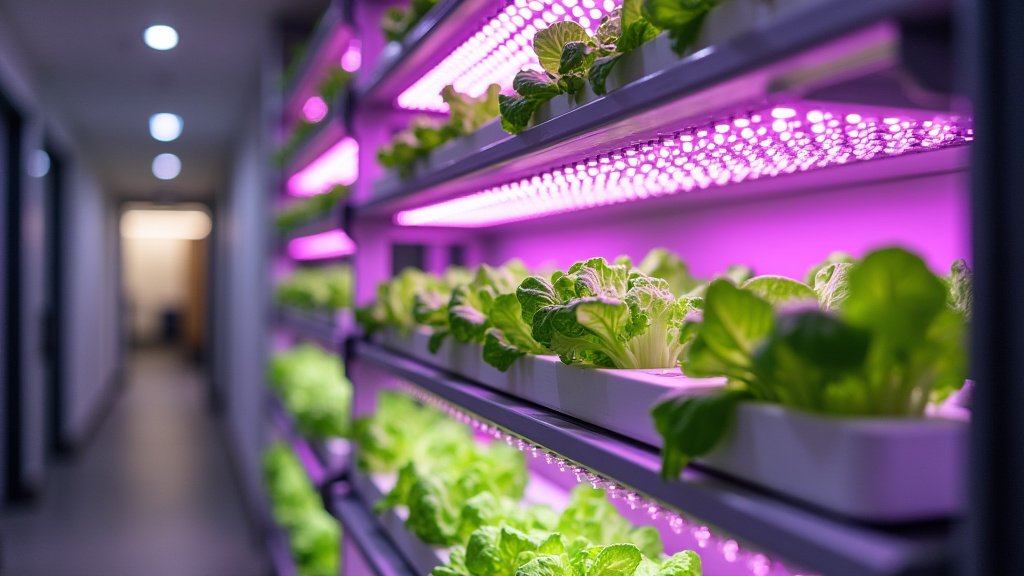
Traditional industrial agriculture is often subject to seasonal limitations, crop failures, and lengthy transport times that diminish nutrient density. The hydroponic setup at Hancock uses controlled-environment agriculture (CEA) technology. This system utilizes LED spectrum lighting, climate control, and nutrient delivery automation to maintain optimal growth conditions regardless of the unpredictable Indiana weather. For the wellness center, this means a consistent, predictable supply of high-quality produce.
From a technical standpoint, the efficiency of this system is critical. In a vertical farming configuration, plants are stacked in layers, allowing the facility to produce a higher volume of crops per square foot than traditional horizontal farming. This allows the center to serve more enrollees in the ‘Food Is Medicine’ program without requiring an expansion of its physical building footprint. The water-saving nature of hydroponics—which can use up to 90% less water than soil-based farming—aligns with the organizational focus on long-term resource sustainability.
The ‘Food Is Medicine’ Integration
At the heart of the initiative is the clinical application. ‘Food Is Medicine’ is a health intervention model that typically involves the provision of medically tailored meals, produce prescriptions, or medically tailored food pantries. Hancock Wellness Center is moving closer to the ‘source’ of the prescription. When patients visit for nutritional counseling or physical therapy, the proximity to the garden serves a dual purpose: it acts as a dietary aid and an educational resource.
Patients are no longer just receiving advice on what to eat; they are seeing the process of how fresh food is grown. This visual and hands-on interaction is a powerful psychological tool in health behavior modification. It de-stigmatizes fresh produce as a difficult-to-attain luxury and presents it as a readily available, tangible part of the healing process.
Economic and Community Impacts
The economic implications of this model are significant. By producing food on-site, the center reduces costs associated with procurement and distribution. While the initial capital expenditure for hydroponic technology can be higher than traditional sourcing, the operational savings and the improvement in patient health outcomes create a positive return on investment (ROI) that is measured not just in dollars, but in reduced future healthcare utilization.
Furthermore, this project positions Hancock Wellness Center as a leader in the broader Greenfield community. It serves as a pilot for how other health systems in the region—and potentially the state—could utilize similar agri-tech interventions. By addressing the social determinants of health, such as access to affordable, healthy food, the center is taking a proactive stance against chronic illness rather than a reactive one.
Future Scaling and Sustainability
The successful deployment of this garden is likely just the beginning. As technology in vertical farming continues to advance, the scalability of such systems means that Hancock could potentially increase its output or diversify its crop varieties to cater to specific patient needs—growing low-potassium greens for kidney health patients, for instance, or high-fiber crops for digestive health. This degree of agricultural customization within a healthcare setting is the next frontier of patient-centered care.
FAQ: People Also Ask
1. What exactly is the ‘Food Is Medicine’ program?
‘Food Is Medicine’ (FIM) is an evidence-based clinical intervention that provides patients with nutritional support as a way to treat, manage, or prevent specific health conditions. It often involves produce prescriptions or access to healthy, medically tailored groceries.
2. How does the hydroponic garden support the program?
It provides a consistent, high-quality, and hyper-local source of fresh produce for enrollees. By having this produce grown on-site, the center ensures that participants have immediate access to greens and vegetables that are nutrient-rich and free from supply chain delays.
3. Is the food grown in the garden safe for all patients?
Yes. Hydroponic systems are highly controlled environments. Because they do not use soil, they are largely protected from soil-borne pathogens and pests, resulting in produce that is often cleaner and more consistent in quality than traditional soil-grown counterparts.
4. Will Hancock Wellness Center be selling this produce to the public?
The primary objective of the current program is to support the ‘Food Is Medicine’ enrollees and educational initiatives within the center. It is designed as a wellness utility rather than a commercial farm operation.
5. Can this model be replicated in other healthcare facilities?
Yes, the vertical farming model is highly modular and scalable. Its ability to thrive in indoor, urban, or space-constrained environments makes it an ideal candidate for hospitals and wellness centers looking to integrate nutritional support into their existing facilities.


Related Posts