
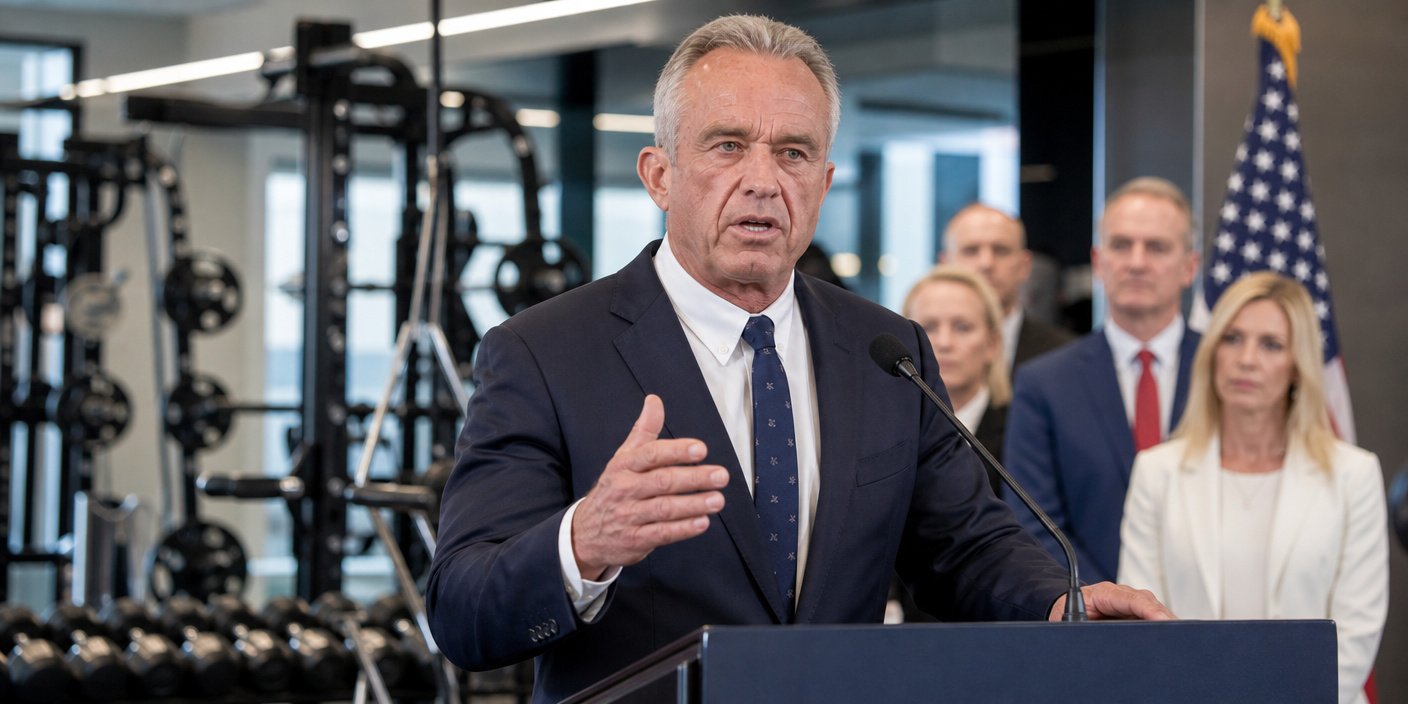
RFK Jr. Unveils $10M National School Fitness Challenge
Health Secretary Robert F. Kennedy Jr. has officially announced a sweeping $10 million national initiative aimed at revitalizing the Presidential Physical Fitness Test in American K-12 schools. This ambitious program seeks to reverse the declining metrics of youth health by providing financial incentives to educational institutions that demonstrate innovative and effective approaches to physical education. By blending the historical legacy of the fitness movement with a modern, competitive funding model, the Department of Health and Human Services (HHS) intends to place physical wellness back at the center of the American scholastic experience.
Key Highlights:
- Total Investment: A $10 million fund dedicated to nationwide youth fitness promotion.
- Performance Incentives: $7 million allocated as prizes for schools and organizations implementing the most effective fitness programs.
- Equipment Upgrades: $3 million earmarked specifically for vouchers to purchase modern fitness and athletic equipment.
- Strategic Focus: Modernizing the traditional Presidential Physical Fitness Test to increase student participation and physical health outcomes.
Reclaiming the Legacy: A Modern Mandate for Youth Health
The announcement of the $10 million challenge marks a significant pivot toward federal intervention in school-based physical health. Secretary Kennedy’s initiative is designed to address a growing crisis: the steady decline in physical activity among American youth, which correlates with rising rates of chronic conditions and decreased academic focus. The program is not merely about standardized testing but about creating a cultural shift within the school system, encouraging administrators and physical education departments to prioritize movement as a foundational element of student development.
Historical Context and Modern Urgency
For decades, the Presidential Physical Fitness Test was a cultural touchstone for American students. First championed under the administration of John F. Kennedy, the program served as a benchmark for health and agility. Over the years, however, the test faced criticism for its rigid focus on specific drills and its failure to accommodate diverse student populations, eventually leading to its decline in widespread usage.
Secretary Kennedy’s proposal seeks to rehabilitate this legacy by moving away from the one-size-fits-all model of the mid-20th century. Instead, the initiative encourages schools to adopt holistic fitness metrics that emphasize consistency, improvement, and personal health goals rather than singular athletic prowess. By injecting capital into the system, the administration hopes to solve the primary hurdle currently facing physical education departments: a lack of resources and outdated equipment.
The Incentive Architecture: How the $10 Million Will Work
Unlike historical federal fitness programs that often relied on top-down mandates, this $10 million challenge utilizes a competitive, grant-based framework. The $7 million in prize money serves as an incentive for schools, non-profits, and regional athletic organizations to act as catalysts for change. Applications for these funds will be evaluated based on the sustainability of the programs proposed, the inclusion of underrepresented student groups, and the integration of data-driven tracking to monitor health improvements.
The $3 million in equipment vouchers addresses the infrastructure gap. Many schools currently lack the budget to replace aging equipment, let alone integrate modern technology such as heart-rate monitors, smart-tracking systems, or updated gymnasium amenities. These vouchers will allow school districts to modernize their facilities, making physical education more engaging for digital-native students who may otherwise be disconnected from traditional sports.
Bridging the Gap: Physical Activity and Cognitive Performance
Beyond the physiological benefits, the HHS initiative emphasizes the correlation between physical activity and academic performance. Research consistently demonstrates that regular physical exercise improves cognitive function, memory, and focus. By tying the challenge to these outcomes, Kennedy’s office is positioning physical fitness not as an ‘extra’ or ‘electives’ activity, but as a critical component of scholastic success. This approach aligns with broader efforts to improve pediatric mental health and combat the epidemic of screen-time-related sedentary behavior.
Critics of such programs often point to the potential for excessive federal oversight, but the structure of this challenge aims to mitigate such concerns. By distributing funds to local organizations and schools, the program creates a decentralized network of implementation. This allows for local adaptation, ensuring that a school in a rural district can tailor its fitness initiative differently than a school in a high-density urban environment, all while working toward the same federal goals of improved student health statistics.
Future Predictions: Defining Success
The success of the $10 million challenge will be measured by more than just enrollment in the program. Long-term success will require an increase in physical activity levels across student demographics, a reduction in health-related absences, and the creation of self-sustaining fitness cultures within the schools. If this pilot program yields the intended results, it could serve as a template for future federal health policy, moving the Department of Health and Human Services further into the realm of preventative, school-based community health. As the initiative rolls out, the eyes of educators and health advocates will be on the efficacy of these grants in creating meaningful, lasting change in the next generation’s health.
FAQ: People Also Ask
1. Who is eligible to apply for the $10 million fitness challenge?
Eligibility criteria are broad, including K-12 public and private schools, school districts, and community-based organizations that operate youth fitness programs in partnership with educational institutions.
2. How does this differ from the original Presidential Physical Fitness Test?
While the original test was a standardized, static measure of performance, the new challenge emphasizes flexibility, modern health metrics, and institutional improvement, incentivizing schools to build their own effective fitness cultures rather than merely forcing compliance with a single set of exercises.
3. When will the funding vouchers be available to schools?
The rollout is expected to begin following the formal application process, with the Department of Health and Human Services targeting the upcoming academic semester to begin distributing the first round of equipment vouchers.
4. How will the prize money be distributed?
The $7 million in prize money will be awarded based on a competitive evaluation process, where applicants must demonstrate a clear plan for implementation, measurable goals for student fitness improvement, and a strategy for sustaining the program beyond the initial grant period.


Related Posts


