
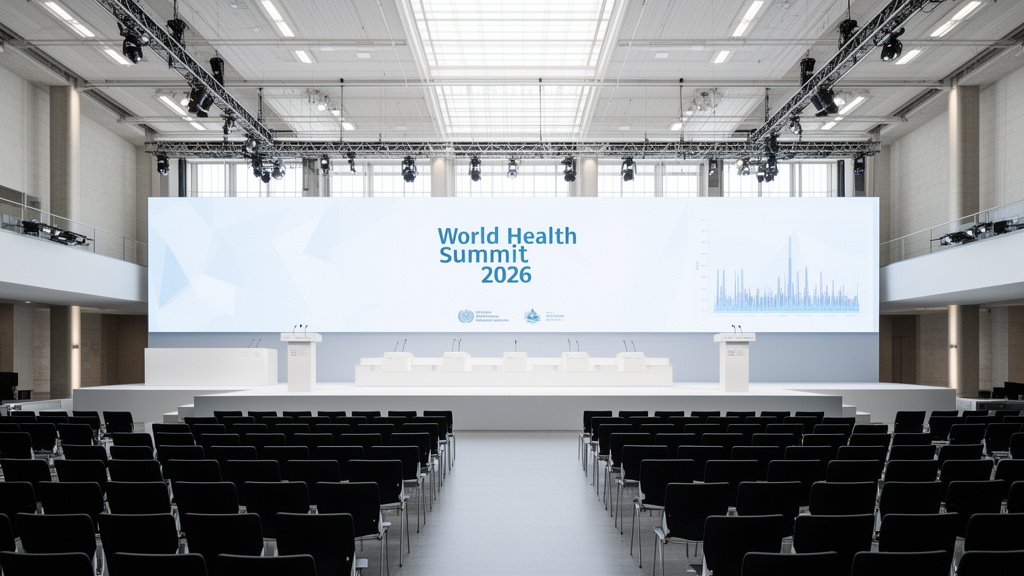
World Health Summit 2026: Berlin Charts New Path for Global Health Resilience
Berlin has officially become the epicenter of international medical discourse as the World Health Summit 2026 kicks off under the guiding theme “From Crisis to Resilience: Innovating for Health.” This pivotal gathering brings together a diverse cohort of global leaders from politics, science, and the private sector to address the fraying fabric of international health security and the urgent need for structural innovation. By bridging the gap between policy and patient outcomes, the summit aims to fortify systems that were tested to their breaking point in previous years.
Key Highlights
- Launch of the “From Crisis to Resilience” strategic initiative to overhaul global health preparedness.
- Announcement of a landmark multi-million dollar investment framework targeting maternal and primary women’s health infrastructure in Bangladesh.
- Official unveiling of the 2026 Global Trust in Science Index, highlighting critical gaps in public communication.
- Introduction of a new, evidence-based policy framework aimed at integrating emotional and mental well-being into universal primary healthcare systems.
Navigating the Future: A New Era of Health Policy
The 2026 World Health Summit in Berlin represents a decisive shift in how international bodies view medical stability. Moving beyond the reactive posture adopted during the early 2020s, the current summit focuses on systemic resilience—the ability of health systems to absorb shocks while maintaining equitable care. The central theme, “From Crisis to Resilience,” is not merely rhetorical; it is the foundation for a series of new, legally binding commitments designed to foster cross-border collaboration in the face of emerging epidemiological threats.
Rebuilding the Foundation of Trust in Science
One of the most anticipated deliverables at this year’s summit is the release of the 2026 Global Trust in Science report. For years, the scientific community has struggled with the erosion of public confidence, driven by misinformation and the politicization of health data. The findings presented in Berlin suggest that trust is not a passive commodity but an active, fragile asset that requires consistent, transparent maintenance.
Experts at the summit highlighted that the methodology behind this report involved tracking data across 40 countries, identifying a sharp correlation between local language science communication and adherence to public health guidelines. The report argues that scientists must transition from purely academic voices to active participants in the public square, utilizing digital platforms to disseminate findings in real-time. By institutionalizing these communication channels, the summit hopes to create a more resilient information ecosystem, ensuring that when the next health crisis arrives, the public is equipped with accurate, trusted information.
Bangladesh Initiative: A Case Study in Targeted Global Health Equity
Perhaps the most concrete outcome of the summit is the unveiling of a substantial, donor-backed investment in the healthcare infrastructure of Bangladesh. Specifically targeting women’s health, this initiative addresses the stark disparities in maternal mortality and access to reproductive services. The investment package, structured as a public-private partnership, focuses on digitizing patient records, training community health workers in rural districts, and expanding the availability of localized diagnostic equipment.
Leaders noted that Bangladesh was chosen as the pilot site not because it lacks infrastructure, but because of its proven capacity to scale community-led health interventions rapidly. By infusing capital into these existing networks, the project aims to serve as a blueprint for other developing nations. The initiative is expected to reduce maternal mortality rates by a projected 15% within the first three years of implementation, provided that the supply chain logistics for essential medicines remain stable. This focus on women’s health is seen as a bellwether for the summit’s broader commitment to ‘innovation for health’—prioritizing the most vulnerable populations as the true measure of a system’s success.
The New Mandate for Emotional Well-being
Recognizing that a healthy body is inseparable from a healthy mind, the summit also debuted the 2026 Global Report on Emotional Health. Historically, mental health has been treated as a secondary concern, often marginalized in primary care discussions. The Berlin summit effectively ended that separation, proposing a mandate that includes mental wellness screenings as a standard component of all adult primary care check-ups.
This shift is driven by economic data presented during the summit, which correlates high levels of untreated anxiety and emotional distress with decreased workplace productivity and long-term physical illness. By treating emotional health as a biological imperative, the summit participants hope to influence national budgets globally to allocate more resources toward psychiatric and counseling services. The report provides a roadmap for integrating these services into clinics, emphasizing the use of telehealth to reach those in isolated or underserved regions, thereby ensuring that emotional support is accessible regardless of geographic location.
Challenges and Strategic Outlook
Despite the optimism, the road ahead remains complex. Critics at the summit pointed out that while these initiatives are robust, their success depends entirely on sustained political will. The tension between national sovereignty and global health cooperation remains a hurdle. As delegations depart Berlin, the consensus is clear: resilience is a collective endeavor. The investments made today in Bangladesh, the frameworks established for scientific trust, and the prioritization of emotional health are the first steps in a long-term strategy to ensure that future health crises do not turn into societal catastrophes. The world is watching to see if these blueprints, drafted in the conference halls of Berlin, can survive the reality of implementation on the ground.
FAQ: People Also Ask
1. What is the main objective of the World Health Summit 2026?
The primary goal is to shift global focus from crisis management to systemic resilience, emphasizing innovation in science communication, women’s health, and emotional well-being.
2. What does the Bangladesh women’s health investment include?
The investment focuses on digitalizing health records, expanding rural community health worker training, and providing localized diagnostic equipment to improve maternal care outcomes.
3. What does the Global Trust in Science report conclude?
The report concludes that public trust in science has eroded due to misinformation and suggests that the scientific community must become more proactive and transparent in public communication.
4. Why is ’emotional well-being’ a major topic at this summit?
It is being elevated because new data shows a direct link between emotional health and physical longevity, necessitating its integration into standard primary healthcare systems globally.


Related Posts


