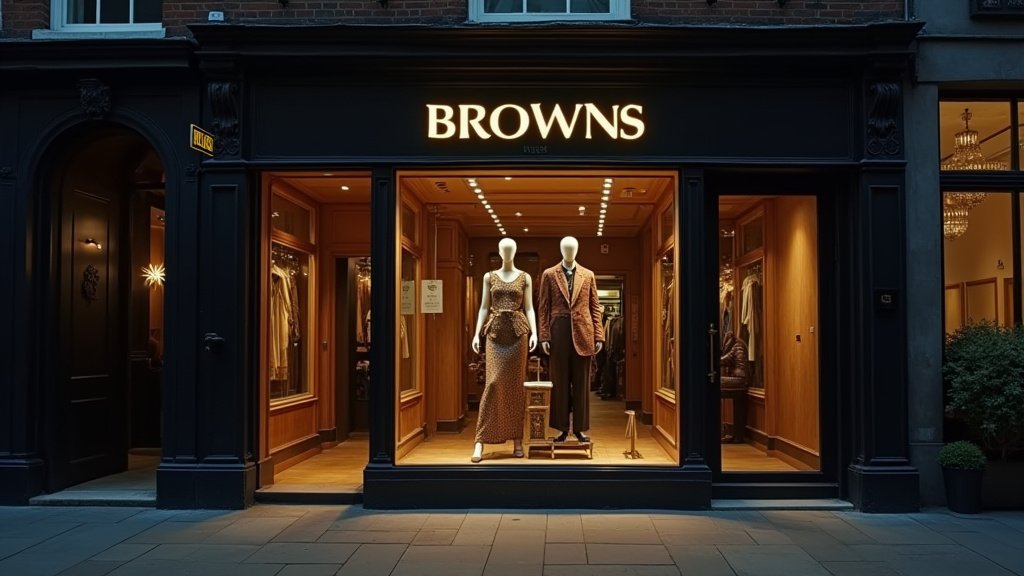
Fashion Icon Joan Burstein, Founder of Browns, Dies at 100
The world of high fashion is in mourning today following the passing of Joan Burstein, the visionary retailer and founder of the iconic London boutique Browns. Affectionately known throughout the industry simply as “Mrs. B,” Burstein passed away peacefully on Friday, April 17, 2026, at her home in Ibiza, surrounded by her family. She had celebrated her 100th birthday earlier this year, marking a century of life defined by unparalleled taste, a pioneering spirit, and a transformative influence on the global luxury retail landscape.
Key Highlights
- A Retail Revolutionary: Joan Burstein founded Browns on London’s South Molton Street in 1970 alongside her late husband, Sidney, effectively changing the city’s fashion map.
- The Ultimate Talent Scout: Mrs. B is credited with launching the careers of fashion titans including John Galliano, Alexander McQueen, and Christopher Kane, often by being the first to stock their debut collections.
- Global Luxury Pioneer: Browns was the first retailer to introduce major international labels such as Ralph Lauren, Giorgio Armani, and Calvin Klein to the UK market.
- A Lasting Legacy: Even after the acquisition of Browns by digital luxury giant Farfetch in 2015, Burstein remained an influential, honorary presence, continuing to shape the industry she helped define.
The Visionary Who Shaped Modern Luxury
Joan Burstein was more than a shopkeeper; she was a cultural arbiter who possessed an unerring ability to spot the “next big thing” long before it reached the mainstream. For over five decades, the name “Browns” was synonymous with the avant-garde, the sophisticated, and the exquisitely curated. Her passing marks the end of an era in British retail, but her imprint on the industry is indelible.
The Birth of an Empire: South Molton Street
In 1970, the London fashion scene was vastly different. With her husband Sidney managing the business and real estate side, Joan Burstein took control of the buying and creative direction. The initial boutique at 27 South Molton Street began as a small, specialized space but quickly grew to occupy five connecting Georgian townhouses.
This growth wasn’t merely physical; it was conceptual. Mrs. B transformed the retail experience from a mere transactional process into a curated journey. She understood that luxury was about discovery. By creating an atmosphere that felt intimate yet exclusive, she turned Browns into a destination for the global elite, from royalty to rock stars.
Scouting the Legends: The ‘Mrs. B’ Touch
Perhaps her most significant contribution to fashion history was her legendary eye for talent. When a young, unknown designer had a graduate collection, they often didn’t go to investors; they went to Mrs. B. If she liked what she saw, she bought the entire collection and placed it in the Browns window—a move that virtually guaranteed the designer’s entry into the public consciousness.
This was the path taken by Alexander McQueen and John Galliano. Mrs. B provided not just the shelf space, but the validation these designers needed to thrive. She was the fairy godmother of British fashion, bridging the gap between raw, unrefined talent and commercial viability. Her ability to identify “handwriting”—the unique aesthetic signature of a designer—is a skill that defined her legacy.
Navigating the Evolution of Retail
As the industry moved from brick-and-mortar boutiques to global e-commerce, Burstein remained a constant. Even as the digital revolution took hold and Farfetch eventually acquired Browns, she maintained a seat at the table. Her role evolved from active buyer to honorary chair, but her influence never waned. She remained a fixture at fashion weeks, holding the front row with the poise and authority that only someone who had built an empire from the ground up could possess.
Defining the ‘Mrs. B’ Standard
What truly set Joan Burstein apart was her blend of professional rigor and personal warmth. Designers she supported didn’t just work for her; they became part of a professional family. Her management style was grounded in the belief that one must “invest in people.” This people-first philosophy allowed her to navigate the volatile world of fashion—surviving economic downturns, shifting consumer habits, and the rapid pace of change—with a graceful, steady hand.
Her life serves as a blueprint for the modern entrepreneur: she was courageous enough to take risks, discerning enough to trust her intuition, and humble enough to acknowledge that, at the heart of every brand, there is always a human story. As the industry reflects on her life, the consensus is clear: fashion has lost one of its truest, most influential pioneers.
FAQ: People Also Ask
Who was Joan Burstein, and why was she significant?
Joan Burstein, or “Mrs. B,” was a pioneering British retailer who founded the Browns boutique in 1970. She is widely considered one of the most influential figures in fashion history for her role in discovering and championing designers like Alexander McQueen and John Galliano.
What was the ‘Browns’ boutique known for?
Browns was famous for its high-end curation, specifically being the first store in the UK to stock international luxury brands like Ralph Lauren, Calvin Klein, and Giorgio Armani, while simultaneously acting as a launchpad for emerging, experimental British talent.
Did Joan Burstein retire before she died?
Yes, Joan Burstein officially retired from active day-to-day management in 2015 when Farfetch acquired the Browns business, though she remained as the honorary chair and a guiding influence for the brand.
How did Mrs. B discover new designers?
She was known for her “unerring eye,” frequently attending graduate shows and private presentations. If she believed in a designer’s unique point of view, she would commit to purchasing their collections and giving them prime visibility in her shop windows, which served as a massive platform for emerging labels.


Related Posts