
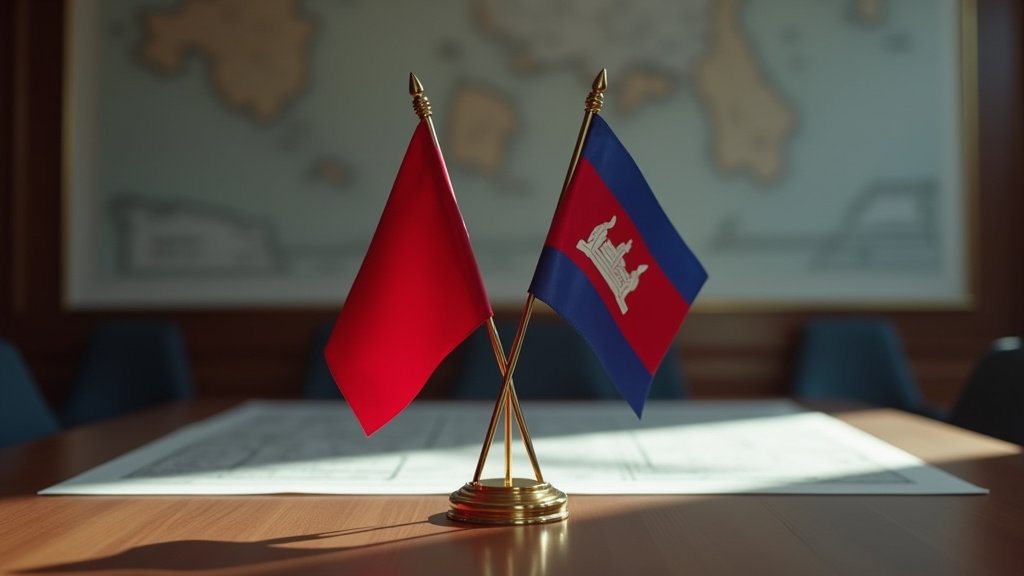
China, Cambodia Launch Historic ‘2+2’ Security Dialogue
In a pivotal development for Southeast Asian geopolitics, China and Cambodia have officially inaugurated their first “2+2” Strategic Dialogue Mechanism, a high-level diplomatic platform that synchronizes foreign and defense policy between the two nations. This landmark meeting, held in Phnom Penh on April 21–22, 2026, signals a definitive elevation in the “ironclad” friendship between Beijing and the Kingdom of Cambodia, moving bilateral relations from broad economic cooperation to granular, synchronized strategic alignment.
Key Highlights
- High-Level Convergence: The inaugural session brought together China’s Foreign Minister Wang Yi and Defense Minister Dong Jun with their Cambodian counterparts, Foreign Minister Prak Sokhonn and Defense Minister Tea Seiha.
- Strategic Synchronization: The “2+2” format is designed to align foreign diplomacy with military and security posture, a rare and deeply consequential diplomatic arrangement for a Southeast Asian nation.
- Regional Security Implications: The dialogue underscores China’s expanding influence in the region, particularly as it seeks to fortify partnerships in the face of shifting geopolitical alliances in the Indo-Pacific.
- Policy Continuity: The mechanism operationalizes the long-standing vision of building a “China-Cambodia Community with a Shared Future,” effectively institutionalizing the security architecture of the bilateral relationship.
The Architecture of the 2+2 Mechanism
The formalization of the “2+2” dialogue is not merely a symbolic gesture; it represents a tactical evolution in how Beijing engages with its closest regional allies. By bringing together the heads of the Foreign and Defense ministries—the two critical pillars of national sovereignty—China is signaling that its relationship with Cambodia is moving beyond simple infrastructure investment and into the realm of integrated strategic defense.
The Shift from Economy to Security
For years, the China-Cambodia narrative was dominated by the Belt and Road Initiative (BRI). Massive investment in ports, highways, and special economic zones defined the relationship. However, the introduction of the “2+2” framework suggests that Beijing is now focused on security and geopolitical reliability. This alignment allows both nations to coordinate positions on critical regional issues, such as maritime security, regional conflict resolution, and the broader ASEAN security architecture, without the delays often inherent in traditional, siloed diplomatic channels.
Strategic Signaling to the Region
The timing of this dialogue is significant. As regional tensions simmer in the South China Sea and competition between the United States and China intensifies across Southeast Asia, Cambodia’s explicit commitment to a dual-track security dialogue with China provides Beijing with a stable anchor in the Mekong sub-region. It demonstrates to other ASEAN members that Cambodia remains, as it has described itself, an “ironclad” partner, regardless of external pressures or Western-led geopolitical alternatives.
Geopolitical Implications and Future Trajectories
The integration of foreign and defense policies into a single, cohesive dialogue framework offers several secondary angles that will define the regional landscape over the coming years.
Impact on ASEAN Unity
The “2+2” dialogue inherently complicates the concept of ASEAN centrality. Historically, ASEAN has sought to maintain a degree of strategic autonomy by balancing relations with both China and the United States. Cambodia’s proactive deepening of security ties with Beijing through this institutionalized mechanism creates a distinct “pull” factor that may further polarize the bloc. Analysts are closely watching whether other ASEAN nations, potentially those with closer alignment to Beijing, will seek to replicate this “2+2” format, effectively creating a sub-grouping of security-aligned states within the broader Southeast Asian framework.
The US-Cambodia Hedging Dilemma
For the United States and its regional partners, the formalization of this dialogue raises questions about the future of military and diplomatic engagement with Phnom Penh. As Cambodia aligns its strategic doctrine more closely with China, the space for Western diplomatic influence may contract. The U.S. has frequently expressed concerns over potential dual-use facilities in Cambodia; this “2+2” mechanism serves to deepen the political and security consensus that underpins the bilateral relationship, making it harder for external actors to drive a wedge into the China-Cambodia strategic calculus.
Sustainability and the ‘Shared Future’ Doctrine
Beyond the headlines, the long-term viability of this dialogue will rest on its economic sustainability. The “Community with a Shared Future” is not just a security concept; it is an economic one. China remains Cambodia’s largest investor and aid donor. The effectiveness of this “2+2” format will likely be tested by whether it can deliver tangible benefits for the Cambodian population—such as digital transformation, industrial capacity building, and climate resilience—rather than just high-level security summits. If the mechanism can prove it delivers domestic prosperity, it will likely entrench this diplomatic format as the bedrock of Cambodian foreign policy for decades to come.
FAQ: People Also Ask
What is the ‘2+2’ Strategic Dialogue Mechanism?
The ‘2+2’ refers to a high-level diplomatic format where the Foreign and Defense Ministers of two countries meet to coordinate foreign policy and military/security strategy simultaneously. It is designed to create a unified national approach to bilateral relations.
Why did China and Cambodia choose to launch this now?
The move aligns with Beijing’s broader strategy to formalize security relationships across Southeast Asia. Given the existing “comprehensive strategic partnership” between the two nations, this was the natural next step to deepen the security component of that relationship amidst a complex regional geopolitical landscape.
Does this mean Cambodia is abandoning other alliances?
Cambodian officials maintain that their foreign policy is based on neutrality and sovereignty. However, the ‘2+2’ mechanism is a clear signal of the “ironclad” nature of their relationship with China, indicating that while they may maintain other ties, their strategic security alignment is increasingly centered on Beijing.


Related Posts