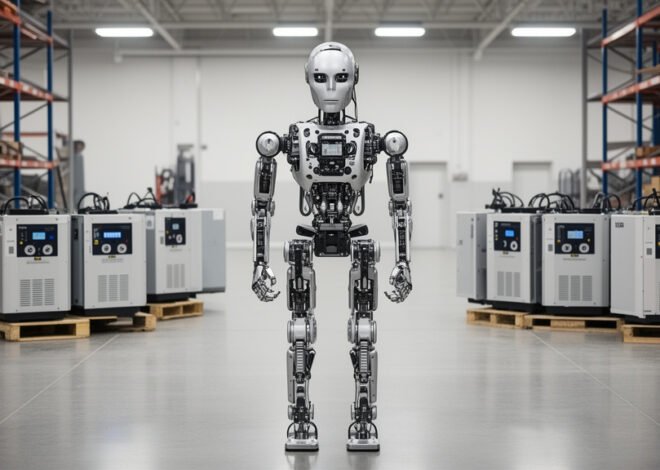
AI Boosts Productivity, But Businesses Miss Out
A new study reveals that while artificial intelligence tools are significantly improving individual productivity, most companies are failing to capitalize on these gains, leading to wasted potential and missed opportunities for overall business growth.
Key Highlights:
- AI tools are demonstrably increasing individual employee efficiency.
- A majority of organizations are not implementing strategies to harness AI-driven productivity for broader business objectives.
- This disconnect results in a significant gap between potential and realized benefits.
- Companies that effectively integrate AI are seeing substantial competitive advantages.
The Productivity Paradox: AI’s Untapped Potential
Despite the widespread adoption of AI tools, a growing body of evidence suggests a significant disconnect between individual efficiency gains and organizational-level success. The core of the issue lies not with the AI technology itself, but with how businesses are integrating and leveraging these powerful tools. While employees are using AI to automate tasks, streamline workflows, and enhance their output, many companies are failing to re-architect their processes, strategies, or performance metrics to fully benefit from this newfound capacity. This creates a ‘productivity paradox’ where individual gains are not translating into collective or strategic advantages, thereby leaving substantial potential benefits on the table.
The Individual vs. The Organization
The findings highlight a critical distinction: AI is excellent at augmenting individual tasks. Whether it’s drafting emails, analyzing data sets, or coding software, AI assistants are proving invaluable for many professionals. However, organizational structures, legacy processes, and a lack of strategic foresight are preventing these micro-efficiencies from accumulating into macro-level business improvements. Companies often adopt AI tools in a piecemeal fashion, without a cohesive strategy for how these tools should reshape team collaboration, project management, or even fundamental business models. This siloed approach means that the time saved by individuals is often absorbed by other tasks or simply doesn’t lead to a reduction in overall project timelines or an increase in strategic output.
Strategic Integration is Key
Experts emphasize that realizing the full potential of AI requires more than just deploying the technology. It demands a fundamental rethinking of how work is done. Organizations that are successfully navigating this transition are typically those that have invested in:
- Strategic Planning: Developing a clear roadmap for AI adoption that aligns with business goals.
- Process Re-engineering: Adapting existing workflows and business processes to incorporate AI efficiencies.
- Employee Training and Upskilling: Equipping the workforce with the skills to not only use AI tools but to identify opportunities for AI integration.
- Performance Measurement: Revising how productivity and success are measured to account for AI-augmented capabilities.
Companies focusing on these areas are reporting significant improvements in innovation, market responsiveness, and overall profitability, demonstrating that the gap is bridgeable with the right approach.
The Cost of Inaction
Conversely, businesses that fail to adapt risk falling behind. As competitors become more agile and efficient through strategic AI integration, organizations clinging to outdated processes will face mounting challenges. The cost of inaction is not just missed opportunities for growth; it can also lead to decreased competitiveness, employee dissatisfaction as they feel their efforts aren’t translating into meaningful impact, and a general stagnation of innovation. The study implicitly warns that AI is not a magic bullet; it is a powerful catalyst that requires thoughtful and strategic application to yield its promised benefits.
FAQ: People Also Ask
What is the main challenge companies face when adopting AI?
The primary challenge is often not the technology itself, but the organizational inertia and the difficulty in integrating AI into existing business processes and strategies. Many companies struggle to move beyond individual task augmentation to strategic, company-wide adoption.
How can companies better leverage AI productivity gains?
Companies can better leverage AI by focusing on strategic integration, re-engineering workflows to capitalize on AI efficiencies, investing in employee training, and updating performance metrics to reflect AI-augmented capabilities.
What are the risks of not effectively integrating AI?
The risks include falling behind competitors, missing out on significant efficiency and innovation gains, potential employee dissatisfaction, and a general stagnation of business growth and adaptability in an increasingly AI-driven market.
Does AI truly save time for businesses?
Yes, AI tools can significantly save time for individuals by automating tasks and streamlining workflows. However, the realization of this time saving at a business-wide strategic level depends heavily on how effectively the organization integrates and leverages these gains.


Related Posts