Trump: Iran Strikes to Continue Indefinitely
President Donald Trump has asserted that military strikes on Iran will continue indefinitely, stating they will persist “until I say enough.” The declaration signals a potentially prolonged period of escalating conflict, with the US President indicating that power plants and bridges could be among the targets. This firm stance emerges as Iranian state media reports explosions in several southern cities and on coastal islands, including areas near the critical Strait of Hormuz. The Islamic Revolutionary Guard Corps (IRGC) has claimed responsibility for targeting US forces in Kuwait, Bahrain, and Jordan, adding another layer of complexity to the unfolding situation. Concurrently, the United States has reinstated its blockade on Iranian ports, signaling a tightening of economic and military pressure. Notably, a proposed plan by the Trump administration to impose a 20 percent tariff on ships transiting the Strait of Hormuz has reportedly been withdrawn.
Key Highlights:
- US President Donald Trump has stated that strikes on Iran will continue until he decides they are sufficient.
- Potential targets for US action include Iranian power plants and bridges.
- Iran’s IRGC claims to have attacked US forces in Kuwait, Bahrain, and Jordan.
- The US has reimposed a blockade on Iranian ports.
- A planned 20 percent tariff on ships in the Strait of Hormuz has been withdrawn.
Escalating Tensions: Trump’s Declaration and Iranian Response
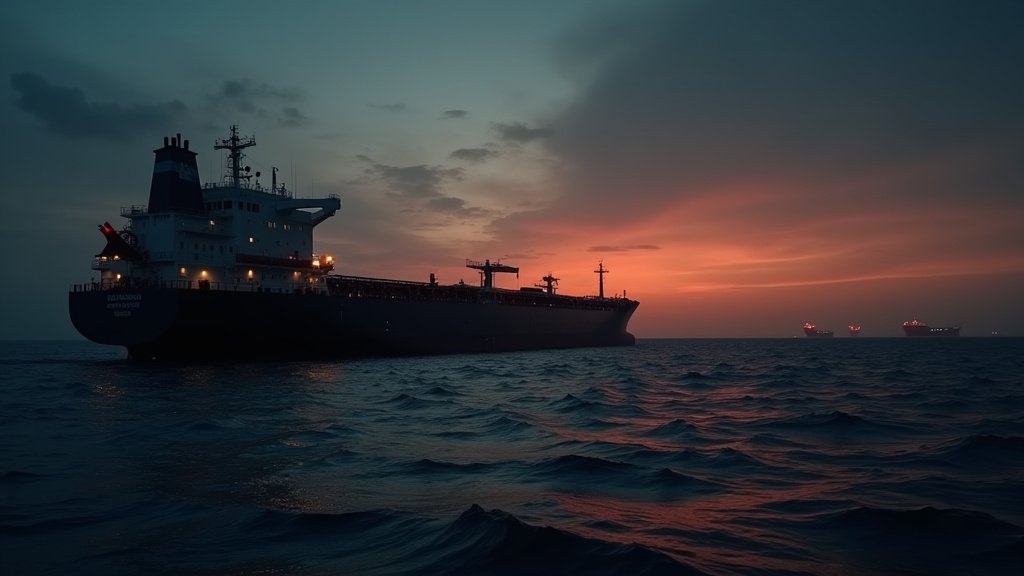
President Trump’s unequivocal statement that “strikes on Iran will continue until I say enough” underscores a significant shift in US foreign policy and a commitment to sustained military pressure on the Islamic Republic. The breadth of potential targets, including critical infrastructure like power plants and bridges, suggests a strategy aimed at inflicting substantial economic and societal disruption within Iran. This aggressive posture is juxtaposed with reports of explosions originating within Iran, as detailed by Iranian media. These incidents, occurring in southern cities and on strategically vital coastal islands, including those near the Strait of Hormuz—a global chokepoint for oil transport—indicate a heightened state of conflict and potential Iranian retaliatory actions or internal unrest.
The IRGC’s Assertions and Counter-Pressure
The narrative of escalating conflict is further complicated by claims from Iran’s Islamic Revolutionary Guard Corps (IRGC). The IRGC has asserted its involvement in targeting US forces across multiple locations in the Middle East, specifically naming Kuwait, Bahrain, and Jordan. These allegations, if substantiated, would represent a significant escalation of Iran’s direct engagement with US assets and allies in the region, moving beyond stated defensive postures to active targeting.
US Blockade and Shifting Trade Policies
In parallel to the military posturing, the United States has intensified its economic pressure by reimposing a blockade on Iranian ports. This move is designed to further isolate Iran economically, limiting its ability to conduct international trade and access crucial resources. The reimposition of the blockade signals a dual-pronged strategy of military and economic coercion. Adding a layer of complexity to the economic landscape, the Trump administration has reportedly withdrawn a plan that would have imposed a substantial 20 percent tariff on ships transiting the Strait of Hormuz. The reasons for this withdrawal remain unclear, but it suggests a potential recalibration or internal debate regarding the most effective methods of exerting pressure on Iran.
Economic Ramifications and Geopolitical Stability
The ongoing tensions and potential for wider conflict carry significant global economic implications, particularly concerning the stability of oil markets. The Strait of Hormuz is a critical artery for global energy supplies, and any disruption or perceived threat to its security can lead to volatile price fluctuations and supply chain anxieties worldwide. The reimposition of port blockades and the threat of strikes on infrastructure could exacerbate these concerns, potentially impacting not only regional economies but also global trade and financial markets. The uncertainty surrounding the duration and intensity of these actions creates a challenging environment for businesses and governments alike, necessitating careful monitoring of geopolitical developments.
Historical Context of US-Iran Relations
The current escalation is situated within a long and often contentious history of US-Iran relations. Since the 1979 Iranian Revolution, the two nations have been locked in a complex dynamic characterized by periods of direct confrontation, proxy conflicts, and intermittent diplomatic efforts. Key flashpoints have included Iran’s nuclear program, regional influence, and support for various militant groups. The current administration’s “maximum pressure” campaign, which includes sanctions and military posturing, represents a continuation of long-standing US policy objectives aimed at altering Iran’s behavior and regional activities. Understanding this historical context is crucial for deciphering the motivations and potential trajectory of the current crisis.
Future Trajectory and Potential Outcomes
The declaration by President Trump opens a wide range of potential future scenarios. A prolonged period of strikes could lead to further Iranian retaliation, potentially drawing regional allies into a wider conflict. Conversely, the sustained pressure might eventually lead to de-escalation or negotiations, although the current rhetoric suggests a firm commitment to the “maximum pressure” approach. The withdrawal of the Strait of Hormuz tariff plan could indicate a strategic flexibility or a recognition of the potential for unintended consequences. Ultimately, the path forward will depend on a complex interplay of political decisions, military actions, and diplomatic engagement, with significant implications for regional stability and global security.
FAQ: People Also Ask
What are the primary concerns regarding the Strait of Hormuz?
The Strait of Hormuz is a vital maritime chokepoint through which approximately 20-30% of the world’s seaborne oil trade passes. Any disruption or threat to navigation in the strait can significantly impact global energy supplies, leading to price volatility and economic instability.
What is the Islamic Revolutionary Guard Corps (IRGC)?
The IRGC is a branch of the Iranian armed forces established after the 1979 revolution. It is responsible for ideological oversight of the military and plays a significant role in Iran’s security, economy, and political sphere. It is also known for its involvement in regional proxy conflicts.
What does “maximum pressure” mean in US foreign policy towards Iran?
The “maximum pressure” policy, employed by the Trump administration, involves the extensive use of economic sanctions and diplomatic isolation aimed at crippling Iran’s economy and forcing concessions on its nuclear program, ballistic missile development, and regional activities.
What are the potential economic impacts of renewed US-Iran tensions?
Renewed tensions can lead to disruptions in oil supply, causing price spikes in global energy markets. Sanctions and military actions can also affect international trade routes, investment, and the financial stability of countries with strong economic ties to the region. Increased geopolitical risk can deter foreign investment in Middle Eastern economies.
What is the historical significance of US-Iran relations?
US-Iran relations have been complex and often adversarial since the 1953 CIA-backed coup and the 1979 Iranian Revolution. Key issues have included Iran’s nuclear ambitions, its regional foreign policy, and human rights concerns, leading to decades of sanctions, diplomatic standoffs, and occasional military confrontations or near-confrontations.


Related Posts